Dyness Lithium Battery — Models, Features, and Who Should Buy One

If you are shopping for a dyness lithium battery for your home, you have probably seen the name Dyness on dealer boards and in WhatsApp groups. The brand is everywhere in Pakistan now, and the model names all look alike — DL5.0C, DL5.0F, PowerBox G2, PowerBrick. This guide sorts them out in plain words.
You will learn who makes Dyness batteries, what each main model does, how the DL5.0 family differs from the PowerBox range, and which size fits a normal Pakistani home. No engineering degree needed — just simple words and real examples.
By the end, you will know which model to ask for, which questions to ask the seller, and how to check that the battery you buy is genuine. Let us start with the short answer.
Dyness Lithium Battery — The Short Answer
Here is the short answer. A dyness lithium battery is a rechargeable battery that stores electricity in LFP cells — the same safe, long-life chemistry used in most home solar batteries today. You charge it from your solar plates in the daytime, and it gives the power back at night or during load-shedding.
Dyness makes several sizes of the same idea: the small DL5.0C suits most homes, the PowerBox G2 is the bigger box for larger homes, and the PowerBrick and Tower series are for very large homes and small businesses. Here is how the main models compare — without any prices, because prices change often and differ by model and dealer.
| Model | Size | Usable power | Cycles (about) | Protection | Best for |
|---|---|---|---|---|---|
| DL5.0C | 5.12 kWh | 90% | About 6,000 | IP20 — indoors | Most homes, wall-mounted |
| DL5.0F | 5.12 kWh | 95% | 8,000 or more | IP20 — indoors | Longer life, same size |
| DL5.0C Pro | 5.12 kWh | 95% | 6,000 or more | IP20 — indoors | Fire suppression, middle step |
| PowerBox G2 | 10.24 kWh | 95% | 8,000 or more | IP65 — sheltered outdoor OK | Bigger homes, one big box |
| Powerbox Pro | 10.24 kWh | 90% | 6,000 or more | IP65 — sheltered outdoor OK | Bigger homes, simpler box |
| PowerBrick | 14.336 kWh | About 90–95% | — | IP20 — indoors | Large homes, floor-standing |
One line in that table decides most purchases: usable power is the share of the stored electricity you can actually use. A DL5.0C lets you use 90% of its 5.12 kWh, which is about 4.6 units a night, while a tubular battery lets you use only about half its stored power safely. That is why a smaller lithium unit can run the same fans and lights as a bigger tubular one.
One note on the table: the DL5.0C cycle figure is about 6,000 on the maker’s datasheet, though some dealer pages say 8,000. PowerBrick cycle counts vary by version, so ask the dealer for the datasheet of the exact unit you are buying. See today’s options on the lithium battery price page.
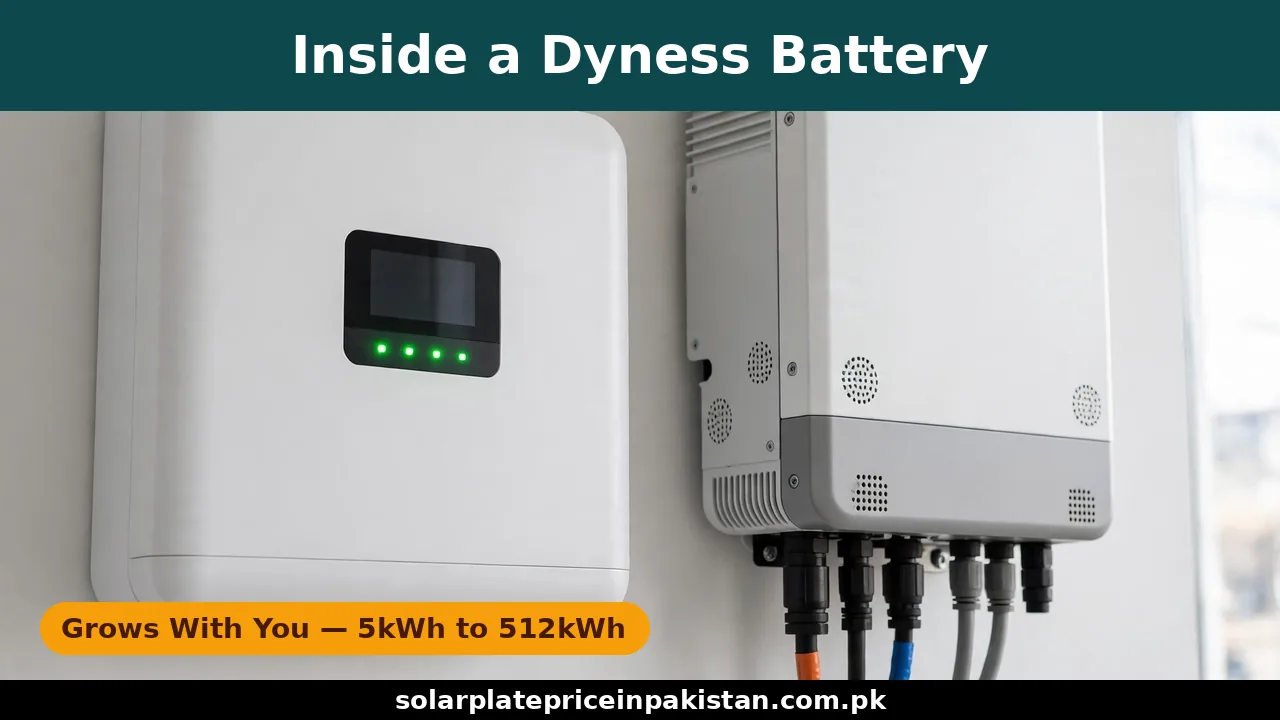
What Is a Dyness Lithium Battery?
Dyness is short for Dyness Digital Energy Technology Co., Ltd, a company based in Suzhou, China. It has worked in energy storage since 2017, and its home batteries are now used by over one million people around the world. In Pakistan, the brand is sold through dealers and has become a common name in home solar backup.
In short, a dyness lithium battery is a Chinese-made LFP battery built for home solar systems, and it is sold in Pakistan through authorised dealers. LFP stands for lithium iron phosphate — a chemistry known for long life and heat stability. Every Dyness home battery uses LFP cells, so the safety story is the same across the whole range, from the small DL2.5 to the big Tower series.
You can read more about the company on the Dyness official website, where the full model list and datasheets are published. If a dealer shows you a model that is not on that site, ask questions before you pay.
The DL5.0 Family in Detail
The DL5.0C is the standard dyness lithium battery in this family — the one most Pakistani dealers stock first. It stores 5.12 kWh, which is about 5 units of electricity. It runs at 51.2 volts and 100 amp-hours, gives you 90% usable power, and is rated for about 6,000 charge cycles on the maker’s datasheet. Some dealer pages say 8,000 cycles, so treat the figure as about 6,000 on the datasheet and ask your dealer which datasheet their stock follows.
The DL5.0C is a wall-mounted indoor unit with an IP20 rating, so it must stay dry and indoors. It weighs about 54 kg, so it needs a solid wall and proper brackets. It talks to your inverter through CAN, RS485 or RS232, the standard languages inverters use to speak to a battery.
DL5.0F — the newer, longer-life model
The DL5.0F is the newer version of the same 5.12 kWh size. It gives you 95% usable power instead of 90%, and it is rated for 8,000 or more cycles — a longer life than the DL5.0C. It also has built-in aerosol fire suppression, a small system that releases a fire-stopping agent inside the unit if it ever gets dangerously hot. The DL5.0F is backward compatible with the DL5.0C range, so you can mix it with older DL5.0C units in the same system.
DL5.0C Pro — the middle step
The DL5.0C Pro sits between the two. It is also 5.12 kWh, with 95% usable power and 6,000 or more cycles, and it also has aerosol fire suppression. Think of it this way: the DL5.0C is the standard pick, the Pro adds fire suppression and more usable power, and the DL5.0F adds the longest life on top of that.
All three can be connected in parallel — up to 50 units together, which is 256 kWh in total. That matters because you can start with one unit today and add more later as your load grows, instead of buying a huge battery on day one.
PowerBox G2 vs PowerBox Pro
The PowerBox G2 is a bigger dyness lithium battery for homes that need more backup power in one box. It stores 10.24 kWh — double the DL5.0C — at the same 51.2 volts. It gives you 95% usable power and is rated for 8,000 or more cycles. It weighs about 99.7 kg, so it is a two-person job to move and fit.
The G2’s big advantage is its IP65 rating. IP65 means the box resists dust and water jets, so it can sit in a sheltered outdoor spot — a covered veranda, for example. It also has built-in Wi-Fi, so you can check its charge and health from your phone, and it has an aerosol fire extinguisher inside, plus an optional heating function for cold places.
The Powerbox Pro is the simpler 10 kWh box. It also stores 10.24 kWh and also carries an IP65 rating, but it gives 90% usable power and is rated for 6,000 or more cycles. If you want the biggest usable power and the longest life, pick the G2. If you want the same size in a simpler box, the Pro does the job.
PowerBrick and Tower for Bigger Homes
The PowerBrick is a floor-standing unit that stores 14.336 kWh in one cabinet — nearly three DL5.0C units in a single box. It stands on the floor instead of hanging on a wall, which suits homes that have floor space but no strong wall. It has an IP20 rating, so it must stay indoors, and it comes with built-in Wi-Fi and an aerosol extinguisher. You can connect up to 50 PowerBrick units together, and bigger versions, the PowerBrick Plus and Max, store about 16.07 kWh.
The Tower series is for much bigger systems. It is a high-voltage range, running at 192 to 576 volts, with sizes from 7.1 to 276.48 kWh. A Tower system is built by stacking modules — the STACK100 is a similar idea, a modular high-voltage stackable system with 5.12 kWh per module. These are for large homes, shops and small businesses with big hybrid inverters, not for a normal two-bedroom house.
Two smaller names complete the range. The DL2.5 is the starter unit at 2.56 kWh, in 25.6V or 51.2V versions, and you can connect up to 16 of them together. The B4850 and BX51100 are older 48V and 51.2V 100Ah models still sold in Pakistan — if a dealer offers you one, check the warranty and inverter match first.
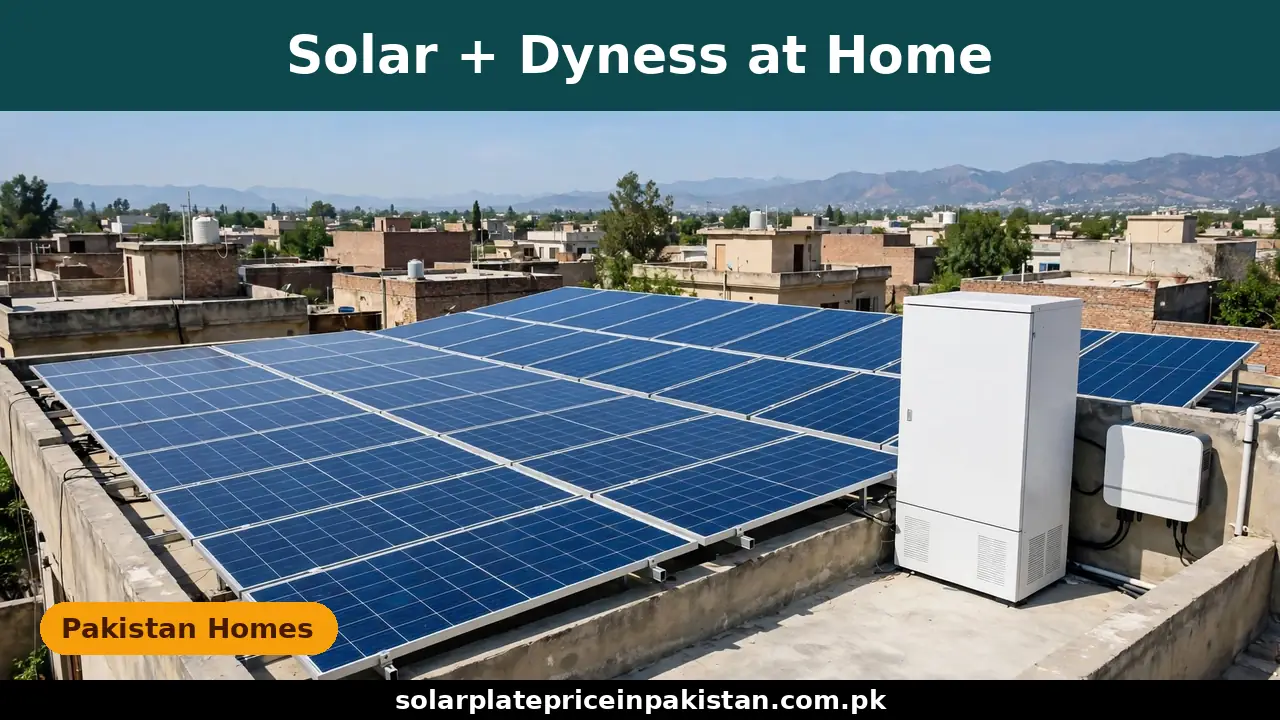
Key Features of a Dyness Lithium Battery
LFP cells and the BMS
Every dyness lithium battery from this brand uses LFP cells. LFP is short for lithium iron phosphate, a chemistry that stays stable when it gets hot and lasts for thousands of cycles. On top of the cells sits the BMS, the battery management system. Think of the BMS as a guard at the gate: it watches voltage, current and temperature all the time, stops overcharging and deep discharge, and balances the cells so no single cell gets overworked.
IP20 or IP65 — where can it sit?
The IP rating tells you where the battery can live. IP20 means indoor only — keep it dry, in a room or a store, away from rain and splashes. IP65 means dust-proof and safe against water jets, so the box can sit in a sheltered outdoor spot — but never in open rain or where flood water can reach it.
Growing the system later
Dyness batteries are made to grow: up to 50 DL5.0C units together, up to 50 PowerBox G2 units, and up to 16 DL2.5 units. Start small and add a box next year when you add an air conditioner or a new room.
Which inverters work with Dyness?
Dyness batteries work with many common inverters, including Solis, Deye, GoodWe, Growatt, Victron, SMA and LuxPower, communicating through CAN, RS485 or RS232. Always check your exact inverter model against the Dyness compatibility list before you buy — a battery and an inverter are a pair, and the pair must match. Compare inverter options on the solar inverter hub page.
Warranty, Wi-Fi and the app
Dyness gives a 7-year standard warranty, extendable to 10 years when you register the product and get approval. Keep the warranty card and the dealer’s invoice safe. The PowerBox G2 and PowerBrick have built-in Wi-Fi, so you can check the battery’s charge, temperature and cycle count from your phone.
Dyness vs Tubular Battery
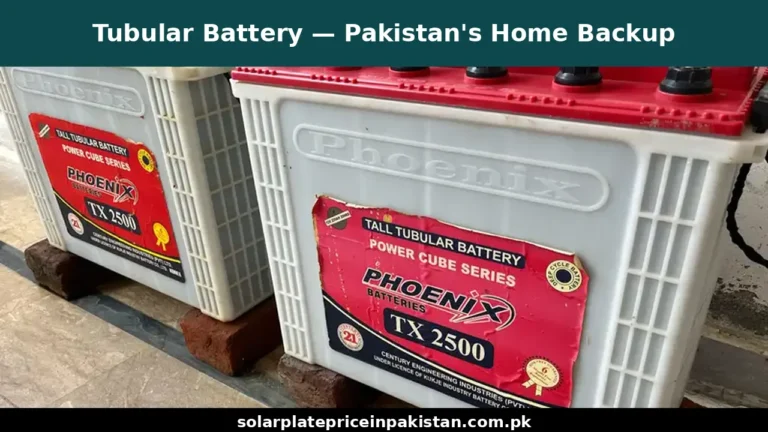
A dyness lithium battery lets you use 90 to 95% of its stored power, while a tubular battery lets you use only about half of its stored power safely. That is the biggest difference, and it is why a 5.12 kWh Dyness unit can run the same night load as a much bigger tubular battery.
The second difference is maintenance. A tubular battery needs water top-ups every few weeks, and its terminals need cleaning. A Dyness battery needs nothing — no water, no cleaning, no acid smell. You fit it on the wall and check the display or the app once a month.
The third difference is life. A good tubular battery lasts about 1,000 to 1,500 cycles with care. A Dyness DL5.0C lasts about 6,000 cycles on the datasheet, and the DL5.0F lasts 8,000 or more. That is the difference between replacing a battery every few years and fitting one that may outlast your inverter.
Where does tubular still win? Upfront cost and repair: a tubular battery is simpler, and any UPS shop in any town can fix it. A Dyness battery needs a matching inverter and a working BMS, and not every small shop can repair it yet. If your budget is very tight and your load is small, tubular is still a fair choice — read the full tubular guide in our tubular battery article before you decide.
Dyness vs Other Lithium Brands
Most home lithium brands today use the same LFP chemistry, so the cells are rarely the real difference between brands. The differences are in the warranty, the dealer network, the app, the IP rating and the expansion limit.
So compare the whole package, not just the model name. Ask how many years the warranty runs and who honours it in Pakistan, and whether the dealer stocks spare parts and answers the phone after the sale. Ask to see the datasheet, and check the DoD, the cycle count and the IP rating yourself.
If you are still learning the basics of lithium chemistry, read our lithium ion battery article first — it explains LFP and the other lithium types in plain words, so the brand comparison makes more sense.
What Size Dyness Battery Does Your Home Need?
To pick the right dyness lithium battery, start with your night load, not your neighbour’s battery. In the daytime your solar plates run the house directly, so the battery only needs to cover the evening and night, plus load-shedding hours. Add up the fans, lights, fridge and TV you run after sunset, and how many hours each one runs.
Here is a worked example. A home with four fans, ten lights, a fridge and a TV uses roughly 4 to 5 units in a full night, so one 5.12 kWh DL5.0C covers that night — you can use 90% of its stored power. Add one air conditioner running all night and you need roughly double that, so a 10.24 kWh PowerBox G2 or two DL5.0C units make more sense.
Dyness Lithium Battery Sizes at a Glance
A small home with a light night load can start with a DL2.5 or one DL5.0C, a medium home fits one DL5.0C or one DL5.0F, and a large home — or a home with an air conditioner at night — fits a PowerBox G2 or a PowerBrick. A very large home or a small business needs the Tower series or a STACK100 system. Do not guess — use the solar load calculator to add up your own appliances first. It takes five minutes and stops you buying a battery that is too small or too big.
How to Check a Genuine Dyness Battery
A genuine dyness lithium battery comes with a warranty card and a serial number you can register with Dyness. Buy from an authorised dealer — in Pakistan, that includes dealers such as Hajvery Solar Energy — and ask for the warranty card and the invoice in writing before you pay.
Check three things on the spot. First, the serial number on the box and on the unit should match. Second, the model label should name the exact model you ordered — DL5.0C, DL5.0F, PowerBox G2 or PowerBrick — not a vague “Dyness battery” sticker. Third, the dealer should be able to show you the datasheet for that exact model.
Watch for two warning signs. A price far below every other dealer is a warning sign, not a bargain — ask why it is so low. A seller who cannot show a warranty card, a serial number or a datasheet is a seller to walk away from. Register the warranty with Dyness as soon as the battery is fitted.
Mistakes to Avoid When Buying
Most bad Dyness purchases fail in the same few ways. The most expensive mistake is not picking the wrong model — it is skipping the checks around the model.
Buying from an unknown seller
A Dyness battery bought from an unknown seller may have no warranty behind it, even if the box looks new. Buy from a dealer whose shop you can visit and whose name you can check. Ask for the warranty card and the invoice before you pay, and keep both safe.
Skipping the inverter match
A battery and an inverter are a pair. The inverter must support the battery’s voltage and its communication with the BMS. Buying the two from different sellers without checking they work together is the most common cause of a battery that never charges properly. Check the pair first — the best solar panels guide also explains how the plate, inverter and battery fit together as one system.
Ignoring the warranty terms
A long warranty means little if it covers only the cells and not the BMS, or if there is no service centre in Pakistan to honour it. Read what the warranty covers, how many years it runs, and who handles a claim. A warranty you cannot use is just a sticker on the box.
The right dyness lithium battery is the one that fits your night load, your inverter and your budget — and that you can prove is genuine. For most homes, that means a DL5.0C or DL5.0F, fitted by a careful installer, with a working BMS and a warranty you can actually use. Start on the homepage for today’s prices, then check the lithium battery price page for the models that suit your home.
One last tip: buy from a dealer who lets you see the battery’s display and app before you pay. A seller who shows you the cell voltages, the temperature and the cycle count is a seller with nothing to hide. That is the seller to trust with your home’s nights.
Frequently Asked Questions
Which dyness lithium battery model should I buy first?
For most homes, the DL5.0C — 5.12 kWh covers a normal night load, and you can add more units later. If you want longer life and fire suppression, the DL5.0F is the newer step up. Start from your night load, not from the biggest box.
What is the warranty on a Dyness battery?
7 years standard, extendable to 10 years when you register the product and get approval. Keep the warranty card and the dealer’s invoice — a warranty you cannot prove is hard to use.
Is a Dyness battery safe to keep inside the house?
Yes — it uses LFP cells, which are thermally stable, with a BMS plus aerosol fire suppression on the newer models. Keep it in a dry, airy corner, away from direct sun and gas cylinders, with space around it for air.
Can a Dyness battery run an air conditioner?
Yes, if the battery is big enough and the inverter can handle the air conditioner’s starting load. One air conditioner running all night needs roughly double the battery of a home without one — size from your real night load.
How many Dyness batteries can I connect together?
Up to 50 DL5.0C or PowerBox G2 units in parallel — 256 kWh for DL5.0C and 512 kWh for PowerBox G2. The small DL2.5 goes up to 16 units. Add boxes later as your load grows.
Does a Dyness battery work with my inverter?
Dyness batteries work with many common inverters — Solis, Deye, GoodWe, Growatt, Victron, SMA and LuxPower, among others. Check your exact inverter model against the Dyness compatibility list before you buy.
What is the difference between the DL5.0C and the DL5.0F?
Both are 5.12 kWh. The DL5.0C gives 90% usable power and about 6,000 cycles on the datasheet. The DL5.0F gives 95% usable power, 8,000 or more cycles, and built-in aerosol fire suppression, and it is backward compatible with the DL5.0C range.
Can I use a Dyness battery outdoors?
Only the IP65 models, like the PowerBox G2 and Powerbox Pro, are made for sheltered outdoor spots — they resist dust and water jets. IP20 models like the DL5.0C must stay indoors in a dry place. Never put any battery where flood water can reach it.
How do I check if my Dyness battery is genuine?
Buy from an authorised dealer, check the serial number on the box and the unit, and register the warranty with Dyness. Ask for the datasheet and the warranty card in writing. If the seller cannot show these, do not pay.
Do Dyness batteries need maintenance?
Almost none. There is no water to top up and no acid to clean. Just keep the battery cool and dry, let the BMS manage charging, and check the display or the app once a month.