Longi Solar Plate Price in Pakistan

Longi Solar Plate Price in Pakistan — 23 November 2026
Longi Hi-MO 7
N-Type Bifacial, Double Glass
Rs 24,248
Rs 39.8/W

- N-Type bifacial cells
- Power from both sides
- Double glass
- A-grade, documented
- 12-year product warranty
- 25-year performance warranty
Longi Hi-MO 7
N-Type TOPCon Bifacial
Rs 24,293
Rs 39.5/W
★ Best Value
- N-Type TOPCon bifacial cells
- Power from both sides
- Double glass
- Hi-MO 7 — the value pick of the range
- A-grade, documented
- 12-year product warranty
- 25-year performance warranty
Longi Hi-MO 7
N-Type Bifacial
Rs 24,645
Rs 39.8/W
- N-Type bifacial cells
- Power from both sides
- Double glass
- A-grade, documented
- 12-year product warranty
- 25-year performance warranty
Longi Hi-MO X10
HPBC 2.0 Monofacial
Rs 27,200
Rs 42.5/W
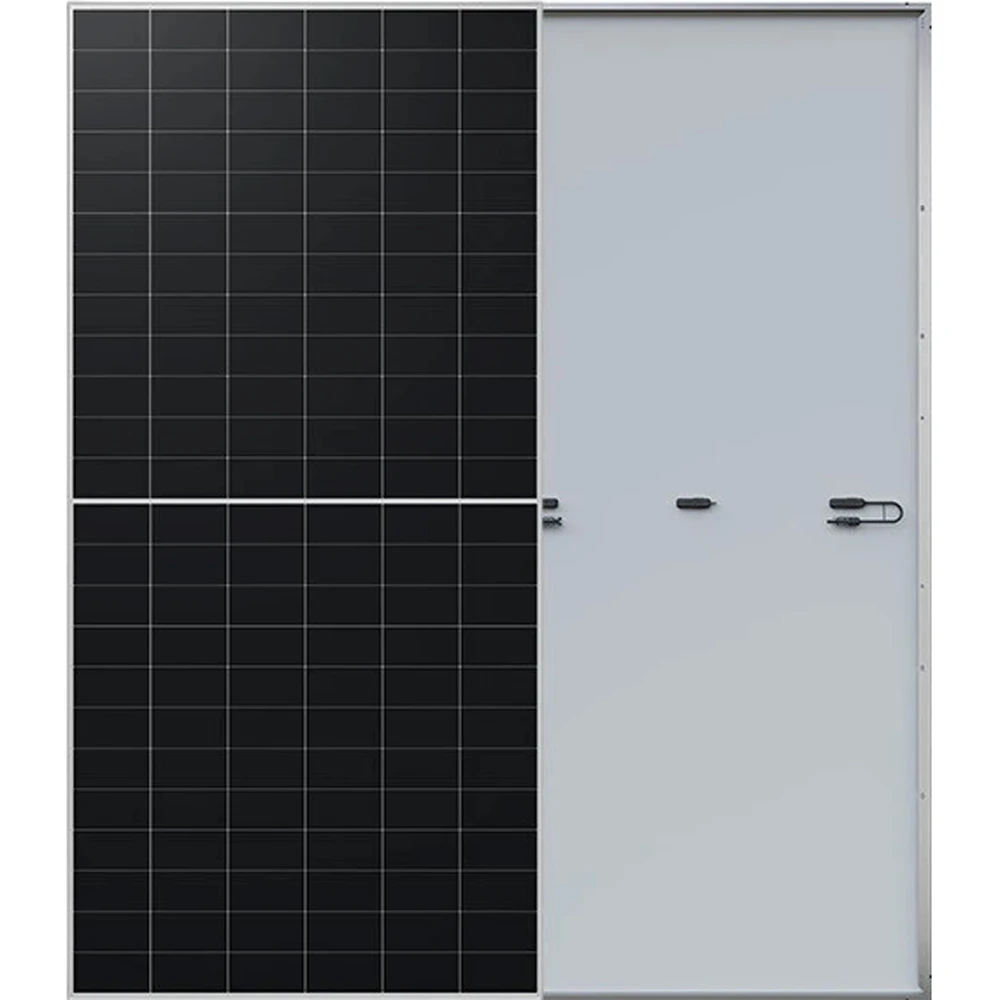
- HPBC 2.0 back-contact cells
- Monofacial, single glass
- A-grade, documented
- 15-year product warranty
- 30-year performance warranty
Longi Hi-MO X10
N-Type HPBC 2.0 Bifacial
Rs 26,123
Rs 40.5/W
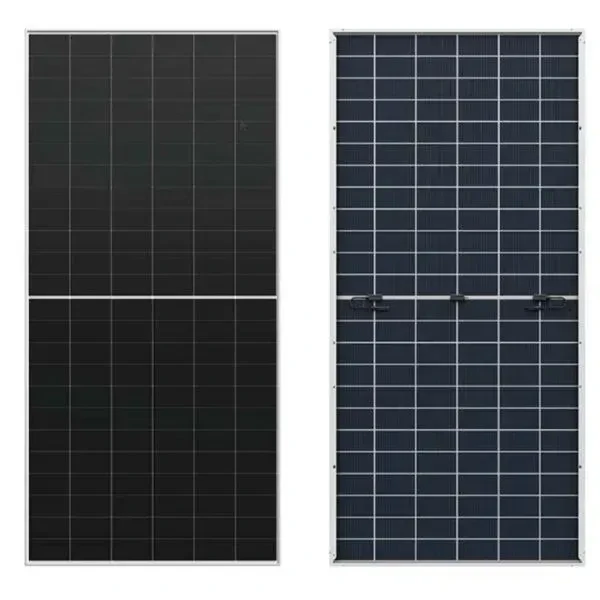
- HPBC 2.0 back-contact cells
- Power from both sides
- Double glass
- Flagship — best seller in Pakistan
- A-grade, documented
- 15-year product warranty
- 30-year performance warranty
Longi Hi-MO X10
N-Type HPBC 2.0 Bifacial
Rs 26,325
Rs 40.5/W
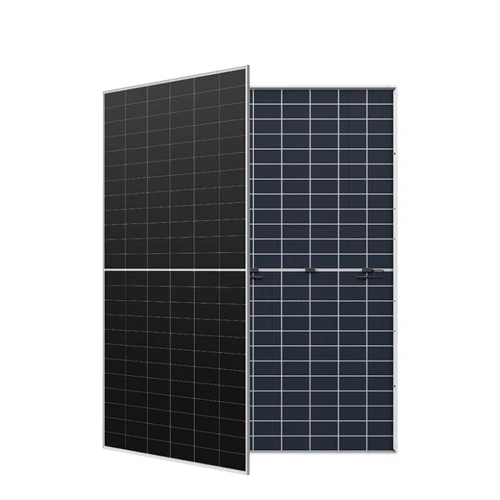
- HPBC 2.0 back-contact cells
- Power from both sides
- Double glass
- Biggest Longi plate in Pakistan
- A-grade, documented
- 15-year product warranty
- 30-year performance warranty
Back-contact leader
Hi-MO X10 with HPBC 2.0 back-contact cells, reported up to 24.8% mass-production efficiency.
Mono silicon since 2000
LONGi built the company on monocrystalline silicon — from wafers to cells to plates.
Updated daily
Every price in the slider above comes from that day’s verified dealer listings — never guessed.
Longi in One Minute — What Makes It Different?
LONGi is one of the biggest plate makers in the world, and it built its name on one thing: mono silicon. That is the pure, single-crystal silicon that makes the most efficient plates. If Jinko is known as the biggest seller, Longi is known as the efficiency leader. That is the one-line version of this brand.
This page lists the longi solar plate price in pakistan for every Longi size with a verified listing today — six sizes, from the 610W plate to the 650W plate. Slide through them with the arrows in the slider at the top. Each card shows the model, the price, and the per-watt rate. Compare the per-watt rate, not the plate price alone. A big plate always costs more, but it can still be cheaper per watt. Or more expensive. The card tells you.
Some people still search for longi 545 watt solar panel price in pakistan today, but the Hi-MO 5 545W is discontinued — no dealer lists it anymore, so there is no verified price to show for it.
Below the slider you will find the plain story: how to pick a size, what Hi-MO and HPBC mean in simple words, how Longi grew from a wafer factory to a world leader, how to check a plate is real, and what else a full system needs. No jargon without an explanation. If a word is new to you, it is explained right where it appears.
Six Wattages, One Slider — Picking the Right Size
Longi sells six sizes in Pakistan right now. The smallest is the 610W plate. Then comes the 615W, the 620W, the 640W, the 645W, and the biggest, the 650W. They come from two generations of the same family. The 610W, 615W and 620W plates are Hi-MO 7. The 640W, 645W and 650W plates are Hi-MO X10 — the newer flagship. Same brand, same quality idea, two generations side by side.
The per-watt rate is the fair way to compare them. Take the plate price and divide it by the wattage. That gives you the price of one watt of power. A 650W plate costs more than a 610W plate — of course it does, it makes more power. But the price per watt tells you which one gives you more power for each rupee. That is why every card in the slider shows the per-watt rate under the price. The cheapest per watt today is the 615W card, so it carries the Best Value badge. The 645W card is the flagship — the plate dealers sell most — but flagship and cheapest are not always the same plate.
How many plates do you need? It depends on your system size. A 5 kW system — the size most Pakistani homes buy — needs nine 610W plates, or nine 615W plates, or nine 620W plates, or eight 640W plates, or eight 645W plates, or eight 650W plates. Fewer plates means fewer mounts, less wiring, and a shorter day for the fitting team. But bigger plates are heavier and need more roof space each. Measure your roof first. A 5-marla house with a water tank and a small roof is often better with the smaller Hi-MO 7 plates. A factory roof or a big farmhouse can take the Hi-MO X10 plates without a problem.
| Plate size | Plates needed for a 5 kW system |
|---|---|
| 610W | 9 plates |
| 615W | 9 plates |
| 620W | 9 plates |
| 640W | 8 plates |
| 645W | 8 plates |
| 650W | 8 plates |
One more thing: the 645W Hi-MO X10 is the best seller in Pakistani dealer listings. That matters, because the best-selling size has the most dealers, the most stock, and the most quotes to compare. If you are not sure which size to buy, start with the 645W card in the slider. It is the safe middle of the range — big enough to keep the plate count low, and common enough that every dealer stocks it.
A few other Longi sizes appear on single-dealer boards — the older 545W plate, a 585W plate and a 600W plate — but they have no listing on the daily dealer tracker today, so they are not in the slider. The Hi-MO X10 range also goes up to 670W, but no Pakistani dealer lists a 660W or 670W plate today. If a listing appears, the slider will gain a card. We never fill a card with a guess.
Hi-MO, HPBC and Back-Contact — The Words, Explained Simply
Longi’s plates carry names that sound like code. Hi-MO. HPBC. HPDC. Back-contact. Here is what each one means, in plain words.
Hi-MO is the name of Longi’s plate family. The number tells you the generation. Hi-MO 5 is the older generation. Hi-MO 6 was the first back-contact generation. Hi-MO 7 is the current mid-range. Hi-MO X10 is the flagship. Think of it like phone models: a higher number usually means newer, but the older ones still work fine and cost less.
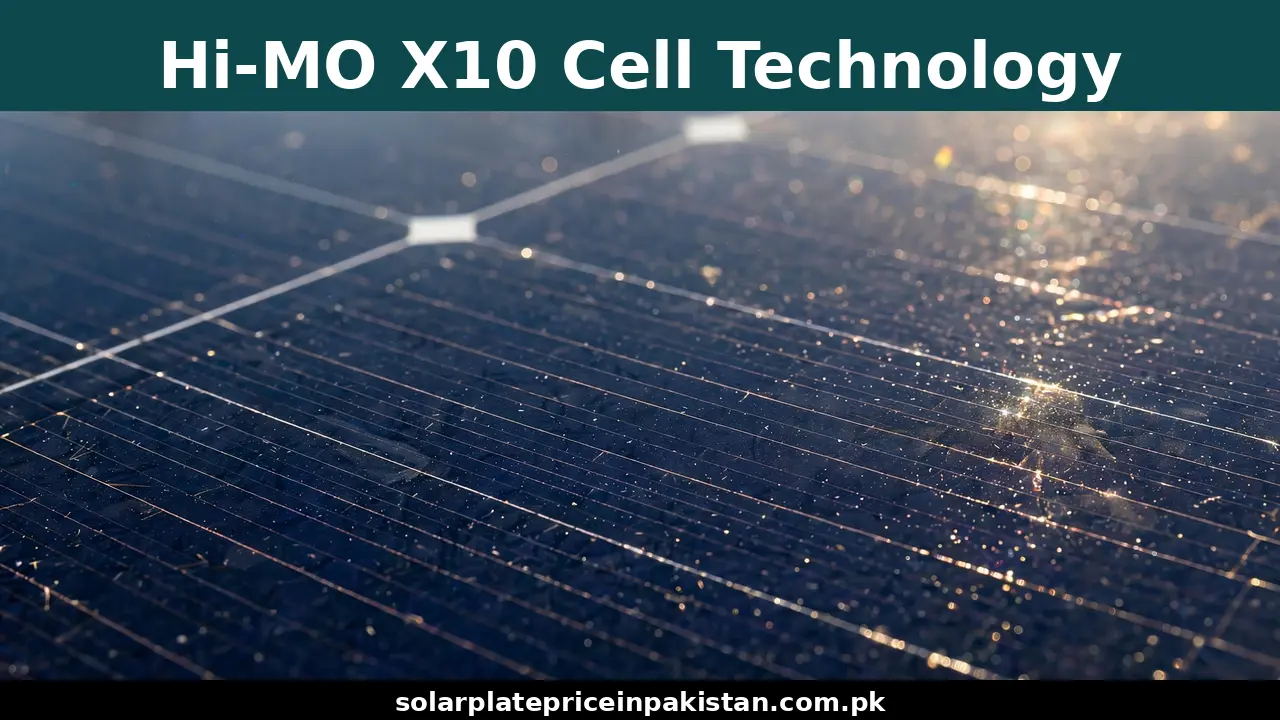
HPBC stands for Hybrid Passivated Back Contact. It is the big idea behind the Hi-MO X10. All the wires move to the back of the cell, so the front is clear and catches more sun. There are no busbars — the thin metal lines you see on a normal plate — on the front at all. More light in, more power out. Hi-MO 6 used the first version, HPBC 1.0. Hi-MO X10 uses HPBC 2.0, the newer version, built on a special wafer called TaiRay, with zero busbars (0BB).
HPDC is the cell design inside Hi-MO 7. The full name is long and you do not need to remember it. What matters is where it sits: it is the step between the older PERC cells and the newer back-contact cells. It gives Hi-MO 7 its efficiency without the back-contact price.
PERC is the older cell design, used in Hi-MO 5. It was a big step when it came out, and millions of PERC plates are still on roofs today. Back-contact is the newer idea that came after it.
Bifacial means the plate makes power from both sides. The front catches the direct sun. The back catches the light that bounces off your roof. On a white roof, with the plate raised up, the back adds a useful bit of extra power. On a dark roof, or a plate fixed flat to the roof, the back adds almost nothing. So the gain is real, but only if the plate is mounted right. A monofacial plate makes power from the front only — the 640W card in the slider is monofacial.
Double glass means the plate has glass on the front and glass on the back, instead of a plastic sheet on the back. Glass lasts longer, it does not go yellow in the sun, and it protects the cells better. It also makes the plate heavier — one more reason to check your roof can hold it. A single-glass plate has glass on the front and a plastic backsheet — lighter, but the back ages faster.
Longi 545 Watt Solar Plate Price in Pakistan Today — Older Hi-MO 5 Stock
If you search for the longi 545 watt solar plate price in pakistan today, you are looking for the older Hi-MO 5 545W plate — a P-type PERC plate from the generation before back-contact cells. That model is reported as discontinued, so what dealers sell now is remaining old stock, and availability is limited. Because it is old stock, quoted figures vary widely between dealers and dates, and there is no single reliable market price for it. This page gives no fixed figure for the 545W plate: if a verified dealer listing for it appears on the day, its row is shown in the slider above with that listing’s price; if no verified listing exists, the card is left out rather than filled with a guess. Ask the dealer for the plate’s serial details and warranty papers, confirm it is A-grade stock, and compare its per-watt rate with the current Hi-MO 6 and Hi-MO 7 plates before paying for old stock.
From Wafers in Xi’an to Roofs in Lahore
LONGi is named after Jiang Longji, a former president of Lanzhou University. In 1986, when Li Zhenguo and Zhong Baoshen had just enrolled at the university, the opening ceremony was held before Jiang Longji’s statue — and the two young students vowed to name their future company after him. Fourteen years later, on 14 February 2000, Li Zhenguo founded the company in Xi’an, Shaanxi Province, China, together with Zhong Baoshen and Li Chunan. Li, a Lanzhou University physics graduate, had built his career in semiconductor materials. The company’s first business was research, development, production and sale of single-crystal (monocrystalline) silicon rods and slices — at a time when most of the industry still used polycrystalline silicon.
The early years were all about mono silicon capacity. In 2005 the first batch of 18 monocrystalline silicon furnaces began operations. In 2006 a 1,000-ton mono silicon ingot project was completed in Ningxia, and by 2009 the company was building a 350 MW mono silicon wafer project. In April 2012 LONGi listed on the main board of the Shanghai Stock Exchange. The decisive turn came in 2014, when LONGi merged with Zhejiang LERRI Solar Technology and moved from wafers into solar cells and plates, and into solar power plants. Its first overseas production base opened in Kuching, Malaysia, in 2016. By 2017 LONGi reported it ranked first in the world in monocrystalline module shipments, and it has stayed at the top of the mono segment since. In 2018 Li Zhenguo presented the “Solar for Solar” concept at the 24th UN Climate Change Conference (COP24). In 2020 LONGi was the solar solution supplier for the China Pavilion at EXPO 2020 Dubai, launched its first BIPV product, “LONGi Roof”, and joined the RE100, EV100, EP100 and Science Based Targets initiatives. It entered green hydrogen in 2021. In 2022 shipments of its Hi-MO 5 series passed 30 GW, and in 2023 the company reported a world record of 27.09% efficiency for crystalline silicon heterojunction back-contact cells. In April 2025 it reported new records of 34.85% for perovskite tandem cells and 27.81% for hybrid interdigitated-back-contact cells. In May 2025 founder Li Zhenguo stepped down as general manager to focus on research.
The key to Longi’s growth is that it makes everything itself: wafers, cells, and finished plates, all in-house. That control is why its plates are known for quality — the company is not waiting on another factory for parts. Pakistani sources describe LONGi as the world’s largest solar plate maker — the same claim is made for Jinko, so treat both as reported claims rather than this site’s own finding. Solar Plate Pakistan is an independent price-information website. We are not an authorized dealer or official partner of LONGi, or of any other brand.
Is Your Longi Plate Genuine? Four Checks
Longi is popular, and popular brands get copied. A fake plate looks right, but it makes less power and it has no real warranty. Here are four checks, in the order to do them.
1. Check the barcode on LONGi’s own site
Every genuine Longi plate carries a barcode and a QR code on its nameplate and pallet. LONGi runs an official Module Authenticity Checker on its own website — longi.com — where you enter the module barcode or digital string code, or scan the QR code, to confirm the specifications. Use only LONGi’s official website for this check; lookalike “verification” sites on the internet are not LONGi.
2. Match the papers to the plate
Ask for the serial details, the flash test report and the warranty papers that match the plate itself, and check that the wattage and model on the papers match the plate you are buying. A dealer who cannot produce the papers is a dealer to walk away from. Also check the hardware: an IP68 junction box, stamped MC4 connectors and clean busbar alignment are the marks of a genuine Tier-1 plate. Get a warranty card that names the importer or distributor.
3. Ask what the quote covers
Ask the dealer whether the quoted price is for the plate alone or includes delivery, and whether tax is included. A lower plate price that excludes delivery can end up costing more. A quote is only valid for the week or day it was given, so confirm the final quote with your dealer before paying.
4. Buy from a shop you can visit again
A genuine plate from a dealer with a shop you can visit is worth more than a slightly cheaper plate from a seller you cannot find again. Be extra careful with a plate priced well below the market band for its size — a bargain plate is usually a B-grade or relabelled plate. The buying guides in the blog explain what else to check.
Beyond the Plate — What a Longi System Still Needs
Plates are only one part of a system. A complete system also needs an inverter, a mounting structure, wiring, safety boxes, and installation. The inverter is the box that turns the plate’s power into the power your home uses. The plate makes DC power — direct current, the kind that flows one way. Your fans and lights run on AC power — alternating current, the kind that flows back and forth. Without an inverter, the plates cannot power your home.
Work out your own size first with the solar load calculator, then use the slider above to price the plates for that size. For full system rates, see the solar system price in Pakistan page. For inverter rates, see the solar inverter price in Pakistan page. For battery rates, see the lithium battery price in Pakistan page. A 5 kW to 6 kW system suits most Pakistani homes — that is the size where the balance of plates, inverter and battery usually works out best.
What Changes the Price in Your City?
Wholesale and retail rates differ by city, and transport adds to the cost outside the main markets. A plate bought in Lahore’s wholesale market is usually cheaper than the same plate delivered to a small town, because the dealer there pays for the truck. See the city pages for the same day’s snapshot: Lahore | Karachi | Peshawar | Multan | Faisalabad. City rates are indicative — always confirm the final quote with a dealer in that city before paying.
About This Page, in Brief
Solar Plate Pakistan is an independent price-information website. We are not an authorized dealer or official partner of LONGi, or of any other brand. The longi solar plate price in pakistan on this page comes from dealer listings collected each morning, and the same model’s price is matched across this page, the homepage and the wattage pages on the same day. Questions about this page can be sent through the Contact Us page, or by email at sohaibkhan127222@gmail.com. More about the site on our About Us page and our Our Team page.
Frequently Asked Questions
What is the Longi solar plate price in Pakistan today?
See the slider at the top of this page. Slide through the six sizes with the arrows. The slider is updated every morning from dealer listings, and the date is in the heading above it.
Which Longi size is best for a home?
It depends on your load and your roof, not on the brand alone. Work out your system size first with the solar load calculator, then pick the size. The 645W Hi-MO X10 is the flagship and the best seller in Pakistan, so it is the safe starting point.
What is the longi 545 watt solar plate price in pakistan today?
The 545W plate is the older Hi-MO 5 model, reported as discontinued, so only limited old stock remains. There is no single reliable market price for it — this page shows its card only when a verified dealer listing exists that day, and never with a guessed figure.
Hi-MO X10 or Hi-MO 7 — which is better?
Hi-MO X10 uses the newer HPBC 2.0 back-contact cells with reported efficiency up to 24.8%, while Hi-MO 7 uses HPDC cells. X10 is the flagship; Hi-MO 7 plates usually cost less per watt. Compare both in the slider above.
Does the Longi price include installation?
No. The slider on this page is plate-only. Inverter, structure, wiring and installation are separate — see the system price page.
How do I check a Longi plate is genuine?
Enter its barcode or digital string code, or scan its QR code, in LONGi’s official Module Authenticity Checker on longi.com, and match the serial, flash report and warranty papers to the plate.
Are these prices a final quote?
No. They are indicative rates from dealer listings. Always confirm the final quote with your dealer before paying. See our Disclaimer.
What is HPBC technology?
HPBC (Hybrid Passivated Back Contact) moves all electrical contacts to the rear of the cell, so the front has no busbars and collects more light. Hi-MO 6 uses HPBC 1.0 and Hi-MO X10 uses HPBC 2.0.
Longi or Jinko — which should I buy?
Both are Tier-1 brands. Longi’s Hi-MO X10 leads on reported back-contact efficiency; Jinko’s Tiger Neo leads on N-type TOPCon. Compare their per-watt rates on our Jinko page and this page before deciding.
Where can I see Longi prices in my city?
See our city pages for Lahore, Karachi, Peshawar, Multan and Faisalabad, linked in the What Changes the Price in Your City section above.