600 Watt Solar Plate Price in Pakistan


600 Watt Solar Plate Price in Pakistan — 23 November 2026
Jolywood N-Type Dual Glass 600W
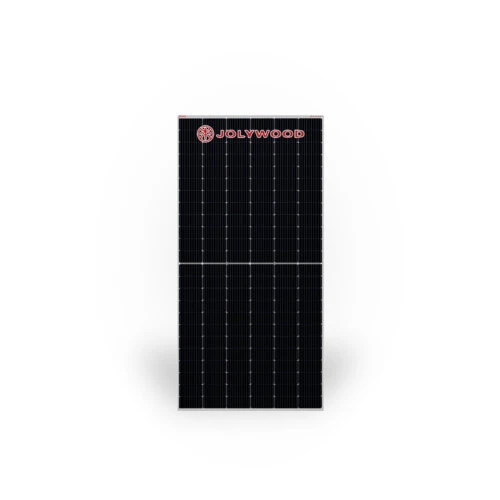
- ✓ Jolywood N-Type
- ✓ Dual Glass
- ✓ Tier-1 brand
Do not compare plates by the plate price alone. Compare the price per watt instead. The price per watt is what you pay for each watt of power the plate makes. The three cards on this page are close together: Inverex is the cheapest, Canadian Solar sits in the middle, and Longi is the most expensive — see today’s prices in the cards above. Even a small difference in the price per watt adds up on one plate alone, and much more when you buy plates for a whole home system. So do not take the highest price per watt as the usual price for a 600W plate.
Three brands offer a verified 600W plate, and the gap between them is real: Inverex is the cheapest, while Longi is the most expensive — see today’s prices in the cards above. Canadian Solar sits in the middle. No verified exact-600W listing was found for Jinko, Trina, JA Solar, Crown, Astronergy or Risen — most brands skip an exact 600W model: Jinko jumps from 590W to 615W, JA from 590W to 605W, Trina from 590W to 610W, Longi from 590W to 610W. For every wattage of each brand, see the brand pages: Jinko | Longi | Canadian Solar | Trina | JA Solar | Inverex. For the 585W class, see the 585 watt solar plate price in Pakistan page, and for the 580W class, the 580 watt solar plate price in Pakistan page.
The 600W plate is the size shoppers search for — but here is the honest truth no competitor page tells you: “600W” is mostly a rounded band, not a single buying class. This page lists the 600 watt solar plate price in pakistan for the plates with verified listings, with the same day’s rates in one place. The rates below match the solar plate price in Pakistan homepage for the same models on the same day. Below the price cards you will find why 600W is so thinly listed, how it compares with 585W, 620W and 645W, how many 600W plates a home needs, what a system costs by size, and how to check a 600W plate is genuine.
A rounded band, not a class
“600W” is the label shoppers search for — the real buying class is 595–620W, and 585W/610W/620W plates carry the live listings.
Today’s prices in the cards above
The Tier-1 band for a 600W plate — see today’s prices in the cards above.
Updated daily
Every price below comes from that day’s verified dealer listings — never guessed.

600W vs 585W — Is 600W Worth It?
A 600W plate is only 15 watts stronger than a 585W plate. That is about 2.6% more. The two plates are the same size, from the same series, with the same warranty and the same cell type. The only real difference is the number on the label. The 585W size is also much easier to check. On solarrate there are 22 listings for 585W plates and none for 600W. So buy by the price per watt, not by the number on the label — see today’s prices in the cards above. A 600W plate does not really save you money per watt. A 600W plate also saves you at most one plate per system. Nine 600W plates make 5.4 kW, and nine 585W plates make 5.27 kW. But you lose the easy price check, because there are so few 600W listings to compare. For example, if a dealer offers a 600W plate at a higher price per watt than a 585W plate, the 585W plate is the better buy. One warning: “600W” is a popular search term with very few real listings, so it is easy to fake. A “600W Tier-1” plate at a price well below the market band is not a bargain. It is a lower-grade plate, or a plate with a changed label. The checks at the bottom of this page show how to tell a real plate from a fake one.
Why the Same 600W Plate Has Different Prices
Five things move the price of the same 600W plate, and none of them is the plate itself:
- Grade — A-grade, B-grade and relabelled plates: A-grade plates are the maker’s first-quality plates, with full warranty papers. B-grade plates are factory seconds: they make less power, have a shorter warranty, and cost less per watt. Relabelled plates are the trap: a lower-grade plate sold under a top-brand name. The gap between A-grade and B-grade is the biggest single reason two quotes for “the same plate” differ by thousands of rupees. As a guide, A-grade plates with papers cost the most per watt, A-grade plates without papers cost less, and B-grade plates cost the least.
- Pallet vs loose: a pallet is a big stack of 30 or more plates. A pallet sells for less per watt than one single plate. A single plate bought at a shop costs more, because it carries the shop’s profit, the handling and the delivery.
- The dollar rate: plates are imported, so the rupee-dollar rate moves the plate price week to week. A quote from last week is not today’s price.
- Season: demand peaks in the summer, when load-shedding and high bills push buyers to install. Prices are usually softer in the winter months — November to February is the best buying window.
- Freight and dealer margin: every plate carries transport costs from Karachi Port on top of its import price. Cities far from Karachi pay more per watt for transport. A showroom also charges more than a wholesale dealer, because its rent and its service are different. The plate is the same. The distance and the service around it are not. Karachi is the cheapest city, then Lahore and Faisalabad, Multan, Islamabad/Rawalpindi, Peshawar and Quetta.
So do not expect one fixed price for a 600W plate. Think of a price range instead: see today’s prices in the cards above for good-quality plates from the top brands in November 2026. And always ask if the price you are given includes GST, the sales tax. There is no customs duty, the tax on bringing goods into the country, on imported plates. The sales tax is 10% since July 2025. So a price that does not include the tax will look cheaper by exactly that much, but you still have to pay the tax. A price is only good for the day or week it was given. Always check the final price with your dealer before you pay.
How Many 600W Plates Do You Need?
That depends on your load, not on the plate alone. Work out your load first with our solar load calculator, then divide the system size you need by 600. The sizing maths is simple: the system size you need in kilowatts equals your daily use in kilowatt-hours divided by the peak sun hours, times a derating of 0.80 for real-world losses. Pakistan averages about 5.5 peak sun hours a day, though solarrate’s 600W page uses a more conservative 4.5 — use the conservative figure when you size, so the system does not disappoint you in winter.
Plate Counts and Roof Area for Common System Sizes
One 600W plate makes about 81 units of power a month, when it gets 4.5 hours of strong sun a day. That is a little more than a 585W plate, which makes about 79 units a month. The plate counts in the table below are for 600W plates. They include a little extra, because the inverter and the wires lose some power on the way to your home. There is one honest disagreement to tell you about. For a 5 kW system, solarrate’s 600W page says about 9 plates, while another guide says 8. Eight 600W plates make 4.8 kW, which is less than 5 kW. Eight 625W plates make exactly 5.0 kW. Nine plates (5.4 kW of plates) is the safe choice, with a little extra.
| System size | 600W plates needed | Plate capacity (DC) | Roof area needed |
|---|---|---|---|
| 3 kW | 5 plates | 3.00 kW | ~13 m² |
| 5 kW | 8–9 plates | 4.80–5.40 kW | ~21–23 m² (350–450 sq ft) |
| 6 kW | 10 plates | 6.00 kW | ~26 m² |
| 10 kW | 17 plates | 10.20 kW | ~44 m² |
| 15 kW | 25 plates | 15.00 kW | ~65 m² |
| 20 kW | 34 plates | 20.40 kW | ~88 m² |
Each large plate covers about 2.6 square metres, and a home needs roughly 65–70 square feet of roof per kilowatt. For full system rates, see our solar system price in Pakistan page.
600W vs 620W vs 645W — Which Size to Pick?
A 600W plate sits in the middle of a price range, and the real next step up is a 620W or 625W plate, not the 600W itself. A 620W plate saves you about one plate per 5 kW system. Eight 620W plates make 4.96 kW. And 620W plates have real dealer listings you can check. Longi’s 645W plate costs more per watt than a 585W plate. It only makes sense when your roof space is truly tight. Jinko’s Tiger Neo 3.0 645W is also listed. Pick 700W plates only for a roof where space is so short that you must use as few plates as possible. They cost the most per watt and are the hardest to find. For most homes, the right question is not “which wattage is best?” It is “which wattage gives me the lowest price per watt from a dealer I trust, with a listing I can check?” In November 2026, that is usually a 585W or 620W plate, not the thinly listed 600W. If your inverter can handle the higher voltage these big plates make (what installers call the MPPT input voltage), then 600–620W plates are the right size for you. If not, 580W or 585W plates are the sweet spot.
Solar System Cost with 600W Plates by Size
The plates are only part of what you pay for. A full solar system also needs an inverter, which is the box that changes solar power into power your home can use, the metal frame that holds the plates, batteries (only if you choose a hybrid system), wires, and the work to install it all. For system prices by size, see our solar system price in Pakistan page. Treat those prices as a guide, not a fixed price, because one quote may include the frame and the net metering work, and another may not. So always compare quotes that list the same items. The plates are roughly 45 to 55% of a system’s installed cost. The inverter is about 30%, the frame about 14%, the cables and safety parts about 10%, and the fitting work about 8%.
| System size | Typical use | System price |
|---|---|---|
| 3 kW | Small home, fans + lights + fridge | See system prices |
| 5 kW | Medium home, daytime load | See system prices |
| 7 kW | Large home, daytime load | See system prices |
| 10 kW | Large home, full daytime load | See system prices |
| 15 kW | Commercial / large house | See system prices |
A hybrid system costs about 30–40% more than an on-grid system of the same size, because of the battery and the hybrid inverter. One other guide quotes much lower hybrid figures, so treat the prices on the system price page as a guide, not a single truth, and compare quotes with the same items listed. Work out your own size first with the solar load calculator, then use the cards at the top of this page to price the plates for that size. For inverter rates, see our solar inverter price in Pakistan page, and for battery rates, see our lithium battery price in Pakistan page.
Best 600W Plates — Technology Compared
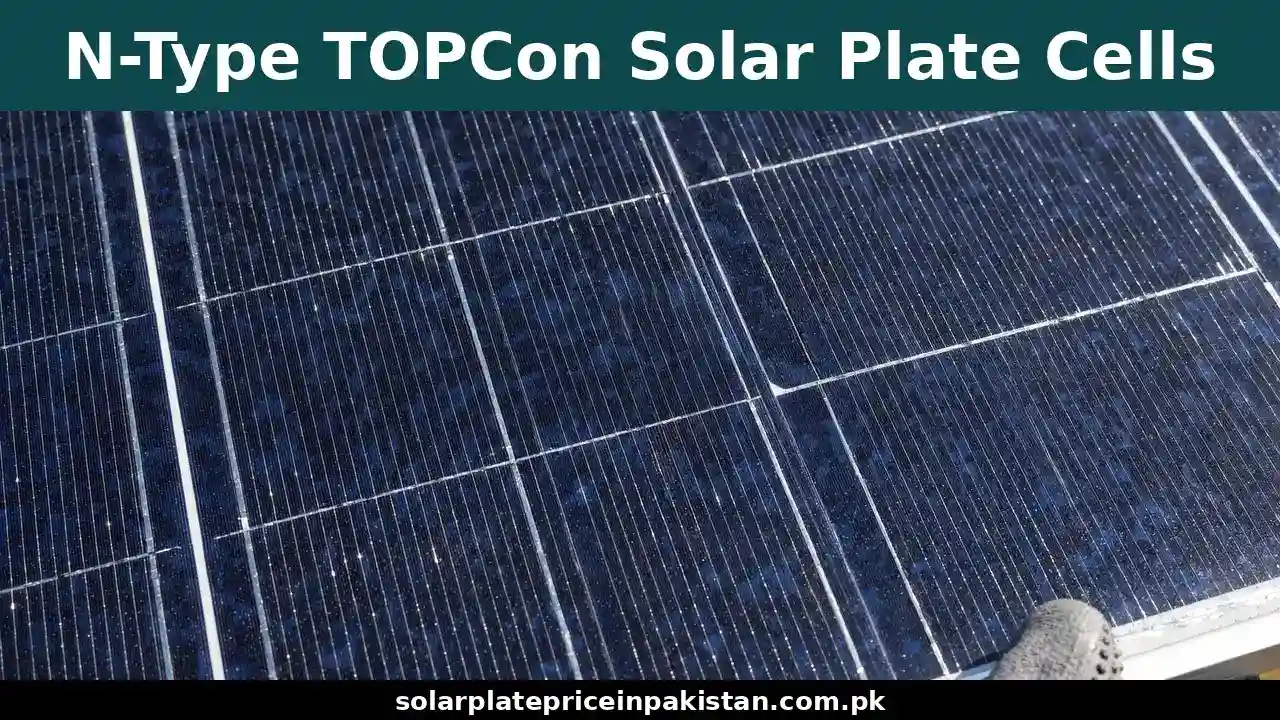
The plates that do best in Pakistan are the ones that lose the least power when they get hot, and that still work well when the light is weak. The temperature coefficient is the number that tells you how much power a plate loses as it heats up. A smaller number is better, because the plate loses less on a hot roof. The best choice is N-type TOPCon plates first, then HJT plates, then the older P-type PERC plates. N-type TOPCon is the normal 600W type today. Inverex’s Jolywood 600W is an N-type plate with glass on both sides (dual glass), and ZN Shine’s 600W is an N-type bifacial plate. Bifacial means the plate makes power from both sides: it adds 5 to 15% from the back side when it is fixed high enough above a light-coloured roof. Longi’s Hi-MO X9 600W is an N-type HPBC 2.0 plate. HPBC is a back-contact type, which means the wires are on the back, so the front is a clean all-black look. It handles heat well. Here is how the three cell types compare. N-type TOPCon turns 22 to 23% of the sunlight into power, and it loses about 0.4% of its power each year after about 1% in the first year. It is the current standard. HJT turns 23 to 24% of the sunlight into power, and it loses about 0.35% a year. It is the top choice, and the best in heat. Mono-PERC turns 20 to 21% of the sunlight into power, and it loses about 0.55% a year. It is the older type, and it is now being phased out. Back-contact plates (Longi’s HPBC X10, Aiko’s ABC) give the most watts per square metre of roof, but they cost more per plate. Top brands (Tier-1) give a 12-year product warranty and a 25 to 30 year performance warranty. That means the plate should still make 80% of its power in year 25. On a hot Pakistani roof, the temperature coefficient is the number that matters most. Here are the reported values. Jinko’s Tiger Neo is −0.29% per degree, Longi’s Hi-MO X10 is −0.26% per degree, Canadian Solar’s HJT HiHero+ is −0.24% per degree, JA Solar’s DeepBlue 4.0 is −0.30% per degree, and Trina’s Vertex N is −0.29 to −0.34% per degree. A plate at −0.24% per degree loses clearly less power on a 45°C afternoon than a plate at −0.34% per degree. No source in this research gave checked 600W size or weight, so none are given here. The 2278 × 1134 mm frame and about 27 to 32 kg weight are checked for 585W plates of the same series. A 600W plate is a higher-output version of the same physical size, but that is a guess, not a checked 600W figure.
How to Verify a Genuine 600W Plate
1. Match the serial under the glass with the back label
Every genuine Tier-1 plate carries a serial number printed on the back label, with a matching serial sealed under the front glass, and a matching barcode on the frame sticker. Check that all three match each other and the model and wattage on the label — and check a few plates from each batch, not just one.
2. Check it on the brand’s own website or app
Check the plate on the brand’s own website or app. Jinko is at cs.jinkosolar.com (the Jinko QR app), Longi at longi.com (the Longi Barcode App), Canadian Solar at canadiansolar.com, Trina at trinasolar.com, JA Solar at jasolar.eu, and Inverex at inverexsolar.pk. Do not use a QR code or a link the shop gives you instead. Use only the brand’s official website for this check. There are lookalike “check” websites that are not the brand. One more sign: a QR code set into the glass itself is real. A paper or plastic sticker with a QR code is fake.
3. Ask for the serial details, flash report and warranty papers
Ask for the papers that match the plate itself: the serial details, the flash test report, the packing list, and the invoices that show where it came from. Check that the wattage, the Vmp, the Isc and the model code on the papers match the plate you are buying. Vmp is the voltage the plate makes at its best, and Isc is the highest current it can make. If a dealer cannot show you the papers, walk away. Also check the hardware. The marks of a real top-brand plate are an IP68 junction box (the sealed box where the wires join), stamped MC4 connectors (the plugs that join the plates), and clean, straight rows of the metal lines on the plate. Also look at the glass and frame for fine cracks. And get a warranty card that names the importer or distributor.
4. Buy from a dealer you can return to
A genuine plate from a dealer with a shop you can visit is worth more than a slightly cheaper plate from a seller you cannot find again. Be extra careful with a 600W plate priced well below the market band — a “Tier-1 600W” plate at a price well below the market band is not a bargain, it is a B-grade or relabelled plate. The buying guides in the blog explain what else to check.
Inverter and Battery Pairings for 600W Arrays
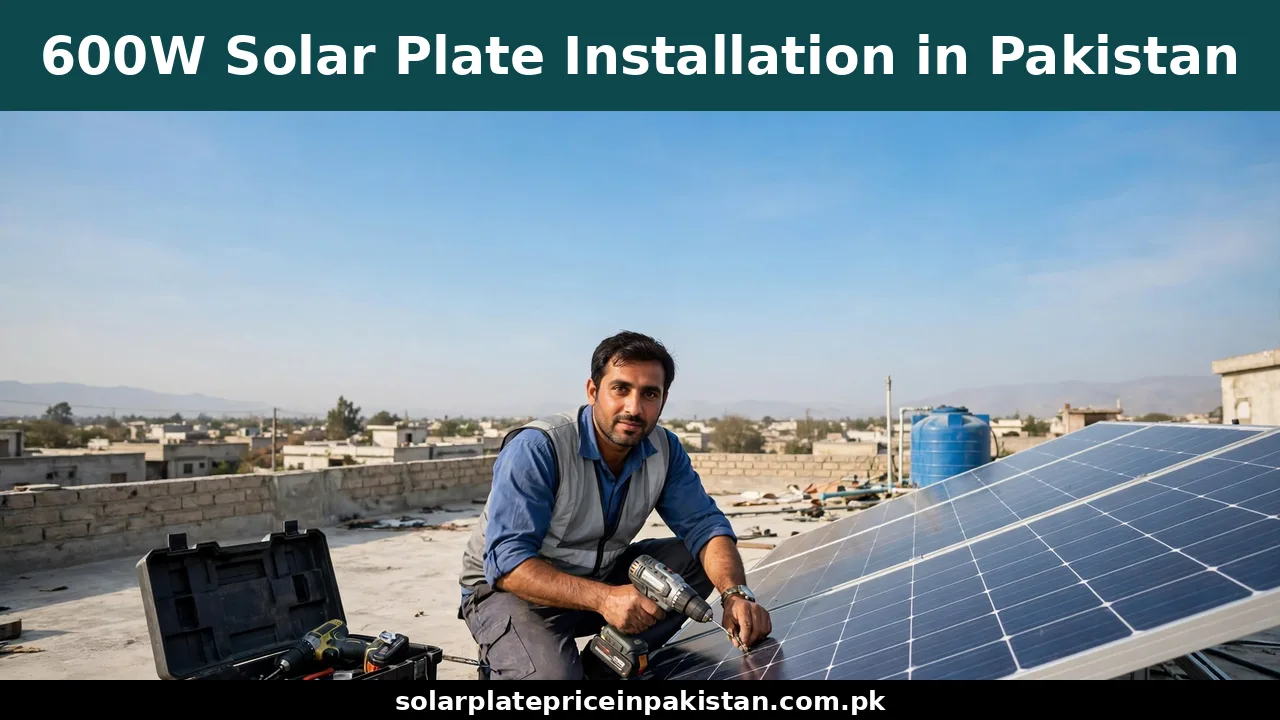
The plate is only half the system. For a 600W array, the inverter decides how much of the plate’s output you actually use: on-grid inverters suit homes with stable supply and daytime load, hybrid inverters suit homes that need backup during load-shedding, and off-grid suits homes with no grid at all. Because a 600W array is usually 9 plates for 5 kW or 17 plates for 10 kW, the strings are short — 8 to 12 plates per MPPT string is typical — and the string maths is the same as for 585W plates: most 585W and 600W plates run at an open-circuit voltage of about 52V, so a string of 10 sits close to 520V open-circuit, comfortably under the 550–600V MPPT ceiling on most hybrid inverters. But check your inverter’s maximum input voltage before stringing 10 or more in series, especially in winter, when cold-weather voltage rises above the standard test figure. Keep strings matched in count and orientation. A bifacial plate needs 10–15 cm of rear ventilation clearance, or the rear gain is lost. Under NEPRA’s 2026 rules, each string needs its own DC protection: a DC breaker sized at 1.25 times the string short-circuit current, a 15–25 A gPV DC fuse, a 1000 V DC surge protector and a DC isolator — the DC protection adds to the system cost. The mounting matters too: an L2 single-plate structure adds to the cost, the tilt should be 25–30° facing south for Pakistan, and a bifacial plate needs 50–100 cm of elevation above a white roof to earn its rear-side gain. In Punjab, seasonal winds reach 90 km/h, so a ground-mount above 5 kW should be galvanised steel, not aluminium. For batteries, dealers stock lithium (LFP) first, then tubular and Osaka/AGS/Phoenix lead-acid — lithium costs more up front and lasts longer, tubular is the budget backup. Compare inverter rates on our solar inverter price in Pakistan page and battery rates on our lithium battery price in Pakistan page before you choose. Under net billing, a hybrid system with batteries — which stores the daytime units for the evening instead of exporting them cheap — pays back faster than an on-grid system of the same size, because exports now pay far less than imports.
Tax on 600W Solar Plates
There is no customs duty on solar plates in Pakistan. That is 0%. The sales tax on imported plates is 10% since July 2025. The 18% rise that was reported in early 2026 was dropped from the Finance Bill 2026-27, so 10% is the number to use. The 2026-27 budget kept the 10% figure. The other parts of a system carry their own duty: inverters 5 to 10%, batteries 10 to 15%, the frame 10 to 15%, and cables up to 20%. Ask your dealer if the plate price you are given includes the 10% sales tax. A price that does not include it will look cheaper by exactly that much, but you still have to pay the tax.
About This Wattage Page
Solar Plate Pakistan is an independent price-information website. We are not an authorized dealer or official partner of any brand. Prices on this page come from dealer listings collected each morning, and the same model’s price is matched across this page, the homepage and the brand pages on the same day. The 600W class is thinly listed because “600W” is mostly a rounded band — if the table above has two rows, that is the honest picture of the day’s verified listings, not a mistake, and the table is re-checked every morning because solarrate could list its first 600W plate any day. Questions about this page can be sent through the Contact Us page, or by email at sohaibkhan127222@gmail.com. More about the site on our About Us page and our Our Team page. The rules that govern this page are set by the National Electric Power Regulatory Authority (NEPRA), under the Prosumer Regulations 2026 (S.R.O. 251(I)/2026).
Frequently Asked Questions
What is the 600 watt solar plate price in Pakistan today?
Look at the cards at the top of this page. Inverex is the cheapest, and Longi is the most expensive — see today’s prices in the cards above.
Which brands sell a 600W plate?
Three brands have a real 600W plate with a card on this page: Inverex Jolywood 600W, Longi Hi-MO X9 600W and Canadian N-Type 600W. Most brands do not make an exact 600W plate at all. They jump from 590W straight to 610W or 620W. No checked 600W listing was found for Jinko, Trina, JA Solar, Crown, Astronergy or Risen.
Is 600W better than 585W?
Only by 15 watts, which is about 2.6%. The two plates are the same size, from the same series, with the same warranty and the same cell type. Buy by the price per watt, not by the number on the label. A 585W plate usually sells for less per watt, and there are far more listings to check it against.
How many 600W plates do I need for a 5kW system?
8–9 plates. Nine plates (5.4 kW of plates) is the safe oversize; 8 × 600W is 4.8 kW, which is under 5 kW. Work out your own size first with the solar load calculator.
How many units does one 600W plate make per month?
About 81 units a month, when it gets 4.5 hours of strong sun a day. That is a little more than a 585W plate, which makes about 79 units a month.
What is the 600W price per watt?
See today’s prices in the cards above. A-grade plates with papers cost the most, A-grade plates without papers cost less, and B-grade plates cost the least.
600W vs 620W — which to buy?
A 620W plate saves you about one plate per 5 kW system, and there are real dealer listings you can check. If the price per watt of a 620W plate is close to the price per watt of a 600W plate, buy the 620W plate.
How do I verify a genuine 600W plate?
Check that the serial number sealed under the front glass matches the serial on the back label and the barcode on the frame. Then check the plate on the brand’s own website or app. And ask for the serial details, the flash test report and the warranty papers that match the plate.
What does a complete 600W system cost?
The card prices on this page are plate-only — see the system price page for full rates.
When is the best time to buy 600W plates?
November to February, when demand is lowest and prices are usually softer. A quote is only valid for the week or day it was given, so confirm the final quote with your dealer before paying. See our Disclaimer.