Canadian Solar Plate Price in Pakistan

Canadian Solar Plate Price in Pakistan — 23 November 2026
Canadian TOPHiKu6
N-Type TOPCon Bifacial, Double Glass
Rs 23,195
Rs 39.6/W
★ Best Value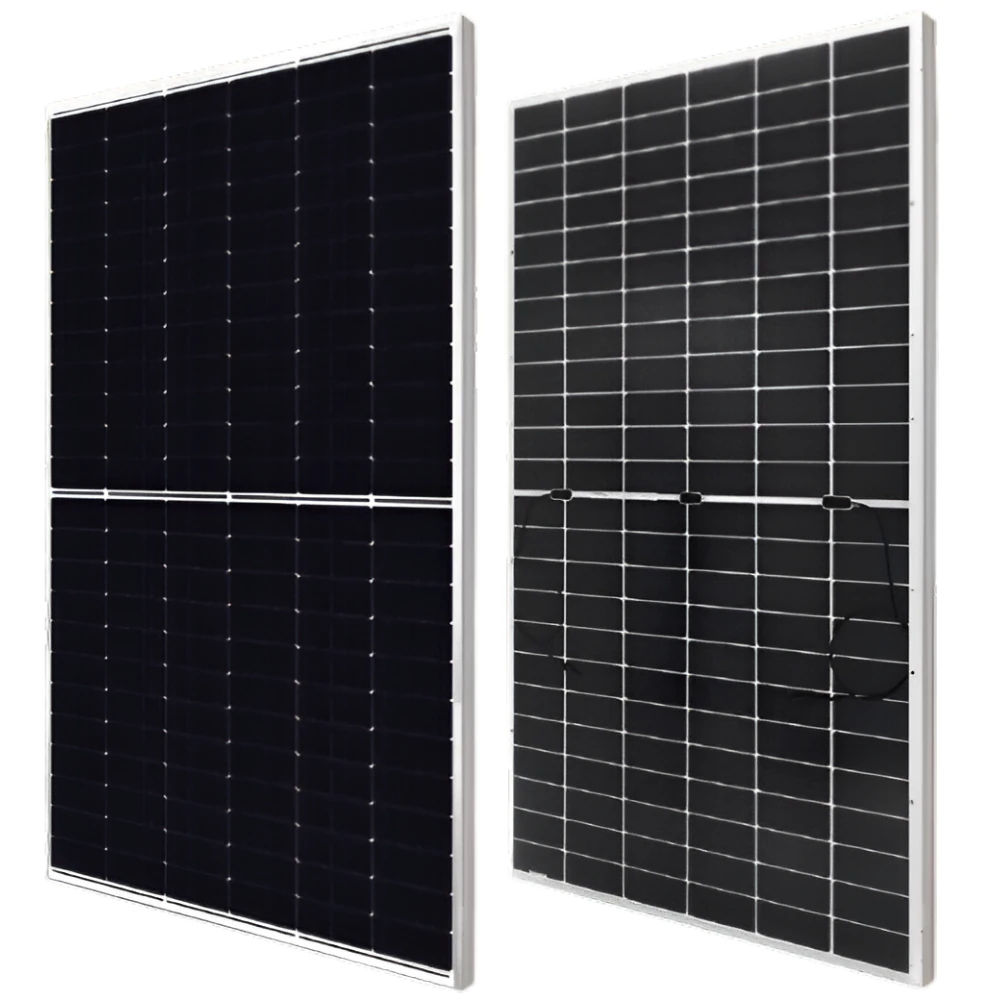
- N-Type TOPCon bifacial cells
- Power from both sides
- Double glass
- Most sold Canadian size in Pakistan
- A-grade, documented
- 12-year product warranty
- 30-year performance warranty
Canadian N-Type
Bifacial
Rs 23,600
Rs 40.0/W
- N-Type bifacial cells
- Power from both sides
- Double glass
- A-grade, documented
- 12-year product warranty
- 30-year performance warranty
Canadian N-Type
TOPCon Bifacial, Double Glass
Rs 30,333
Rs 49.7/W
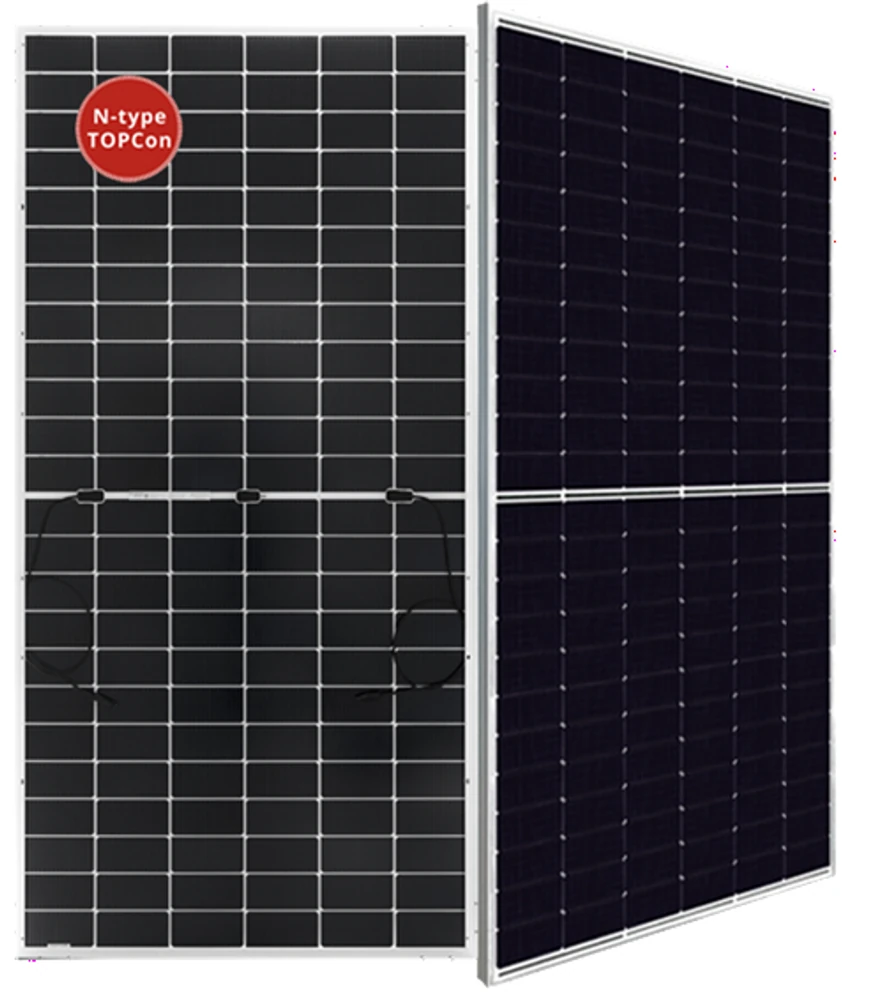
- N-Type TOPCon bifacial cells
- Power from both sides
- Double glass
- A-grade, documented
- 12-year product warranty
- 30-year performance warranty
Canadian TOPHiKu7
N-Type TOPCon Bifacial
Rs 24,600
Rs 40.0/W
- N-Type TOPCon bifacial cells
- Power from both sides
- Double glass
- A-grade, documented
- 12-year product warranty
- 30-year performance warranty
Canadian TOPHiKu7
N-Type TOPCon Bifacial
Rs 24,335
Rs 39.3/W
- N-Type TOPCon bifacial cells
- Power from both sides
- Double glass
- A-grade, documented
- 12-year product warranty
- 30-year performance warranty
Canadian HiHero+
HJT N-Type Bifacial
Rs 25,625
Rs 41.0/W
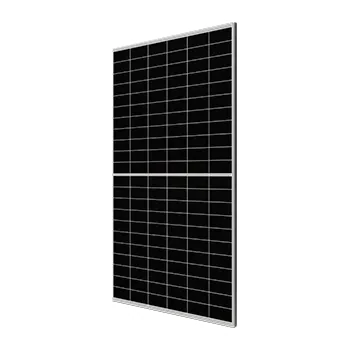
- HJT N-Type bifacial cells
- Power from both sides
- Double glass
- HiHero+ — premium HJT
- A-grade, documented
- 25-year product warranty
- 30-year performance warranty
Canadian HJT
N-Type Bifacial
Rs 26,670
Rs 42.0/W
- HJT N-Type bifacial cells
- Power from both sides
- Double glass
- A-grade, documented
- 25-year product warranty
- 30-year performance warranty
Canadian N-Type
TOPCon Bifacial, Double Glass
Rs 29,187
Rs 41.4/W
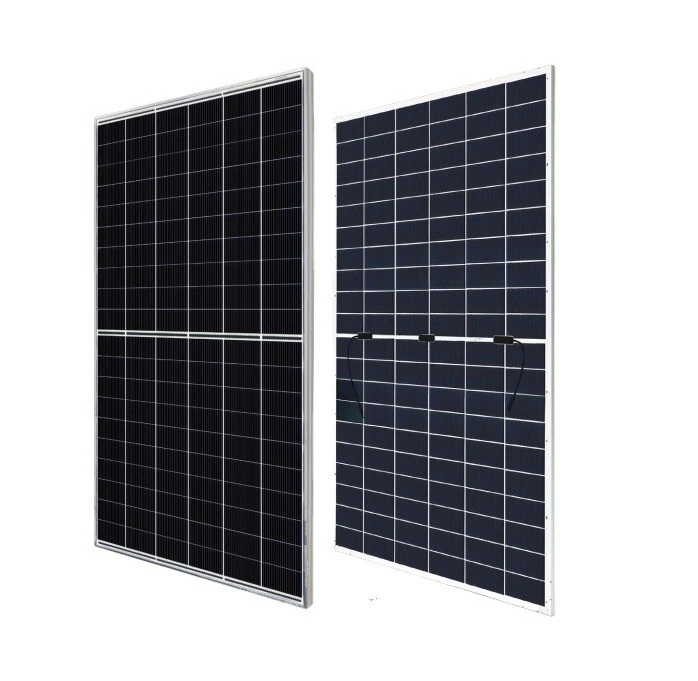
- N-Type TOPCon bifacial cells
- Power from both sides
- Double glass
- A-grade, documented
- 12-year product warranty
- 30-year performance warranty
Canadian N-Type
TOPCon Bifacial, Double Glass
Rs 29,998
Rs 42.3/W
- N-Type TOPCon bifacial cells
- Power from both sides
- Double glass
- A-grade, documented
- 12-year product warranty
- 30-year performance warranty
Canadian N-Type
Bifacial
Rs 29,959
Rs 41.9/W
- N-Type bifacial cells
- Power from both sides
- Double glass
- Biggest Canadian plate in Pakistan
- A-grade, documented
- 12-year product warranty
- 30-year performance warranty
The value pick of Tier-1
Canadian plates are known as the budget-friendly choice among the big Tier-1 brands — same bankability, usually a lower per-watt rate.
Canadian since 2001
Founded in Guelph, Ontario, by Dr. Shawn Qu — listed on NASDAQ since 2006, with plates in 160+ countries.
Updated daily
Every price in the slider above comes from that day’s verified dealer listings — never guessed.
Canadian Solar in One Minute — Why It Costs Less per Watt
Canadian Solar is the value pick of the big Tier-1 brands. It is not the flashiest name on a dealer’s board, and it is not the most expensive. It is the one buyers pick when they want a trusted brand without paying the top price. That is the one-line version of this brand.
This page lists the canadian solar plate price in pakistan for every Canadian size with a verified listing today — ten sizes, from the 585W plate to the 715W plate. Slide through them with the arrows in the slider at the top. Each card shows the model, the price, and the per-watt rate. Compare the per-watt rate, not the plate price alone.
This page lists the canadian solar panel price in pakistan for every TOPHiKu6 size.
A big plate always costs more, but it can still be cheaper per watt. Or more expensive. The card tells you.
Below the slider you will find the plain story: how to pick a size, what TOPCon and HJT mean in simple words, how Canadian Solar grew from a small Canadian company to a world maker, how to check a plate is real, and what else a full system needs. No jargon without an explanation. If a word is new to you, it is explained right where it appears. The canadian solar plate price in pakistan is the thread that runs through this page — the slider at the top, the size guide, and the city section all use the same day’s rates.
Ten Sizes, One Slider — Finding Your Fit
Canadian sells ten sizes in Pakistan right now. The smallest is the 585W plate. Then come the 590W, 610W, 615W, 620W, 625W and 635W plates. Then the big ones: the 705W, the 710W, and the biggest, the 715W.
They fall into two families. The 585W to 620W plates and the 705W to 715W plates are TOPCon plates — the mainstream N-type technology. The 625W and 635W plates are HJT plates — the premium technology, sold under the HiHero+ name. Same brand, same quality idea, two technologies side by side — and the canadian solar plate price in pakistan for each size is on its card in the slider above.
The per-watt rate is the fair way to compare them. Take the plate price and divide it by the wattage. That gives you the price of one watt of power. A 715W plate costs more than a 585W plate — of course it does, it makes more power.
But the price per watt tells you which one gives you more power for each rupee. That is why every card in the slider shows the per-watt rate under the price. When you compare the canadian solar plate price in pakistan across brands, compare the per-watt rate — not the plate price alone. The cheapest per watt today is the 585W card, so it carries the Best Value badge.
The 620W card ties it exactly on per-watt — same rate — but the 585W card is the flagship and the best seller, so the badge sits on the 585W card.
How many plates do you need? It depends on your system size. A 5 kW system — the size most Pakistani homes buy — needs nine 585W plates, or nine 590W plates, or nine 610W plates, or nine 615W plates, or nine 620W plates, or eight 625W plates, or eight 635W plates, or eight 705W plates, or eight 710W plates, or seven 715W plates. Fewer plates means fewer mounts, less wiring, and a shorter day for the fitting team.
But bigger plates are heavier and need more roof space each. Measure your roof first. A 5-marla house with a water tank and a small roof is often better with the smaller TOPHiKu plates. A factory roof or a big farmhouse can take the 705W to 715W plates without a problem.
| Plate size | Plates needed for a 5 kW system |
|---|---|
| 585W | 9 plates |
| 590W | 9 plates |
| 610W | 9 plates |
| 615W | 9 plates |
| 620W | 9 plates |
| 625W | 8 plates |
| 635W | 8 plates |
| 705W | 8 plates |
| 710W | 8 plates |
| 715W | 7 plates |
One more thing: the 585W TOPHiKu6 is the best seller in Pakistani dealer listings. That matters, because the best-selling size has the most dealers, the most stock, and the most quotes to compare. If you are not sure which size to buy, start with the 585W card in the slider — it is the size most buyers check first when they look up the canadian solar plate price in pakistan. It is the safe middle of the range — big enough to keep the plate count low, and common enough that every dealer stocks it.
A few other Canadian sizes appear on single-dealer boards — a 600W plate, a 630W plate, a 650W plate and a 700W plate — but they have no listing on the daily dealer tracker today, so they are not in the slider. If a listing appears, the slider will gain a card. We never fill a card with a guess.
Why Does the 610W Card Cost So Much More?
If you slide through the cards, one thing will jump out: the 610W card costs far more per watt than the rest. That is not a mistake, and the plate itself is not special. The 610W card comes from a single dealer listing, and that dealer’s board lists prices that include tax in the per-watt rate, so its figures run higher than the other dealers. The same dealer is behind the expensive 580W and 590W cards on the Jinko page.
The plate is a normal TOPCon plate — same cells, same glass, same warranty as the others. If you want a 610W plate, ask two or three dealers and compare their quotes before paying. The card shows the only verified listing today, not the cheapest possible price.
TOPCon, HJT and Bifacial — the Words in Plain English
Canadian plates carry names that sound like code — TOPCon, HJT, HiKu, Bifacial.
Here is what each one means, in plain words.
TOPCon is the cell design inside most Canadian plates today. It stands for Tunnel Oxide Passivated Contact — you do not need to remember that. What matters is what it does: it squeezes more power out of the same sunlight, and it loses less power on a hot afternoon.
TOPCon is the mainstream choice now. The TOPHiKu6 and TOPHiKu7 plates in the slider are all TOPCon plates.
HJT stands for heterojunction. It is the premium cell design, used in the HiHero and HiHero+ plates. An HJT plate makes a little more power from the same sunlight, loses even less in the heat, and wears out more slowly over the years. It also costs more per watt.
Think of it like a phone: TOPCon is the good mid-range phone, HJT is the flagship. Both work well. The flagship just costs more — and that is why the canadian solar plate price in pakistan for HJT plates sits above the TOPCon plates on the same page.
HiKu is Canadian Solar’s name for its high-power plate family. The older HiKu plates used PERC cells — the generation before TOPCon. TOPHiKu is the same family with TOPCon cells inside.
The number tells you the size: TOPHiKu6 plates are the 560–580W range, TOPHiKu7 plates are the 615–635W range and up. BiHiKu means the plate is bifacial — it makes power from both sides.
Bifacial means the plate makes power from both sides. The front catches the direct sun. The back catches the light that bounces off your roof. On a white roof, with the plate raised up, the back adds a useful bit of extra power.
On a dark roof, or a plate fixed flat to the roof, the back adds almost nothing. So the gain is real, but only if the plate is mounted right. A monofacial plate makes power from the front only.
Double glass means the plate has glass on the front and glass on the back, instead of a plastic sheet on the back. Glass lasts longer, it does not go yellow in the sun, and it protects the cells better. It also makes the plate heavier — one more reason to check your roof can hold it. A single-glass plate has glass on the front and a plastic backsheet — lighter, but the back ages faster.
Temperature coefficient is a number that tells you how much power a plate loses when it gets hot. It is written like −0.29%/°C. That means for every degree above 25°C, the plate loses 0.29% of its power. A smaller number is better.
Canadian’s TOPCon plates are reported at −0.29 to −0.30%/°C, and the HJT plates at −0.24%/°C. On a Lahore rooftop in June, that difference adds up.
Canadian Solar Plate Price in Pakistan: TOPCon or HJT — Which One Suits Your Roof?
TOPCon is the mainstream choice: the TOPHiKu6 585W is the best seller, widely stocked, and usually the cheapest per watt. HJT (HiHero+) is the premium choice: reported efficiency up to 23.0%, a lower temperature coefficient of −0.24%/°C, slower wear over the years, and a 30-year performance warranty — but it costs more per watt and is stocked by fewer dealers. For a home roof with limited space, HJT’s extra efficiency can be worth it; for a large roof where the budget matters more, TOPCon gives the better value. Compare both in the slider above before deciding.

From Guelph to 100 GW — the Canadian Solar Story
Canadian Solar was founded in 2001 in Guelph, Ontario, Canada, by Dr. Shawn Qu — a Chinese-Canadian entrepreneur with a background in materials science and semiconductor physics, and a PhD from the University of Toronto. The company began with module manufacturing in China in 2001 and shipped its first modules to Europe in 2002.
It expanded in Suzhou in 2007, reached 100 MW of capacity in 2008, and passed 1 GW of cumulative shipments in 2010. It also built manufacturing in Ontario — first in Guelph in 2011, then in London, Ontario, in 2014. On 9 November 2006 Canadian Solar listed on the NASDAQ stock exchange under the ticker CSIQ, at $15 a share — one of the first Chinese solar makers to list in the United States.
The company grew into a vertically integrated maker — that means it makes the ingots, the wafers, the cells and the finished plates itself, instead of buying parts from other factories — plus project development and energy storage, organised in two parts: CSI Solar (plates and e-STORAGE battery storage) and Recurrent Energy (big solar project development). In 2015 it bought Recurrent Energy from Sharp for about $265 million. In 2017 it launched its mono PERC line and passed 20 GW of cumulative shipments; in 2018 came the BiKu bifacial series, and in 2019 the HiKu large-format series, with cumulative shipments passing 40 GW.
In 2020 it launched HiKu6 and HiKu7, created the e-STORAGE division, passed 50 GW of cumulative shipments, and reported a world-record 23.81% efficiency for an n-type multicrystalline cell in March 2020. In 2021 it launched SolBank battery storage and passed 60 GW; in 2022 it announced US manufacturing plans and passed 70 GW. In 2023 cumulative shipments passed 80 GW, full-year 2022 revenue was reported at about $7.47 billion (a record), its first US plant opened in Mesquite, Texas, in June 2023, and CSI Solar listed on the Shanghai Stock Exchange the same month. In 2024 cumulative module shipments passed 100 GW, with modules reported in more than 160 countries.
In January 2025 the company opened its new global headquarters in Kitchener, Ontario. Solar Plate Pakistan is an independent price-information website. We are not an authorized dealer or official partner of Canadian Solar, or of any other brand.
Is Your Canadian Plate Real? Four Checks
Canadian is popular, and popular brands get copied. A fake plate looks right, but it makes less power and it has no real warranty. Here are four checks, in the order to do them.
1. Match the serial under the glass with the back label
Every genuine Canadian Solar plate carries a serial number printed on the back label, with a matching serial sealed under the front glass. Check that both serials match each other and the model and wattage on the label.
2. Check it on Canadian Solar’s own website
Confirm the plate on Canadian Solar’s own website — canadiansolar.com — and keep the invoice and warranty card that match the plate. Check a few plates from each batch, not just one.
3. Ask what the quote includes
Ask the dealer whether the quoted price is for the plate alone or includes delivery, and whether tax is included. A lower plate price that excludes delivery can end up costing more. A quote is only valid for the week or day it was given, so confirm the final quote with your dealer before paying.
4. Buy from a dealer you can return to
A genuine plate from a dealer with a shop you can visit is worth more than a slightly cheaper plate from a seller you cannot find again. Be extra careful with a plate priced well below the market band for its size — a bargain plate is usually a B-grade or relabelled plate. The buying guides in the blog explain what else to check.
What Else a Canadian System Needs
Plates are only one part of a system. A complete system also needs an inverter, a mounting structure, wiring, safety boxes, and installation. The inverter is the box that turns the plate’s power into the power your home uses.
The plate makes DC power — direct current, the kind that flows one way. Your fans and lights run on AC power — alternating current, the kind that flows back and forth. Without an inverter, the plates cannot power your home.
Work out your own size first with the solar load calculator, then use the slider above to price the plates for that size. The canadian solar plate price in pakistan on this page is plate-only — the system page adds the inverter, structure and fitting costs. For full system rates, see the solar system price in Pakistan page.
For inverter rates, see the solar inverter price in Pakistan page. For battery rates, see the lithium battery price in Pakistan page. A 5 kW to 6 kW system suits most Pakistani homes — that is the size where the balance of plates, inverter and battery usually works out best.

Canadian Solar Plate Price in Pakistan — City by City
The canadian solar plate price in pakistan differs by city. Wholesale and retail rates are not the same everywhere, and transport adds to the cost outside the main markets.
A plate bought in Lahore’s wholesale market is usually cheaper than the same plate delivered to a small town, because the dealer there pays for the truck. See the city pages for the same day’s snapshot: Lahore | Karachi | Peshawar | Multan | Faisalabad. City rates are indicative — always confirm the final quote with a dealer in that city before paying.
A Quick Note About This Page
Solar Plate Pakistan is an independent price-information website. We are not an authorized dealer or official partner of Canadian Solar, or of any other brand. The canadian solar plate price in pakistan on this page comes from dealer listings collected each morning, and the same model’s price is matched across this page, the homepage and the wattage pages on the same day.
Questions about this page can be sent through the Contact Us page, or by email at sohaibkhan127222@gmail.com. More about the site on our About Us page and our Our Team page.
Frequently Asked Questions
What is the Canadian Solar plate price in Pakistan today?
See the slider at the top of this page. Slide through the ten sizes with the arrows. The slider is updated every morning from dealer listings, and the date is in the heading above it.
Which Canadian Solar model is best for a home?
For most homes the TOPHiKu6 585W is the flagship, but the TOPHiKu7 615W and 620W plates suit other roofs and budgets. The canadian solar plate price in pakistan for the 585W plate is also the rate most dealers quote first, so it is the easiest one to compare. Work out your system size first with the solar load calculator, then choose the wattage.
TOPCon or HJT — which is better?
HJT (HiHero+) has reported efficiency up to 23.0%, a lower temperature coefficient and a 30-year performance warranty, but costs more per watt. TOPCon (TOPHiKu6/7) is the mainstream choice and the best value for most homes. Compare both in the slider above.
Does the Canadian price include installation?
No. The slider on this page is plate-only. Inverter, structure, wiring and installation are separate — see the system price page.
How do I check a Canadian Solar plate is genuine?
Match the serial number sealed under the front glass with the serial on the back label, confirm the plate on Canadian Solar’s own website (canadiansolar.com), and keep the invoice and warranty card that match the plate.
Are these prices a final quote?
No, they are indicative rates from dealer listings. Always confirm the final quote with your dealer before paying. See our Disclaimer.
What is TOPHiKu?
TOPHiKu is Canadian Solar’s N-type TOPCon plate family — TOPHiKu6 at 560–580W, TOPHiKu7 at 615–635W and up — with higher reported efficiency than the older HiKu plates.
Canadian Solar or Jinko — which should I buy?
Both are Tier-1 brands. Canadian plates are often the value pick per watt; Jinko’s Tiger Neo leads on N-type TOPCon range. Compare their per-watt rates on our Jinko page and this page before deciding.
Are Canadian plates good for Pakistan’s heat?
Yes. The TOPCon plates are reported with temperature coefficients of −0.29 to −0.30%/°C and the HJT plates at −0.24%/°C, so they lose less output in summer heat, with strong reported low-light performance.
Where can I see Canadian prices in my city?
See our city pages for Lahore, Karachi, Peshawar, Multan and Faisalabad, linked in the city section above.