
Solar Plate Price in Faisalabad

Solar Plate Price in Faisalabad — 23 November 2026
Jinko Tiger Neo
N-Type TOPCon Bifacial
Rs 21,587
Rs 36.9/W
★ Best Value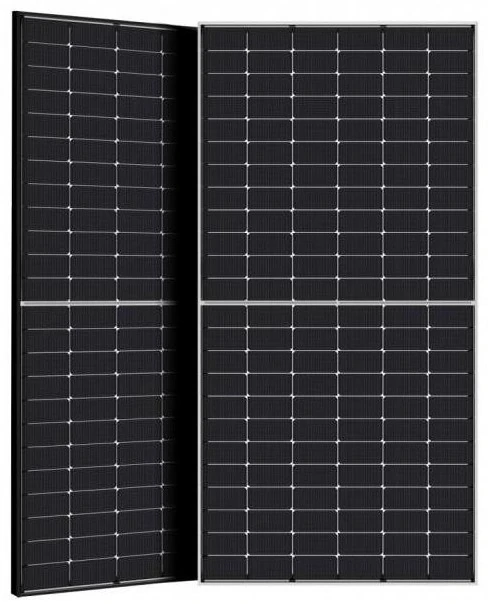
- N-Type TOPCon bifacial cells
- Power from both sides
- Double glass
- Most sold Jinko size in Pakistan
- A-grade, documented
- 12-year product warranty
- 25-year performance warranty
Longi Hi-MO X10
N-Type HPBC 2.0 Bifacial
Rs 26,123
Rs 40.5/W
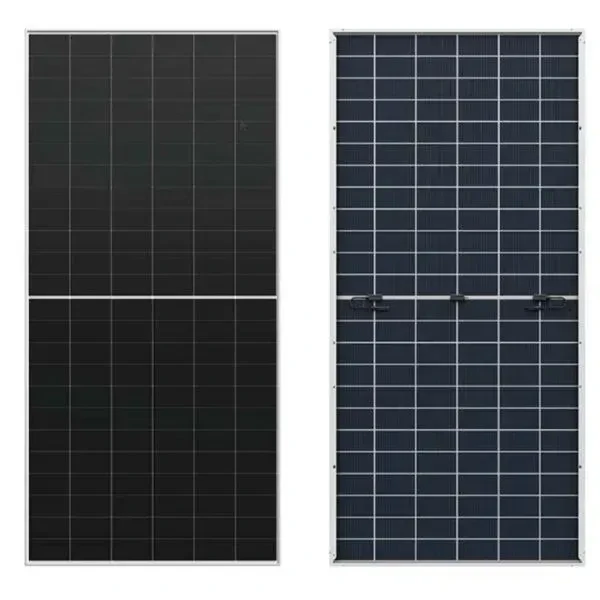
- HPBC 2.0 back-contact cells
- Power from both sides
- Double glass
- Flagship — best seller in Pakistan
- A-grade, documented
- 15-year product warranty
- 30-year performance warranty
Canadian TOPHiKu6
N-Type TOPCon Bifacial, Double Glass
Rs 23,195
Rs 39.6/W
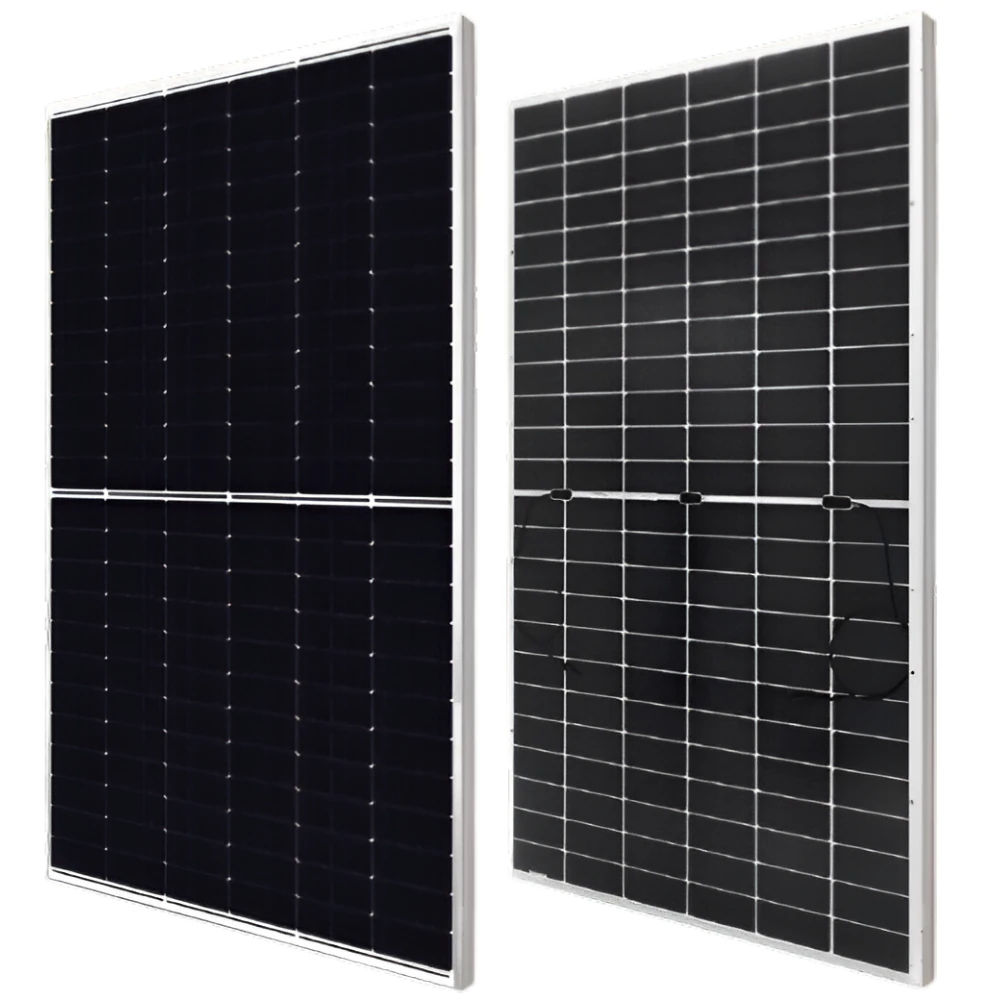
- N-Type TOPCon bifacial cells
- Power from both sides
- Double glass
- Most sold Canadian size in Pakistan
- A-grade, documented
- 12-year product warranty
- 30-year performance warranty
Trina Vertex N
N-Type i-TOPCon Bifacial
Rs 23,906
Rs 38.3/W
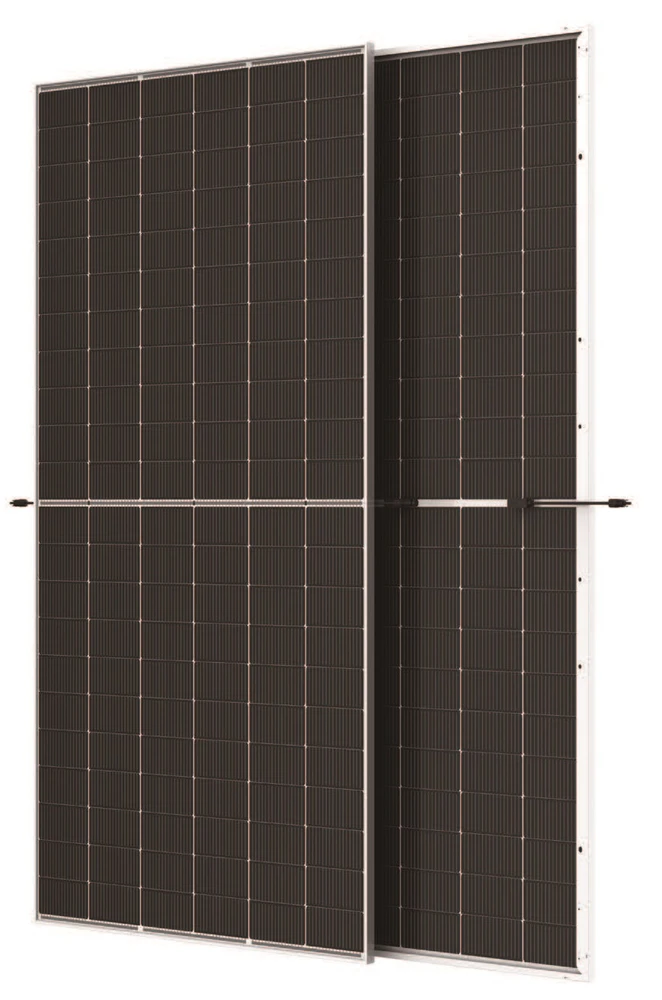
- N-Type i-TOPCon bifacial cells
- Power from both sides
- Double glass
- Second-cheapest per watt on this page
- A-grade, documented
- 12-year product warranty
- 30-year performance warranty
JA DeepBlue 4.0
N-Type TOPCon Bifacial
Rs 22,534
Rs 38.5/W
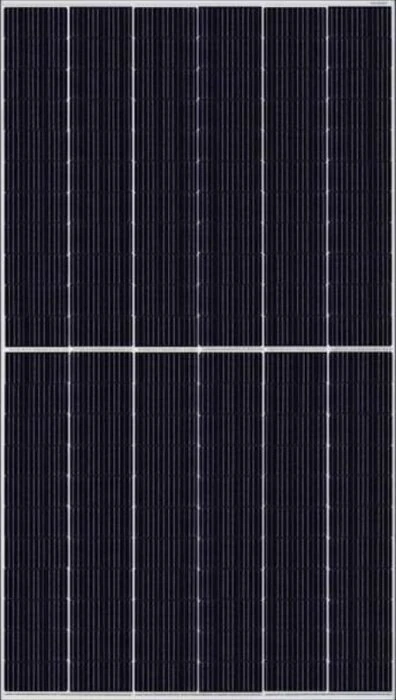
- N-Type TOPCon bifacial cells
- Power from both sides
- Double glass
- Most sold JA size in Pakistan
- A-grade, documented
- 15-year product warranty
- 30-year performance warranty
Inverex Mustang
N-Type TOPCon Bifacial, Double Glass
Rs 25,420
Rs 41.0/W
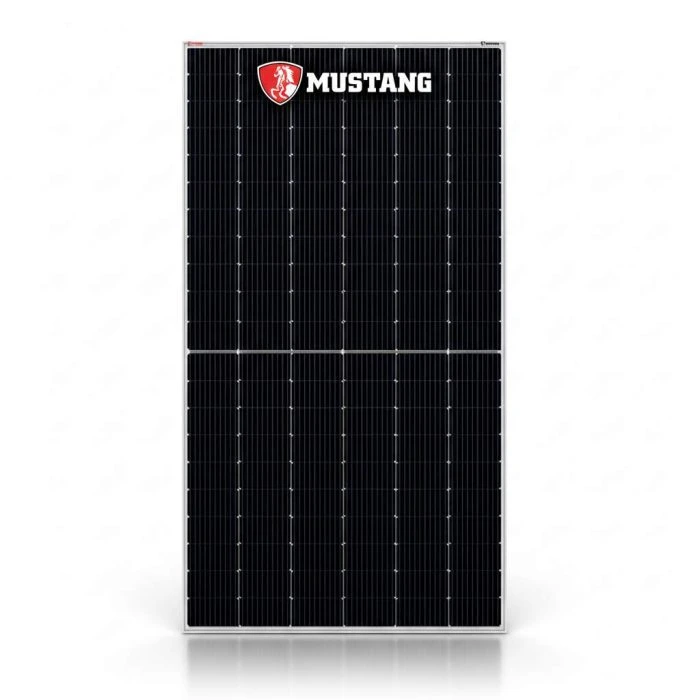
- N-Type TOPCon bifacial cells
- Power from both sides
- Double glass
- Inverex flagship size
- A-grade, documented
- 10-year product warranty
- 25-year performance warranty
Pakistan’s textile city
Mills and power looms buy solar as a cost-of-production decision — daytime loads are “daytime gold” for solar power.
FESCO’s faster queue
A complete residential file typically clears in six to ten weeks — one of the better timelines by DISCO standards.
Updated daily
Every price in the cards above comes from that day’s verified dealer listings — never guessed.
Why Faisalabad Buys Solar Differently From Other Cities
Faisalabad is Pakistan’s textile city — the “Manchester of Pakistan” — and its mills, processing units and power-loom workshops buy solar for a different reason than homeowners do. For them it is a cost-of-production decision, not a bill-saving hobby. This page lists the solar plate price in faisalabad for all six brands on this site in one place, with the same day’s rates in the cards above.
Compare the per-watt rate, not the plate price alone. A big plate always costs more, but it can still be cheaper per watt — or more expensive. The card tells you the per-watt rate under the price, so compare that number first.
Jinko works out cheapest per watt today at Rs 38.1/W, with Trina just behind at Rs 38.3/W. The Best Value badge goes to the Jinko card, because it is the cheapest plate overall and the size Faisalabad dealers sell most. The solar plate price in faisalabad in the cards above is the same day’s rate, updated every morning from dealer listings.
This page is written for buyers in Faisalabad — homeowners, shop owners and mill owners alike. If you run a power loom or a processing unit, the mill sections below are for you. If you are buying for a house, the home sections apply. For the 585W class across brands, see the 585 watt solar plate price in Pakistan page.

Karkhana Bazaar, Satyana Road and the Mill Belts — Faisalabad’s Solar Map
Faisalabad has no single dominant solar bazaar like Lahore’s Hall Road — distribution here is secondary and industrial-led, with strong distribution from Lahore. The one market named by the national price guides is Karkhana Bazaar on Satyana Road, the city’s major market hub for solar equipment. Beyond it, the trade is spread across the industrial clusters: Sargodha Road, Jhang Road, Sitara, M-3 Industrial City and Value Addition City, with Jaranwala Road home to the textile factories that buy at mill scale.
The city’s dealers are a mix of national firms and local specialists. Saigal Solar — a LONGi Flagship Store and official Solis, FoxESS and Dyness distributor on West Canal Road outside Civic Centre — has been in business since 1999, with more than 25 engineers, over 500 home installations and more than 20 MW of industrial work. Urooj Energies in Nishatabad is a hybrid-with-battery specialist since 2018 with more than 300 installations, and national firms such as Solar Citizen count the Jubilee Spinning Mills 1 MW system as their flagship Faisalabad reference.
Buyers in Faisalabad negotiate hard and compare aggressively — and the cheapest quote usually wins. That is exactly how undersized cabling and B-grade plates get onto roofs. A sealed pallet of 31 to 36 plates trades noticeably below single-plate retail, so above about 20 plates, a sealed pallet from Lahore or Karachi plus your own transport usually beats an upcountry retail quote. Below 10 plates, freight eats the saving — buy locally and negotiate the mounting structure instead.
If you are buying for a full home system, ask for the pallet rate and what it includes. If you are buying a single plate, compare two or three quotes for the same brand and wattage — and remember that a quote far below the market band is a warning sign, not a bargain. Compare the bill of materials line by line, not the bottom-line figure. Compare each quote against the solar plate price in faisalabad in the cards above before you decide.
Five Reasons the Same Plate Costs Different Money in Faisalabad
Five things move the price of the same plate in Faisalabad, and none of them is the plate itself. This section explains each one in plain words, so you can read any Faisalabad quote and know what you are paying for.
- Grade — A-grade, B-grade and relabelled stock: A-grade plates are the maker’s first-quality stock with full warranty papers. B-grade plates are factory seconds — lower output, shorter warranty, cheaper per watt. Relabelled stock is the trap: a lower-grade plate sold under a Tier-1 brand name.
- Pallet vs loose: a pallet of 31 to 36 plates trades noticeably below a single plate. A loose plate bought at retail carries the shop’s margin, the handling and the delivery.
- The dollar rate: plates are imported, so the rupee-dollar rate moves the plate price week to week. A quote from last week is not today’s price.
- Season: demand peaks in the summer, when load-shedding and high bills push buyers to install. Prices are usually softer in the winter months, when demand falls.
- Freight and dealer margin: every plate in Faisalabad carries freight from Karachi Port on top of its import price, and a showroom on Canal Road charges more than a wholesale dealer in Karkhana Bazaar, because its rent and its service are different. The plate is the same; the distance and the service around it are not.
Because of all five, the honest way to read a Faisalabad price is as a band, not a single figure. The cards at the top of this page give the day’s verified figure for each brand, not a band — and they are updated every morning. Use the cards for today’s figure, and use this section to judge whether a quote you hold in your hand is fair.
One warning: two older sources still quote far lower per-watt figures for Faisalabad — those figures are from 2024 and early 2026, far below every current source, so do not use them as a benchmark. And do not trust one price site’s claim of 17 percent GST on solar: every other current source says the GST on imported modules is 10 percent — the 17 percent figure is wrong and outdated.
Dust, Smog and Sawtooth Roofs — Plates That Survive a Textile City
Faisalabad gets about five peak sun hours a day, and its defining constraint is not heat but soiling. Textile and industrial particulates settle on plates year-round, and November-to-January smog measurably cuts winter generation across central Punjab. The plates that do best here are the ones with the lowest temperature coefficient and the best low-light performance — N-type TOPCon plates first, then HJT plates, then the older P-type PERC plates.
The temperature coefficient is the number to check. It tells you how much output a plate loses for each degree above 25°C. Jinko’s Tiger Neo is reported at minus 0.26 percent per degree, Longi’s Hi-MO X10 at minus 0.26, Canadian Solar’s HJT HiHero+ at minus 0.24, JA Solar’s DeepBlue 4.0 at minus 0.30, and Trina’s Vertex N at minus 0.29 to minus 0.34. A plate at minus 0.24 loses noticeably less output on a hot Faisalabad afternoon than a plate at minus 0.34.
What Mill Dust and Winter Smog Do to the Solar Plate Price in Faisalabad
Mill dust and winter smog do not change the solar plate price in faisalabad on the cards — but they change what a plate is worth once it is on your roof. Clean the plates every four to six weeks, more often near industrial zones — that is the Faisalabad rule. The proof is a 200 kW textile factory on Jaranwala Road that lost 17 percent of its output in six months from dust; a deep clean plus an inverter inspection restored full capacity. Winter smog from November to January cuts generation further, so size the system against full-year data, not just summer peaks.
And check the roof itself. Faisalabad’s mills and workshops often have sawtooth (north-light) shed roofs, which need custom mounting structures — a flat-roof quote for a sawtooth shed means the installer hasn’t visited the site. For mills, the daytime power-loom and processing loads are “daytime gold” for solar power, but induction-motor loads need inverter headroom, so the inverter must be sized for the motors, not just the plates. A derating of 0.78 is realistic for Faisalabad, not pessimistic.

How Many Plates for a Faisalabad Home — or a Mill?
Plates are only one part of a system’s cost. A complete system also needs an inverter, a mounting structure, batteries for hybrid systems, wiring and installation. The table below shows how many 585W plates each common system size needs — no prices here, because plates are priced in the cards above and the rest is priced on the system page.
| System size | Typical use | Plates needed (585W) |
|---|---|---|
| 3kW | Small home — fans, lights and fridge | 6 plates |
| 5kW | Medium home, daytime load | 9 plates |
| 7kW | Medium-large home with backup | 12 plates |
| 10kW | Large home, full daytime load | 18 plates |
| 15kW | Small workshop or very large house | 26 plates |
On-grid or hybrid — that is the first choice for a Faisalabad home, and for a mill the answer is usually different. On-grid suits homes with stable FESCO supply and most of their load in the daytime, because it is cheaper and simpler. Hybrid suits homes that face load-shedding, because the battery keeps the fans and lights on when the grid goes down. The battery adds cost up front, but with net billing it also saves the daytime units from being exported cheap.
Work out your own size first with the solar load calculator, then use the cards at the top of this page to price the plates for that size. For full system rates, see our solar system price in Pakistan page. For inverter rates, see our solar inverter price in Pakistan page, and for battery rates, see our lithium battery price in Pakistan page. The solar plate price in faisalabad in the cards above is plate-only — the system page adds the inverter, structure and fitting.
A hybrid system costs about 30 to 40 percent more than an on-grid system of the same size, because of the battery and the hybrid inverter. The installation itself is charged separately — labour, mounting, wiring, the net metering work and surge protection each carry their own figure, and one quote includes them while another does not. Always compare quotes with the same items listed. For mills, payback is typically two and a half to four years at current tariffs.
FESCO Net Billing — Faisalabad’s Faster Queue, and the Paperwork That Still Slows It
The Faisalabad Electric Supply Company (FESCO) is the sole DISCO for Faisalabad, and it is one of the better solar-connection processors by DISCO standards. A complete residential file typically clears in six to ten weeks through to bidirectional meter installation. Commercial systems above 25 kW add load-study steps, and installation itself takes about seven days, with FESCO approval usually adding around one billing cycle. The rules are set by the National Electric Power Regulatory Authority (NEPRA), under the Prosumer Regulations 2026.
Installer certification is mandatory for FESCO net metering — an uncertified installer means the application cannot proceed. The old AEDB was dissolved and merged into PPIB in July 2023, so installer enlistment is now handled by PPIB. Ask your installer whether the meter and the application work are included in the quoted price — they often are not. The solar plate price in faisalabad above does not include the net metering fee, so get that figure in writing too.
The billing rules changed in 2026. Under the Prosumer Regulations, new connections approved after 9 February 2026 are net billing, not net metering: surplus exports are bought at a small fraction of what imports cost, while imports are billed at the normal tariff. Connections approved before February 2026 keep the old one-to-one net metering until their agreements expire, and new agreements run for five years. That changes the maths: with net billing, a hybrid system with batteries — which stores the daytime units for the evening instead of exporting them cheap — pays back faster than an on-grid system of the same size.
The right size is the one that matches your daytime use — exports now pay far less than imports cost, so battery storage beats an oversized export array. One installer guide says a complete file clears in six to ten weeks, while another quotes eight to sixteen weeks — either way, ask your installer for the timeline in writing before you pay. And confirm the export rate in writing too: two Faisalabad installers quote different buyback figures for the same exported unit.
Spotting a Fake Plate in Faisalabad — Four Checks That Work
Faisalabad’s markets sell genuine plates and fake ones side by side. A fake plate looks right, but it makes less power and it has no real warranty. Before you pay the solar plate price in faisalabad shown above, run these four checks, in the order given.
1. Match the serial under the glass with the back label
Every genuine Tier-1 plate carries a serial number printed on the back label, with a matching serial sealed under the front glass. Check that both serials match each other and the model and wattage on the label. Check a few plates from each batch, not just one.
2. Check it on the brand’s own website
Confirm the plate on the brand’s own website — Jinko at cs.jinkosolar.com, Longi at longi.com, Canadian Solar at www.canadiansolar.com, Trina at trinasolar.com, JA Solar at jasolar.eu, Inverex at inverexsolar.pk — and do not use a QR code or a link the shop gives you instead. Use only the brand’s official website for this check. Lookalike “verification” sites are not the brand.
3. Ask for the serial details, flash report and warranty papers
Ask for the serial details, the flash test report and the warranty papers that match the plate itself. Check that the wattage and model on the papers match the plate you are buying. A dealer who cannot produce the papers is a dealer to walk away from.
4. Buy from a dealer you can return to
A genuine plate from a dealer with a shop you can visit — in Karkhana Bazaar, on Satyana Road, on West Canal Road, in D Ground or Peoples Colony — is worth more than a slightly cheaper plate from a seller you cannot find again. In Faisalabad, also compare the bill of materials line by line: the cheapest quote usually wins here, and that is exactly how undersized cabling and B-grade plates get onto roofs. The buying guides in the blog explain what else to check.

Inverters and Batteries That Fit Faisalabad Homes and Mills
The plate is only half the system. For a Faisalabad home, the inverter decides how much of the plate’s output you actually use: on-grid inverters suit homes with stable FESCO supply and daytime load, hybrid inverters suit homes that need backup during load-shedding, and off-grid suits homes with no grid at all. Local installers push LONGi Hi-MO X10 plates with Solis hybrid inverters, while national firms install Jinko, LONGi, JA, Canadian and Trina plates with Huawei or Sungrow inverters.
Three-phase comes first for larger homes, then the house hybrid: most Faisalabad homes in the 6 to 10 kW range are hybrid with LFP batteries. A typical starter package pairs six 650W LONGi Hi-MO X10 plates with a Solis 6kW IP66 hybrid inverter and a 5kWh Dyness battery. For batteries, Faisalabad dealers stock lithium (LFP) first, then tubular and Osaka, AGS and Phoenix lead-acid — lithium costs more up front and lasts longer, tubular is the budget backup.
Compare inverter rates on our solar inverter price in Pakistan page and battery rates on our lithium battery price in Pakistan page before you choose. A 5kW home usually pairs nine 585W plates with a 5kW hybrid inverter and one lithium battery, while a 10kW home pairs eighteen plates with a 12kW hybrid inverter and two batteries. Those are starting points, not rules — your own load decides the size. Use the solar load calculator to list your fans, lights, fridge and air conditioner, and it will suggest the system size for you.
For mills, the pairing is different. Daytime power-loom and processing loads are “daytime gold” for solar power, but induction-motor loads need inverter headroom, so the inverter must be sized for the motors, not just the plates. One installer’s case study — a 10 Marla house with a 10kW on-grid system, Jinko N-Type plates and a Huawei SUN2000 inverter — cut the monthly bill sharply with a three-year payback, though under net billing the same system saves less.
The Tax Hidden Inside Every Faisalabad Plate Price
There is no customs duty on solar plates in Pakistan — zero percent — and the sales tax on imported plates is 10 percent since July 2025. The 18 percent rise that was reported in early 2026 was dropped from the Finance Bill 2026-27, so the 10 percent figure is the one to use. Inverters carry 5 to 10 percent duty and batteries 10 to 15 percent. Ask your dealer whether the quoted plate price includes the 10 percent sales tax — a quote that excludes it will look cheaper by exactly that much, and the tax is still payable.
Faisalabad Next to Lahore — Mill Rates vs Mandi Rates
The solar plate price in faisalabad is usually a little above the Lahore rate, and the reason is the truck ride from Karachi Port. A plate bought in Lahore’s wholesale market is usually cheaper than the same plate delivered to Faisalabad, because the dealer here pays for the freight. See the same day’s snapshot for other cities: Lahore | Karachi | Peshawar | Multan. City rates are indicative — always confirm the final quote with a dealer in that city before paying.
Retail quotes in D Ground, Peoples Colony, Madina Town, Gulberg, Eden Valley, Abdullahpur, Wapda City and Green Town can be higher than the hub rate, and transport adds to the cost in Jaranwala, Samundri, Chak Jhumra, Tandlianwala, Toba Tek Singh, Jhang and Chiniot. That is normal — the hub rate is the wholesale rate, and the retail shop adds its own margin and delivery. Compare the cards above with a written quote from a dealer in your own area before you decide.
Before You Buy in Faisalabad — The Short Version
Solar Plate Pakistan is an independent price-information website. We are not an authorized dealer or official partner of any brand. The solar plate price in faisalabad on this page comes from dealer listings collected each morning, and the same model’s price is matched across this page, the homepage and the brand pages on the same day.
Questions about this page can be sent through the Contact Us page, or by email at sohaibkhan127222@gmail.com. More about the site on our About Us page and our Our Team page.
Frequently Asked Questions
What is the solar plate price in Faisalabad today?
See the cards at the top of this page for the solar plate price in faisalabad today. Each card shows one brand’s flagship plate, its price and its per-watt rate. The cards are updated every morning from dealer listings, and the date is in the heading above them.
Where is the wholesale solar market in Faisalabad?
Karkhana Bazaar on Satyana Road is the city’s major market hub for solar equipment. Beyond it, the trade is spread across the industrial clusters — Sargodha Road, Jhang Road, Sitara, M-3 Industrial City and Value Addition City — with strong distribution from Lahore.
Why is solar popular with Faisalabad’s textile mills?
Rising gas prices for captive power and grid tariff escalation pushed mills, processing units and power-loom workshops to rooftop solar as a cost-of-production decision. Daytime power-loom and processing loads are “daytime gold” for solar power, and mill payback is typically two and a half to four years at current tariffs.
How often should I clean solar plates in Faisalabad?
Every four to six weeks, more often near industrial zones. Textile and industrial particulates settle on plates year-round, and November-to-January smog cuts winter generation. One 200 kW textile factory on Jaranwala Road lost 17 percent of its output in six months from dust.
How long does FESCO net metering take?
A complete residential file typically clears in six to ten weeks through to bidirectional meter installation — one of the better timelines by DISCO standards. Commercial systems above 25 kW add load-study steps, and installation itself takes about seven days.
How much does a 5kW system cost installed in Faisalabad?
The cards above give the solar plate price in faisalabad per plate, and nine 585W plates make a 5kW system. The full system adds the inverter, structure, wiring and fitting — see the system price page for the full picture. Work out your own size first with the solar load calculator.
Does the Faisalabad price include installation?
No — the cards on this page are plate-only. Inverter, structure, wiring and installation are separate — see the system price page. For the plate price itself, see the cards above.
What should I check on a sawtooth shed roof?
Sawtooth (north-light) shed roofs need custom mounting structures. A flat-roof quote for a sawtooth shed means the installer hasn’t visited the site — ask for a mounting design for your actual roof.
How do I check a solar plate is genuine in Faisalabad?
Match the serial sealed under the front glass with the serial on the back label, confirm the plate on the brand’s own website, and ask for the serial details, flash report and warranty papers that match the plate — and compare the bill of materials line by line, not the bottom-line figure.
Are these prices a final quote?
No — they are indicative rates from dealer listings. Always confirm the final quote with your dealer before paying. See our Disclaimer.