
Solar Plate Price in Peshawar

Solar Plate Price in Peshawar — 23 November 2026
Jinko Tiger Neo
N-Type TOPCon Bifacial
Rs 21,587
Rs 36.9/W
★ Best Value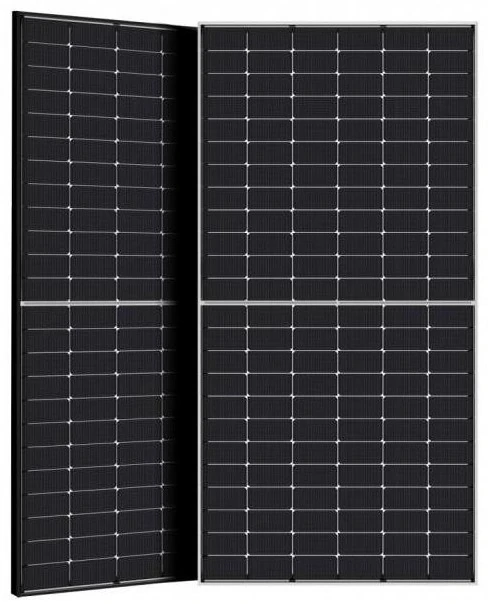
- N-Type TOPCon bifacial cells
- Power from both sides
- Double glass
- Most sold Jinko size in Pakistan
- A-grade, documented
- 12-year product warranty
- 25-year performance warranty
Longi Hi-MO X10
N-Type HPBC 2.0 Bifacial
Rs 26,123
Rs 40.5/W
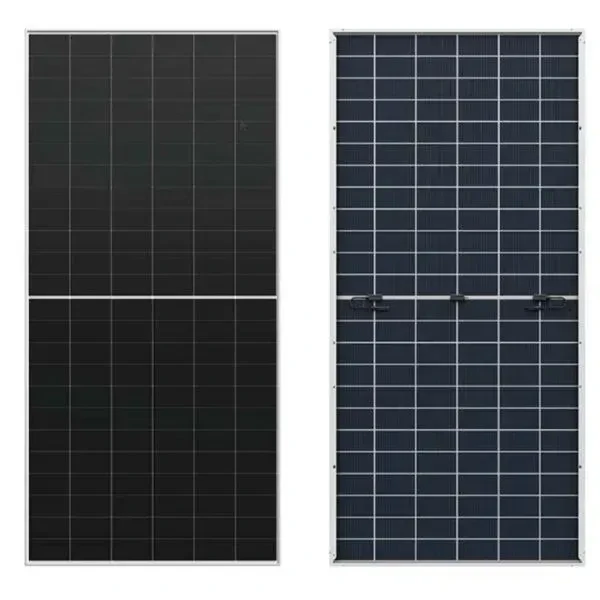
- HPBC 2.0 back-contact cells
- Power from both sides
- Double glass
- Flagship — best seller in Pakistan
- A-grade, documented
- 15-year product warranty
- 30-year performance warranty
Canadian TOPHiKu6
N-Type TOPCon Bifacial, Double Glass
Rs 23,195
Rs 39.6/W
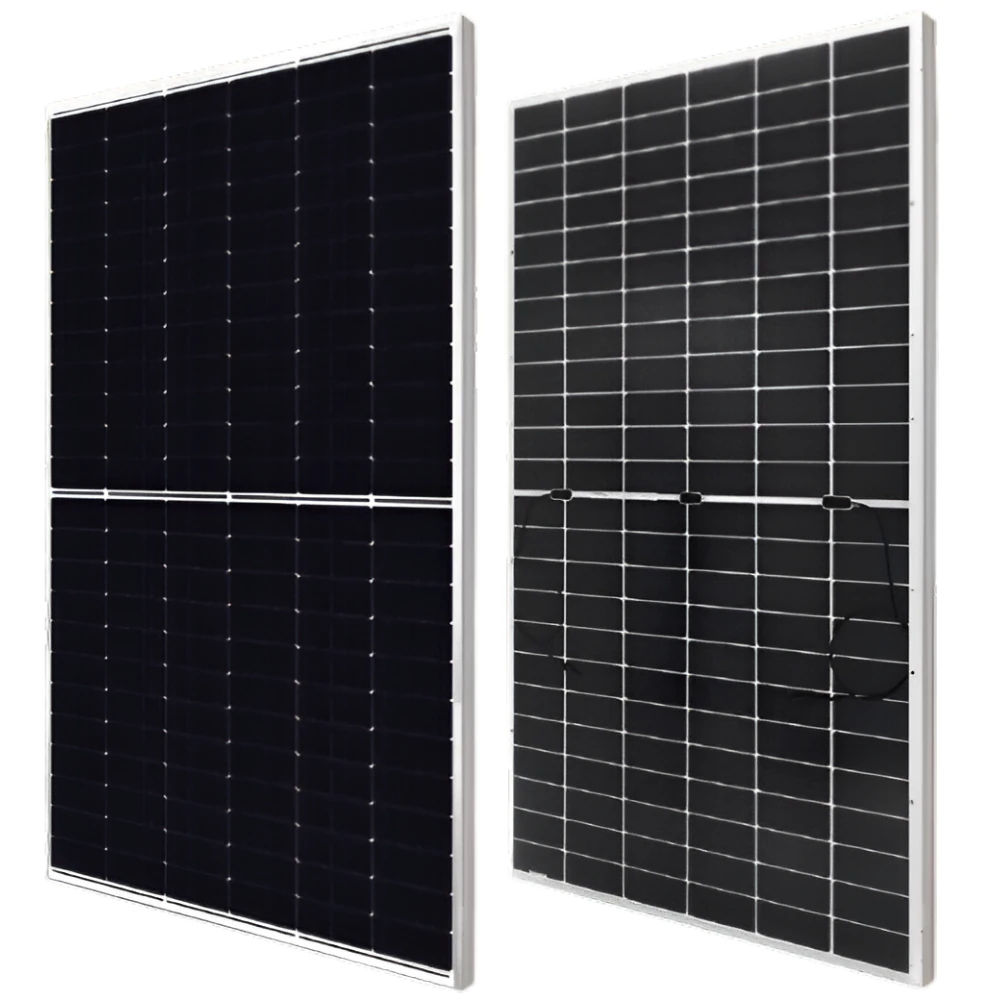
- N-Type TOPCon bifacial cells
- Power from both sides
- Double glass
- Most sold Canadian size in Pakistan
- A-grade, documented
- 12-year product warranty
- 30-year performance warranty
Trina Vertex N
N-Type i-TOPCon Bifacial
Rs 23,906
Rs 38.3/W
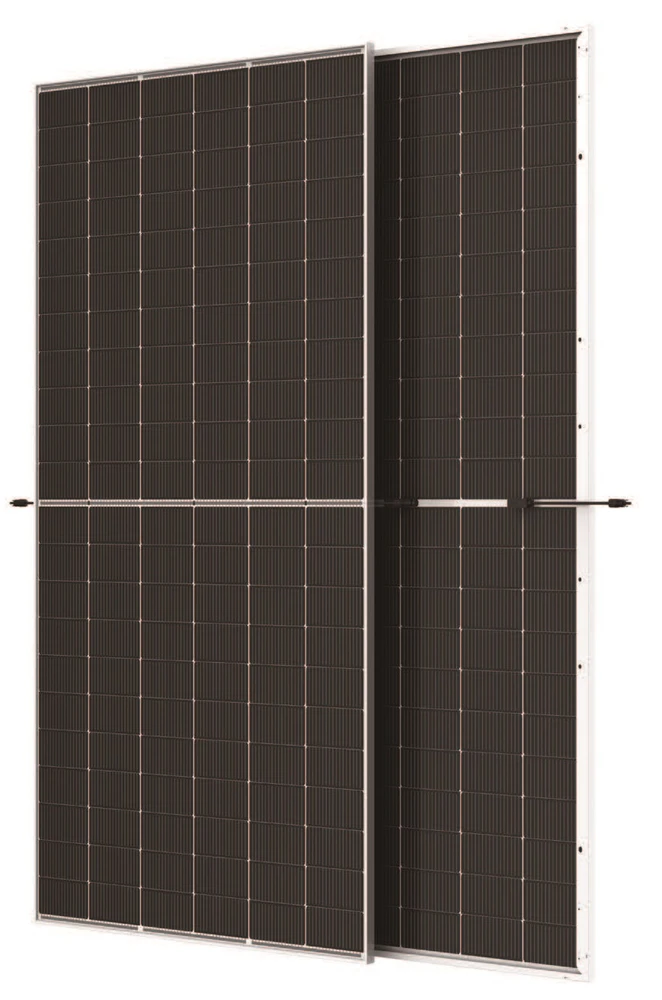
- N-Type i-TOPCon bifacial cells
- Power from both sides
- Double glass
- A-grade, documented
- 12-year product warranty
- 30-year performance warranty
JA DeepBlue 4.0
N-Type TOPCon Bifacial
Rs 22,534
Rs 38.5/W
- N-Type TOPCon bifacial cells
- Power from both sides
- Double glass
- Most sold JA size in Pakistan
- A-grade, documented
- 15-year product warranty
- 30-year performance warranty
Inverex Mustang
N-Type TOPCon Bifacial Double Glass
Rs 25,420
Rs 41.0/W
- N-Type TOPCon bifacial cells
- Power from both sides
- Double glass
- Steel frame
- A-grade, documented
- 10-year product warranty
- 25-year performance warranty
KPK’s reference market
Buyers from Mardan to Swat compare plates in Peshawar first.
Hybrid country
Long outages mean most Peshawar homes buy hybrid systems with batteries.
Updated daily
Every price in the cards above comes from that day’s verified dealer listings — never guessed.
Peshawar Buys for the Whole of Khyber Pakhtunkhwa
Peshawar is the main solar market for Khyber Pakhtunkhwa. Buyers from Mardan, Abbottabad, Swat, Kohat, Mansehra, D.I. Khan, Nowshera, Charsadda, Swabi and Bannu all compare plates here before they buy. This page lists the solar plate price in peshawar for all six brands on this site in one place, with the same day’s rates in the cards above.
Compare the per-watt rate, not the plate price alone. A big plate always costs more, but it can still be cheaper per watt — or more expensive. The card tells you the per-watt rate under the price, so compare that number first.
Jinko works out cheapest per watt today at Rs 38.1/W, with Trina just behind at Rs 38.3/W. The Best Value badge goes to the Jinko card, because it is the cheapest plate overall and the size Peshawar dealers sell most. The solar plate price in peshawar in the cards above is the same day’s rate, updated every morning from dealer listings.
This page is written for buyers in Peshawar and across the province — if you live in Mardan, Swat or Abbottabad, the Peshawar rate is your benchmark, and your own dealer’s quote should sit close to it once transport is added. For the 585W class across brands, see the 585 watt solar plate price in Pakistan page.

University Road, Saddar Road and Karkhano — Peshawar’s Spread-Out Solar Trade
Peshawar has no single solar bazaar like Lahore’s Hall Road — supply is spread across several areas. University Road and Saddar Road are the main commercial areas where dealers keep shops, and the price guides name them as the city’s major market hub. Karkhano Market is Peshawar’s distinctive market — and its most distinctive risk. The Karkhano trade brings plates and inverters through channels ranging from legitimate parallel import to refurbished and B-grade stock sold as new, carrying no enforceable manufacturer warranty.
A plate with no verifiable serial number, no flash-test report and no manufacturer warranty registration is not a Tier-1 plate — it is a gamble. If the seller cannot provide all three, the discount is not a discount. That is the first thing to know about buying in Peshawar, before any price talk.
Because Peshawar is upcountry, its dealers buy further from the container than Karachi’s do — every container lands at Karachi Port, and Peshawar carries a transport premium over Karachi, with thinner stock and fewer direct importers. That is why the solar plate price in peshawar sits a little above the Karachi rate. A sealed pallet of 31 to 36 plates trades noticeably below single-plate retail, so above about 20 plates, a sealed pallet from Lahore or Karachi plus your own transport usually beats an upcountry retail quote. Below 10 plates, freight eats the saving — buy locally and negotiate the mounting structure instead.
If you are buying for a full home system, ask for the pallet rate and what it includes. If you are buying a single plate, compare two or three quotes for the same brand and wattage — and remember that a quote far below the market band is a warning sign, not a bargain. Two Peshawar dealers with published lists are Al Syed Solar Solutions and Zain Solar System, which claims more than 300 installations.
Freight, Grade and the Karkhano Factor — Reading a Peshawar Quote
Five things move the price of the same plate in Peshawar, and none of them is the plate itself. This section explains each one in plain words, so you can read any Peshawar quote and know what you are paying for.
- Grade — A-grade, B-grade and relabelled stock: A-grade plates are the maker’s first-quality stock with full warranty papers. B-grade plates are factory seconds — lower output, shorter warranty, cheaper per watt. Relabelled stock is the trap: a lower-grade plate sold under a Tier-1 brand name — and in Peshawar’s Karkhano trade, refurbished plates are also sold as new.
- Pallet vs loose: a pallet of 31 to 36 plates trades noticeably below a single plate. A loose plate bought at retail carries the shop’s margin, the handling and the delivery.
- The dollar rate: plates are imported, so the rupee-dollar rate moves the plate price week to week. A quote from last week is not today’s price.
- Season: demand peaks in the summer, when load-shedding and high bills push buyers to install. Prices are usually softer in the winter months, when demand falls.
- Freight and dealer margin: every plate in Peshawar carries freight from Karachi Port on top of its import price, and a shop on University Road charges more than a Karkhano trader, because its rent and its service are different. The plate is the same; the distance and the service around it are not.
Because of all five, the honest way to read a Peshawar price is as a band, not a single figure. The cards at the top of this page give the day’s verified figure for each brand, not a band — and they are updated every morning. Use the cards for today’s figure, and use this section to judge whether a quote you hold in your hand is fair. And do not copy one national guide’s plate prices as-is — it works them out with a higher tax rate than the one that actually applies to imported plates, so its figures run high.
Hot Summers, Cold Mornings and Spring Hail — Plates That Survive Peshawar
Peshawar gets about 4.9 peak sun hours a day — the climate is kinder than south Punjab, with summer peaks that are hot but rarely extreme, and strong sunshine across the year. The plates that do best here are the ones with the lowest temperature coefficient and the best low-light performance — N-type TOPCon plates first, then HJT plates, then the older P-type PERC plates. The latest plates are the 640–650W N-type models — Longi’s Hi-MO X10 and Jinko’s Tiger Neo 3.0 — and one Peshawar guide advises skipping the leftover 500–560W PERC stock.
The temperature coefficient is the number to check. It tells you how much output a plate loses for each degree above 25°C. Jinko’s Tiger Neo is reported at minus 0.26 percent per degree, Longi’s Hi-MO X10 at minus 0.26, Canadian Solar’s HJT HiHero+ at minus 0.24, JA Solar’s DeepBlue 4.0 at minus 0.30, and Trina’s Vertex N at minus 0.29 to minus 0.34. A plate at minus 0.24 loses noticeably less output on a hot Peshawar afternoon than a plate at minus 0.34.
How Fog and Hail Change the Solar Plate Price in Peshawar
Peshawar’s winter is the problem, not its summer. Dense winter-morning fog and haze cap mid-morning generation — winter yield is thinner than the marketing brochures suggest — so size the system against full-year sunshine data, not just summer peaks, and set the tilt at about 33 degrees for year-round yield. Fog and hail do not change the solar plate price in peshawar on the cards — but they change which plate is worth buying.
Spring hailstorms hit the Peshawar valley often enough that impact certification and hail-aware mounting angles are worth confirming on any quote. Cold mornings bring voltage spikes, so the system needs oversized DC headroom. And dust costs 8 to 20 percent of output in dry months — wash the plates every two to three weeks in spring with plain water and a soft brush, never cold water on hot glass. A derating of 0.78 is not pessimistic for Peshawar; it is realistic.

How Many Plates Does Your Home Need in Peshawar?
Plates are only one part of a system’s cost. A complete system also needs an inverter, a mounting structure, batteries for hybrid systems, wiring and installation. The table below shows how many 585W plates each common system size needs — no prices here, because plates are priced in the cards above and the rest is priced on the system page.
| System size | Typical use | Plates needed (585W) |
|---|---|---|
| 3kW | Small home — fans, lights and fridge | 6 plates |
| 5kW | Medium home, daytime load | 9 plates |
| 7kW | Medium-large home with backup | 12 plates |
| 10kW | Large home, full daytime load | 18 plates |
| 15kW | Commercial or very large house | 26 plates |
On-grid or hybrid — that is the first choice for a Peshawar home, and here the answer is usually hybrid. On-grid suits homes on stable feeders with most of their load in the daytime, because it is cheaper and simpler. Hybrid suits homes that face long outages, because the battery keeps the fans and lights on when the grid goes down. The battery adds cost up front, but with net billing it also saves the daytime units from being exported cheap.
Work out your own size first with the solar load calculator, then use the cards at the top of this page to price the plates for that size. For full system rates, see our solar system price in Pakistan page. For inverter rates, see our solar inverter price in Pakistan page, and for battery rates, see our lithium battery price in Pakistan page. The solar plate price in peshawar in the cards above is plate-only — the system page adds the inverter, structure and fitting.
PESCO Net Billing — Slow Files, Long Outages, and Why Hybrid Wins Here
The Peshawar Electric Supply Company (PESCO) supplies electricity across Khyber Pakhtunkhwa — Peshawar, Mardan, Charsadda, Nowshera, Swabi, Kohat, Bannu and the surrounding districts — and it is the slowest of the major DISCOs for net metering. A complete file typically takes 8 to 14 weeks through to bidirectional meter installation; one Peshawar installer says 6 to 12 weeks from commissioning to activation. PESCO carries some of the highest distribution losses in Pakistan, and its response — aggressive load-shedding on high-loss feeders — means parts of the city lose power for 8 to 12 hours a day in summer, while better-paying feeders in Hayatabad and University Town see far less. The rules are set by PESCO, under the NEPRA Prosumer Regulations 2026.
The process is: a bidirectional meter application is filed with PESCO, the prosumer is registered, PESCO inspects the site, a bidirectional meter is installed, the agreement is signed, and the system is synchronised to the grid. The size is capped at your sanctioned load, and the demand notice is official — not a shop green-meter SKU. Ask your installer whether the meter and the application work are included in the quoted price — they often are not.
The billing rules changed in 2026. Under the Prosumer Regulations, new connections approved after 9 February 2026 are net billing, not net metering: surplus exports are bought at a small fraction of what imports cost, while imports are billed at the normal tariff. Connections approved before February 2026 keep the old one-to-one net metering until their agreements expire. That changes the maths: with net billing, a hybrid system with batteries — which stores the daytime units for the evening instead of exporting them cheap — pays back faster than an on-grid system of the same size.
Residential payback in Peshawar is reported at two and a half to four years, hybrid at four to five years and commercial at two to three years; other guides say four to six years typical. Either way, the right size is the one that matches your daytime use — exports now pay far less than imports cost, so battery storage beats an oversized export array. Banks offering solar financing in Peshawar include Meezan, Bank Alfalah, Faysal, HBL and JS Bank, and KP-specific lenders also offer agricultural- and trade-financed solar packages. And the key Peshawar fact: hybrid outsells on-grid by a wide margin here — the reverse of Lahore — and battery sizing, not plate count, is usually the design decision that makes or breaks satisfaction.
Four Checks Before You Pay for a Plate in Peshawar
Peshawar’s markets sell genuine plates and fake ones side by side. A fake plate looks right, but it makes less power and it has no real warranty. Before you pay the solar plate price in peshawar shown above, run these four checks, in the order given.
1. Read the serial under the glass and on the back label
Every genuine Tier-1 plate carries a serial number printed on the back label, with a matching serial sealed under the front glass. Check that both serials match each other and the model and wattage on the label. Check a few plates from each batch, not just one.
2. Confirm the plate on the brand’s own website
Confirm the plate on the brand’s own website — Jinko at cs.jinkosolar.com, Longi at longi.com, Canadian Solar at www.canadiansolar.com, Trina at trinasolar.com, JA Solar at jasolar.eu, Inverex at inverexsolar.pk — and do not use a QR code or a link the shop gives you instead. Use only the brand’s official website for this check. Lookalike “verification” sites are not the brand.
3. Ask for the serial details, flash report and warranty papers
Ask for the serial details, the flash test report and the warranty papers that match the plate itself. Check that the wattage and model on the papers match the plate you are buying. In Peshawar, also confirm the warranty registration with the manufacturer — a plate with no warranty registration has no enforceable warranty, whatever the seller says.
4. Buy from a dealer you can visit again
A genuine plate from a dealer with a shop you can visit — on University Road, in Saddar, in Hayatabad or University Town — is worth more than a slightly cheaper plate from a seller you cannot find again. Be extra careful in Karkhano Market, where refurbished and B-grade plates are also sold as new: verify the serial with the manufacturer, ask for the flash-test report, and confirm warranty registration. If the seller cannot provide all three, the discount is not a discount. The buying guides in the blog explain what else to check.

Inverter and Battery Pairings for a Peshawar Home
The plate is only half the system. For a Peshawar home, the inverter decides how much of the plate’s output you actually use — and because parts of the city lose power for 8 to 12 hours a day in summer, the inverter choice matters more here than in Lahore. On-grid inverters suit homes on stable feeders with daytime load, but they shut down during outages — on-grid-only dies with the feeder. Hybrid inverters suit homes that need backup, and in Peshawar hybrid outsells on-grid by a wide margin.
Huawei’s SUN2000 is the usual default for on-grid, while Sungrow and Growatt’s SPH-series are proven for hybrid in KP’s load-shedding conditions. A typical Peshawar house stack is ten 645W plates, a 6 kW IP65 hybrid inverter, 5 kWh LFP battery, 14 SWG iron structure and XLPO 6 mm² cable — and if nights have load-shedding, 5.12 kWh of LFP battery. For batteries, Peshawar dealers stock lithium (LFP) first, then tubular and Osaka, AGS and Phoenix lead-acid — lithium costs more up front and lasts longer, tubular is the budget backup.
Compare inverter rates on our solar inverter price in Pakistan page and battery rates on our lithium battery price in Pakistan page before you choose. A 5kW home usually pairs nine 585W plates with a 5kW hybrid inverter and one lithium battery, while a 10kW home pairs eighteen plates with a 12kW hybrid inverter and two batteries. Those are starting points, not rules — your own load decides the size. Use the solar load calculator to list your fans, lights, fridge and air conditioner, and it will suggest the system size for you.
What Tax Adds to a Plate in Peshawar
There is no customs duty on solar plates in Pakistan — zero percent — and the sales tax on imported plates is 10 percent since July 2025. The 18 percent rise that was reported in early 2026 was dropped from the Finance Bill 2026-27, so the 10 percent figure is the one to use. Inverters, batteries, mounting parts and cables carry their own duty and tax rates, so ask your dealer whether the quoted price includes them. A quote that excludes tax will look cheaper by exactly that much, and the tax is still payable.
Peshawar Against Lahore and Karachi — Why Upcountry Plates Cost More
The solar plate price in peshawar is usually a little higher than in Lahore or Karachi, and the reason is the truck ride from Karachi Port. A plate bought in Lahore’s wholesale market is usually cheaper than the same plate delivered to Peshawar, because the dealer here pays for the freight. See the same day’s snapshot for other cities: Lahore | Karachi | Multan | Faisalabad. City rates are indicative — always confirm the final quote with a dealer in that city before paying.
Retail quotes in Hayatabad, DHA Peshawar, University Town, Regi Model Town, Gulbahar, Tehkal and Faqirabad can be higher than the mandi rate, and transport adds to the cost in Mardan, Swat, Abbottabad and the rest of KPK. That is normal — the Peshawar rate is the upcountry rate, and the local shop adds its own margin and delivery. Compare the cards above with a written quote from a dealer in your own area before you decide.
A Last Word for Peshawar Buyers
Solar Plate Pakistan is an independent price-information website. We are not an authorized dealer or official partner of any brand. The solar plate price in peshawar on this page comes from dealer listings collected each morning, and the same model’s price is matched across this page, the homepage and the brand pages on the same day.
Questions about this page can be sent through the Contact Us page, or by email at sohaibkhan127222@gmail.com. More about the site on our About Us page and our Our Team page.
Frequently Asked Questions
What is the solar plate price in Peshawar today?
See the cards at the top of this page for the solar plate price in peshawar today. Each card shows one brand’s flagship plate, its price and its per-watt rate. The cards are updated every morning from dealer listings, and the date is in the heading above them.
Where is the wholesale solar market in Peshawar?
University Road and Saddar Road are the main commercial areas where dealers keep shops. Karkhano Market is also a source of plates, but be cautious there: refurbished and B-grade plates are sold as new, so verify the serial, the flash-test report and the warranty registration before paying.
Are Karkhano Market plates genuine?
Some are, some are not. The Karkhano trade mixes legitimate parallel imports with refurbished and B-grade plates sold as new, carrying no enforceable manufacturer warranty. A “Tier-1” plate with no verifiable serial number, no flash-test report and no warranty registration is not a Tier-1 plate — it is a gamble.
Should I buy a hybrid or an on-grid system in Peshawar?
Hybrid, for most homes. Parts of Peshawar lose power for 8 to 12 hours a day in summer, and on-grid solar shuts down during outages. Hybrid outsells on-grid by a wide margin in Peshawar, and battery sizing — not plate count — is usually the decision that makes or breaks satisfaction.
How long does PESCO net metering take?
PESCO is the slowest of the major DISCOs: a complete file typically takes 8 to 14 weeks through to bidirectional meter installation, and one installer says 6 to 12 weeks from commissioning to activation. Ask your installer for the timeline in writing before you pay.
How does winter fog affect solar plates in Peshawar?
Dense winter-morning fog and haze cap mid-morning generation, so winter yield is thinner than the marketing brochures suggest. Size the system against full-year sunshine data, set the tilt at about 33 degrees, and clean the plates every two to three weeks in spring.
How much does a 5kW system cost installed in Peshawar?
The cards above give the solar plate price in peshawar per plate, and nine 585W plates make a 5kW system. The full system adds the inverter, structure, wiring and fitting — see the system price page for the full picture. Work out your own size first with the solar load calculator.
Does the Peshawar price include installation?
No — the cards on this page are plate-only. Inverter, structure, wiring and installation are separate — see the system price page. For the solar plate price in peshawar itself, see the cards above.
How do I check a solar plate is genuine in Peshawar?
Match the serial sealed under the front glass with the serial on the back label, confirm the plate on the brand’s own website, and ask for the serial details, flash report and warranty papers that match the plate — and confirm the warranty registration with the manufacturer.
Are these prices a final quote?
No — they are indicative rates from dealer listings. Always confirm the final quote with your dealer before paying. See our Disclaimer.