
Phoenix Battery Price in Pakistan

Phoenix Battery Price in Pakistan — 11 November 2026
Phoenix TX 1000
Tubular deep-cycle · 85 Ah
Rs 28,500 – 30,500
Rs 335–359/Ah

- 85 Ah tubular
- 80% depth of discharge
- 1,200+ deep cycles
- 4–5 year life
- Best for small homes
Phoenix TX 1400
Tubular deep-cycle · 120 Ah
Rs 35,000 – 37,500
Rs 292–313/Ah
- 120 Ah tubular
- 80% depth of discharge
- 1,200+ deep cycles
- 4–5 year life
- Best for medium homes
Phoenix TX 1600
Tubular deep-cycle · 140 Ah
Rs 39,000 – 42,000
Rs 279–300/Ah
- 140 Ah tubular
- 80% depth of discharge
- 1,200+ deep cycles
- 4–5 year life
- Suits 1 kVA UPS
Phoenix TX 1800
Tubular deep-cycle · 165 Ah
Rs 46,000 – 48,500
Rs 279–294/Ah
- 165 Ah tubular
- 80% depth of discharge
- 1,200+ deep cycles
- 4–5 year life
- Most popular home UPS size
Phoenix TX 2000
Tubular deep-cycle · 185 Ah
Rs 51,000 – 54,000
Rs 276–292/Ah
- 185 Ah tubular
- 80% depth of discharge
- 1,200+ deep cycles
- 4–5 year life
- Suits 1.5 kVA UPS
Phoenix TX 2500
Tubular deep-cycle · 215 Ah
Rs 58,000 – 62,000
Rs 270–288/Ah
- 215 Ah tubular
- 80% depth of discharge
- 1,200+ deep cycles
- 4–5 year life
- Suits 3 kW solar
Phoenix TX 3000
Tubular deep-cycle · 240 Ah
Rs 66,000 – 70,000
Rs 275–292/Ah
- 240 Ah tubular
- 80% depth of discharge
- 1,200+ deep cycles
- 4–5 year life
- Suits large homes
Phoenix TX 3500
Tubular deep-cycle · 280 Ah
Rs 71,000
Rs 254/Ah
- 280 Ah tubular
- 80% depth of discharge
- Up to 1,250 deep cycles
- 4–5 year life
- Lowest per-Ah in the TX family
Phoenix UGS 175
Flat-plate UPS · 140 Ah
Rs 38,000 – 41,000
Rs 271–293/Ah
- 140 Ah flat-plate
- 50% depth of discharge
- 400–600 cycles
- 2–3 year life
- Most popular medium UPS model
Phoenix UGS 200
Flat-plate UPS · 155 Ah
Rs 44,000 – 48,000
Rs 284–310/Ah
- 155 Ah flat-plate
- 50% depth of discharge
- 400–600 cycles
- 2–3 year life
- Budget household UPS
Phoenix UGLT 255
Tubular · 200 Ah
Rs 44,000
Rs 220/Ah
★ Best Value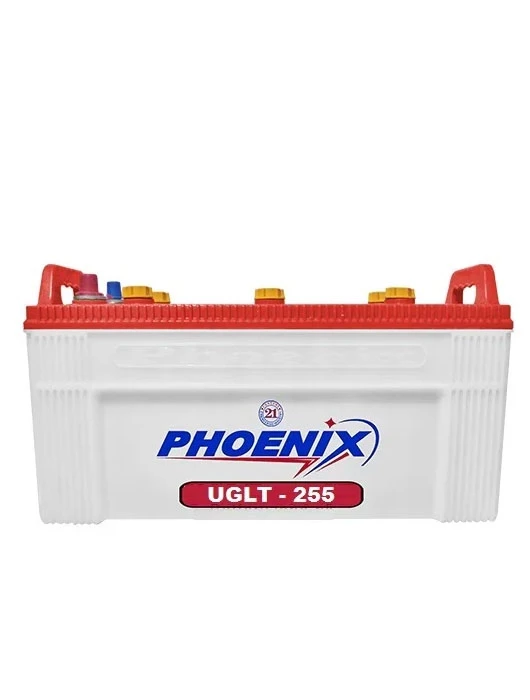
- 200 Ah tubular
- 80% depth of discharge
- 1,200+ deep cycles
- 4–5 year life
- Suits 3 kW solar, long backup
Phoenix XP 230
Flat-plate · 190 Ah
Rs 38,000
Rs 200/Ah
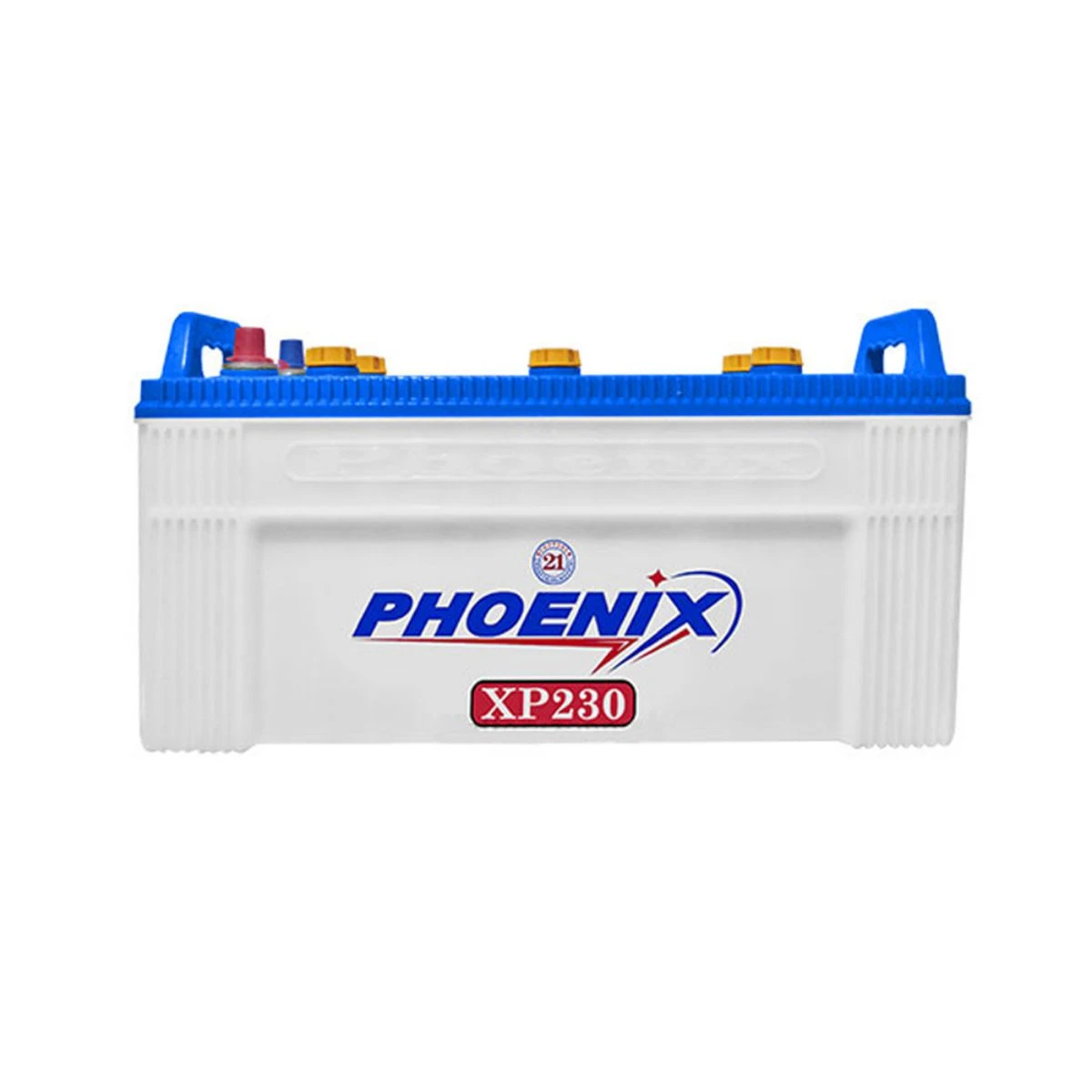
- 190 Ah flat-plate
- 50% depth of discharge
- 400–600 cycles
- 2–3 year life
- Budget household UPS
Phoenix XP 150
Flat-plate · 115 Ah
Rs 24,000
Rs 209/Ah
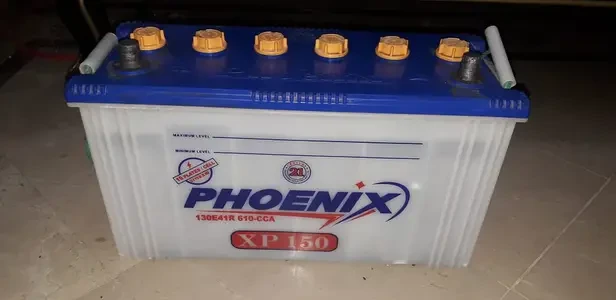
- 115 Ah flat-plate
- 50% depth of discharge
- 400–600 cycles
- 2–3 year life
- Small UPS backup
Phoenix 4DLT 205
Flat-plate · 160 Ah
Rs 39,000
Rs 244/Ah
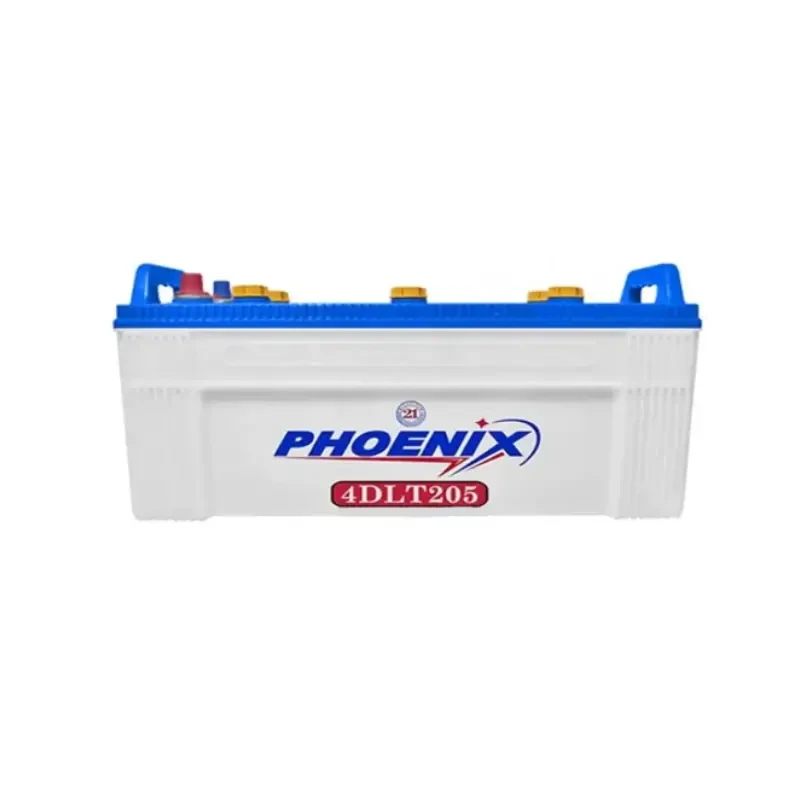
- 160 Ah flat-plate
- 50% depth of discharge
- 400–600 cycles
- 2–3 year life
- Budget household UPS
Phoenix XP 40
Car battery · 32 Ah
Rs 8,200 – 9,000
Rs 256–281/Ah
- 32 Ah car battery
- 12V starter battery
- Fits Alto, Cultus, WagonR, Mehran
- Made in Pakistan
Phoenix XP 50
Car battery · 40 Ah
Rs 10,500 – 11,500
Rs 263–288/Ah
- 40 Ah car battery
- 12V starter battery
- Fits City, Swift, Yaris
- Made in Pakistan
Phoenix XP 65
Car battery · 50 Ah
Rs 12,800 – 13,800
Rs 256–276/Ah
- 50 Ah car battery
- 12V starter battery
- Fits Corolla, Civic, BR-V
- Made in Pakistan
Phoenix XP 85
Car battery · 65 Ah
Rs 16,500 – 18,000
Rs 254–277/Ah
- 65 Ah car battery
- 12V starter battery
- Fits SUVs, Hilux, Fortuner
- Made in Pakistan
Phoenix XP 135
Car battery · 95 Ah
Rs 24,000 – 26,000
Rs 253–274/Ah
- 95 Ah car battery
- 12V starter battery
- Fits trucks, tractors
- Made in Pakistan
Phoenix Cube 12.8V
LiFePO4 · 105 Ah · 1.34 kWh
Rs 62,000
Rs 46,131/kWh

- 12.8V 105Ah LiFePO4
- 95% usable energy
- 6,000+ cycles
- No maintenance
- Cheapest way into Phoenix lithium
Phoenix Cube 25.6V
LiFePO4 · 105 Ah · 2.69 kWh
Rs 118,000 – 123,000
Rs 43,899–45,759/kWh
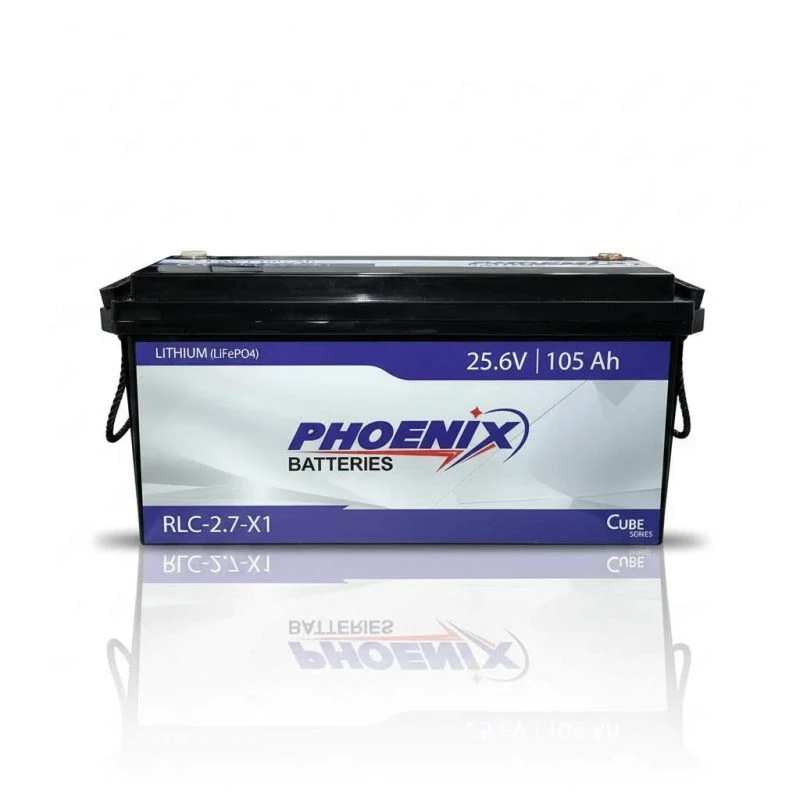
- 25.6V 105Ah LiFePO4
- 95% usable energy
- 6,000+ cycles
- No maintenance
- Needs lithium-compatible inverter
Phoenix 25.6V IP40
LiFePO4 · 100 Ah · 2.56 kWh
Rs 160,000
Rs 62,500/kWh
- 25.6V 100Ah LiFePO4
- 95% usable energy
- 6,000+ cycles
- IP40 indoor
- Needs lithium-compatible inverter
Phoenix Wall Rack 51.2V
LiFePO4 · 100 Ah · 5.12 kWh
Rs 215,000
Rs 41,992/kWh
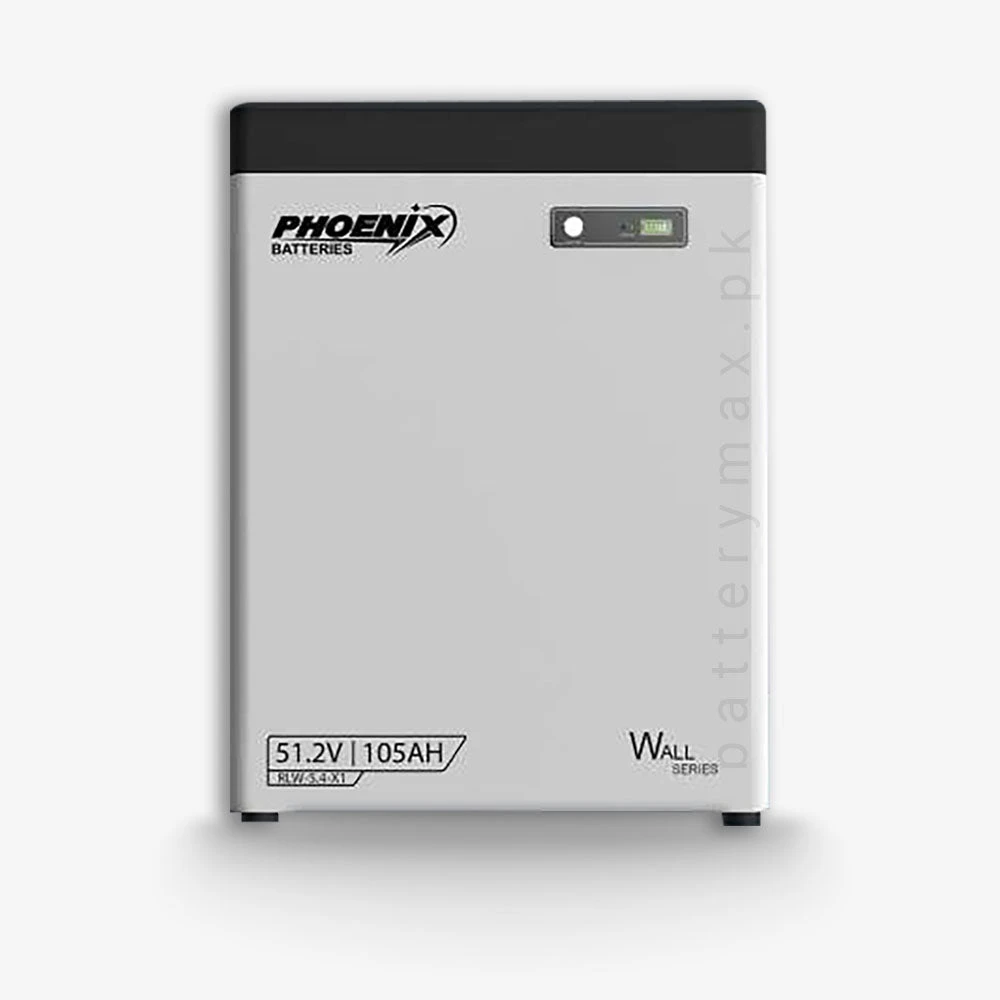
- 51.2V 100Ah LiFePO4
- 95% usable energy
- 6,000+ cycles
- Wall-rack mount
- Lowest per-kWh Phoenix lithium
Made in Pakistan
Century Engineering Industries, Karachi
- Established 2005
- 2 million+ batteries a year
- Company-owned dealer network
- 11 registered offices
Tubular Lasts Longer
TX and UGLT deep-cycle series
- 1,200+ deep cycles
- 80% usable energy
- 4–5 year life
- Water top-up every 2–3 months
Lithium Is the Upgrade
Phoenix LiFePO4 range
- 6,000+ cycles
- 95% usable energy
- 10–15 year life
- No maintenance at all
Buy It Genuine
Three quick checks at the shop
- Date code on the top cover
- Serial matches the warranty card
- Computerised invoice with stamp
- Never buy a dry battery over 3 months old
Need a battery for your home UPS or your solar setup? Phoenix is the name most Pakistani shopkeepers will say first. It is made in Karachi, it is in every bazaar, and its TX tubular series is the battery most people trust for long load-shedding hours. On this page you will find the phoenix battery price in pakistan for every model — tubular, flat-plate, car batteries and lithium — in the cards above.
One honest note before the figures: most of the cards show a price range, not one fixed number. Phoenix batteries are sold by dealers in every city, and each dealer quotes a little differently. We show the full range so you know what to expect at the shop. The number under each price — the rupees-per-amp-hour rate — is worked out from the low end to the high end of that same range.
Nothing here is guessed. And the Best Value badge? That goes to the UGLT 255. Read the next section to see why it wins — and why the cheapest number on the card is not always the cheapest battery.
How to Read the Phoenix Battery Price in Pakistan per Amp-Hour
Every card shows a rupees-per-amp-hour rate under the price. This is the simplest way to compare batteries. Amp-hour — written as Ah — is how much charge a battery holds.
Think of it like the size of a water tank: a bigger Ah means more stored energy. To get the rate, divide the price by the amp-hours. A battery with a lower rupees-per-amp-hour rate gives you more storage for each rupee you spend.
But there is a catch. The Ah printed on the label is the nameplate capacity, not the usable capacity. A tubular battery lets you use about 80% of its amp-hours before you must recharge it.
A flat-plate battery lets you use only about 50%. That limit is called the depth of discharge, or DoD. So when you compare, always use the usable amp-hours.
That is why the UGLT 255 wins: it is tubular, so 80% of its 200 amp-hours is usable. The XP 230 looks cheaper per amp-hour on the label, but it is flat-plate, so only half of its 190 amp-hours is usable. Per usable amp-hour, the UGLT 255 is the cheapest battery on this page.
Here is a quick example. Imagine you pay for a 200-amp-hour tubular battery and a 200-amp-hour flat-plate battery at the same price. The tubular one gives you about 160 usable amp-hours.
The flat-plate one gives you only about 100. You paid the same money but got 60% more usable storage from the tubular one. That is the whole point of checking the usable rate, not just the label rate.

Three Families, One Brand: TX, UGS and XP Explained
Phoenix sells its batteries in three families, and knowing which family a model belongs to tells you almost everything about it. The phoenix battery price in pakistan changes with the family, because each family is built for a different job. The TX family is tubular and deep-cycle.
The UGS and XP families are flat-plate. The Cube and Wall Rack models are lithium. Same brand, very different batteries.
TX Tubular — the Workhorse for Long Power Cuts
The TX series is the famous one. Tubular means the plates inside the battery are long tubes packed with active material, like tall straws standing upright. Those tall plates do not fall apart easily when the battery is charged and discharged again and again.
That is why a TX battery survives over 1,200 deep cycles — a full charge and discharge, over and over — and lasts four to five years. It is built for 8–12 hour load-shedding backup, for 3–6 kW hybrid solar systems, and for running heavy loads like inverter air conditioners, refrigerators, fans and water pumps.
The TX range runs from the small TX 1000 to the big TX 3500. Small homes usually need 105–120 amp-hours. Medium homes need 150–170 amp-hours.
Large homes need 200–230 amp-hours of tubular capacity. For a 1–1.5 kVA UPS, the TX 1800 or TX 2000 is the usual pick, giving about 6–8 hours of backup for a fan, a few lights and a Wi-Fi router. For a 3 kW solar system, the TX 2500 or the UGLT 255 is the usual pick.
One detail worth knowing: some sellers list the TX 2500 as 215 amp-hours and others as 230 amp-hours. We use 215 amp-hours on the card because that is the capacity from the same source as the price. If a shopkeeper shows you a TX 2500 with a different capacity on the label, check the printed plate on the battery itself before you pay.
UGS and XP Flat-Plate — the Budget Option for Short Cuts
Flat-plate batteries have flat lead plates inside, like sheets of paper stacked together. They cost less to make, so they cost less to buy. But the flat plates wear out faster.
A flat-plate battery lasts about 400–600 cycles and two to three years. And because you can only use about 50% of its amp-hours, you need a bigger battery for the same backup time.
That is fine for short power cuts. The UGS 175 is one of the most popular medium UPS models in Pakistan, and it suits a home that only needs 2–4 hours of backup for fans, LED lights, Wi-Fi and laptops. The XP 230 and XP 150 are also budget household UPS batteries.
Just remember the rule: never let a flat-plate battery drop below half its charge. Running it flat will kill it in months.
XP Automotive — Car Batteries, Not Home Batteries
The automotive XP models — XP 40, XP 50, XP 65, XP 85 and XP 135 — are car batteries. They start engines, they do not power homes. A car battery is built to give a short, powerful burst of current to turn the engine, then recharge quickly.
It is not built to run a fan for hours. Do not buy a car battery for your UPS just because it is cheap. It will fail fast, and the warranty will not cover it.
Match the model to your car: the XP 40 fits small cars like the Alto, Cultus, WagonR and Mehran. The XP 50 fits the City, Swift and Yaris. The XP 65 fits the Corolla, Civic and BR-V.
The XP 85 fits SUVs like the Hilux and Fortuner. The XP 135 fits trucks and tractors. If you are unsure, check your car manual or ask the dealer to match by the old battery’s code.
What Is a Phoenox Battery — and Is It the Same as Phoenix?
If you have seen the word “phoenox battery” in a search, you are not alone. Lots of people type it. Here is the honest answer: there is no brand called Phoenox.
We searched for it, and every result was either a Phoenix battery page, a chemistry paper about a substance called phenoxazine, or a European research project called PHOENIX Smart Batteries. The official Phoenix catalogue lists no Phoenox family at all.
So what is going on? It is a spelling mistake. “Phoenox” sounds like “Phoenix” when you say it out loud, and many people type what they hear.
If you searched for a phoenox battery, you were almost certainly looking for the phoenix battery price in pakistan — and this page is the right place. Do not trust any shop or website that claims to sell a “Phoenox” battery with its own price list. That brand does not exist, and anyone selling under that name is either confused or selling you something else.
Why the Same Phoenix Battery Costs Different Amounts in Different Shops
Walk into three shops in the same bazaar and ask for a TX 1800, and you will get three different prices. That is normal, and it does not mean anyone is cheating you. Here is why the numbers move.
First, the city matters. A battery bought in Karachi, where it is made, often costs less than the same battery in Peshawar or Quetta, because transport adds up. Second, the dealer matters.
A company-owned Phoenix dealer and a small general shop have different costs, and their prices show it. Third, the date matters. Battery prices move with the price of lead, and lead moves with the dollar.
A price from three months ago is not today’s price. Fourth, some shops quote the price without the old-battery exchange, and some quote with it. Always ask: is this the price with exchange or without?
One more thing to watch: a single dealer can list a battery far below the usual range. We found one Rawalpindi dealer listing the TX 1800 below the range in the cards above. That does not make the range wrong.
It usually means that dealer had old stock, or a special deal, or a price without the exchange. Use the range as your guide, and treat a price far outside it as a reason to ask questions, not as the new normal.
Which Phoenix Battery Fits Your Home?
Picking a battery is really picking a size. Too small, and your fans die halfway through the power cut. Too big, and you paid for storage you never use. Here is a simple way to think about it.
Start by listing what you need to run when the power goes. A ceiling fan uses about 75–100 watts. An LED bulb uses about 10–15 watts. A Wi-Fi router uses about 10 watts.
A laptop charger uses about 60 watts. Add them up. If your list comes to about 200 watts, and you need 4 hours of backup, you need about 800 watt-hours of usable energy. A 12-volt battery gives you usable energy equal to 12 times its usable amp-hours.
So 800 divided by 12 is about 67 usable amp-hours. For a tubular battery at 80% depth of discharge, that means a nameplate size of about 85 amp-hours — a TX 1000. For a flat-plate battery at 50%, you would need about 135 amp-hours — closer to a UGS 175.
For a whole home with several fans, lights, a refrigerator and a water pump, you are looking at 200–230 amp-hours of tubular capacity, or a pair of batteries in series for a 24-volt system. If you have solar plates on your roof, the battery bank usually matches the system size: a 1–2 kW system pairs with a smaller tubular battery, a 3 kW system pairs with a TX 2500 or UGLT 255, and larger homes and shops go bigger still. If you want exact numbers for your own home, try our solar load calculator — it adds up your appliances and suggests a system size.
Phoenix Against Osaka and AGS: an Honest Comparison
Phoenix is not the only Pakistani battery brand. Osaka and AGS are the other two big names, and every shopkeeper has an opinion about which is best. When you compare the phoenix battery price in pakistan with Osaka and AGS, remember you are comparing more than a price tag. Here is how the three stack up, without any price figures — those live in the cards above.
| Brand | Strength | Backup | Dealer network | Best for |
|---|---|---|---|---|
| Phoenix | Tubular range is deep and well tested | Long, steady backup | Company-owned dealers across Pakistan | Homes with long power cuts |
| Osaka | Wide range, strong in cars and UPS | Good for medium backup | Very wide dealer network | Buyers who want many options |
| AGS | Strong brand name, good build | Reliable for UPS use | Wide dealer network | Buyers who trust the AGS name |
The honest truth is that all three brands make good batteries and all three make batteries that fail early if you abuse them. The brand matters less than three things: buying the right size, buying a genuine battery, and never draining it below its safe limit. A well-cared-for Phoenix tubular will outlast a neglected Osaka or AGS battery every time. Read our Osaka battery price guide and our tubular battery price guide to compare the full ranges side by side.
Tubular or Lithium: Which One Should You Buy?
This is the question every buyer asks now, because Phoenix sells both. A tubular battery is the old, proven technology. A lithium battery is the new, expensive, long-lasting one. Here is the real difference, in plain words.
A tubular battery costs less today but needs care: you top up the water every two to three months, you check it, you keep it ventilated. It lasts four to five years and gives you about 1,200 full cycles. A lithium battery costs much more today but needs no care at all: no water, no checks, no ventilation worries.
It lasts ten to fifteen years and gives you over 6,000 cycles. It also gives you 95% of its energy as usable, against 80% for tubular.
So which one wins? It depends on how long you plan to keep it. If you will move house in two years, or your budget is tight today, tubular is the sensible buy. If this is your forever home and you can afford the higher price now, lithium costs less over ten years because you buy one battery instead of two or three tubular ones.
One more condition: lithium needs an inverter that understands lithium. Check your inverter’s manual before you buy a lithium battery — an old UPS that only knows lead-acid will not charge it properly. When you weigh the phoenix battery price in pakistan against ten years of use, lithium often wins on total cost. Read our lithium battery price guide for the full range of lithium options in Pakistan.
Inside a Phoenix Battery: What Makes the TX Series Last
Open a TX battery and you will see tall tubular plates standing upright, like a row of long straws. Each tube is packed with active material and wrapped in a special sleeve called a gauntlet. When the battery charges and discharges, the material inside swells and shrinks.
In a flat-plate battery, that swelling makes the material fall off the plate — engineers call it shedding — and the battery slowly loses capacity. In a tubular battery, the gauntlet holds the material in place, so shedding is much slower. That is the whole secret of the TX series: tall plates that hold together.
The TX series also uses a low-antimony alloy, which means it loses less water than older battery designs. You still need to top up the water every two to three months, but only with distilled water — never tap water, never acid. Tap water has minerals in it that coat the plates and kill the battery early.
The charging current should stay between 15 and 25 amps, and the cut-off voltage is 10.5 volts on a 12-volt battery. Go below that and you are eating into the battery’s life.
The lithium models work completely differently. They use lithium iron phosphate cells — LiFePO4 — with a small computer inside called a battery management system, or BMS. The BMS watches every cell, balances them, and shuts the battery down before anything goes wrong.
That is why lithium needs no water and no maintenance. It is also why lithium costs more: you are paying for the cells and the computer together.

How to Check a Phoenix Battery Is Genuine Before You Pay
Checking the phoenix battery price in pakistan is only half the job. The other half is making sure the battery in your hands is genuine. Fake and refurbished batteries are common in every bazaar, and they look right until they die in six months. Here are the checks that matter.
First, find the date code. It is embossed in the top cover of the battery — a code that tells you when it was made. Never buy a dry, uncharged battery older than three months.
A battery sitting dry on a shelf slowly damages itself, a problem called shelf-sulphation, and no warranty covers it. Second, look at the terminals. They should be smooth, silvery-grey, and free of dents, scratches and acid marks.
Rough or pitted terminals are a sign the battery has been used before. Third, check the serial number engraved on the battery and make sure it matches the number on the warranty card. If they do not match, walk away.
Fourth, always demand a computerised invoice with the dealer’s stamp on it. A handwritten slip is not enough if you need a warranty claim later. Buy from a company-owned Phoenix dealer when you can — the dealer network is one of Phoenix’s real strengths.
And remember the warranty picture is messy: different sources quote different warranty lengths for the same model, from six months to two years. Ask the dealer to write the exact warranty on your invoice before you pay, and keep that invoice safe.

Installing Your Phoenix Battery Safely
A battery is not a toy. It holds sulphuric acid and it gives off hydrogen gas while charging. Install it in a ventilated area — never in a closed cupboard or a bedroom.
Keep it at least three feet away from gas cylinders, stoves and generator exhaust. When you top up the water, wear eye protection and gloves. If acid touches your skin, wash it off with plenty of water straight away.
The cables matter more than most people think. Use thick, pure copper DC cables — at least 16 to 25 square millimetres — with pressed lugs on the ends. Thin cables heat up, waste energy and can melt.
Keep the cables short and tight. After connecting, coat the terminals with petroleum jelly to stop corrosion. Never use wheel grease — it traps dirt and makes things worse.
For maintenance, check the water level every two to three months for tubular batteries, and every month in summer for flat-plate batteries. Top up with distilled or de-ionised water only. If you have a hydrometer — a small tool that measures the acid strength — a fully charged battery should read between 1.240 and 1.260.
Clean the terminals with warm water and baking soda when they look dull. Lithium batteries need none of this: no water, no hydrometer, no cleaning. Just keep them dry and indoors.
Which Inverter and UPS Work Best with Phoenix Batteries?
A battery is only as good as the inverter or UPS that charges it. The wrong charger will overcharge a tubular battery and dry it out, or undercharge it and leave it weak. Match the charger to the battery type.
For TX tubular batteries, use an inverter with a proper tubular or deep-cycle charging mode. Most modern hybrid inverters — Inverex, Crown, Solis and similar brands — have one. Set the charging current between 15 and 25 amps and the cut-off at 10.5 volts for a 12-volt battery.
For flat-plate UGS and XP batteries, use a standard UPS charging mode and never let the battery drop below half charge. For lithium batteries, you need an inverter with a lithium mode and a CAN bus or RS485 connection so the inverter can talk to the battery’s BMS. An old UPS that only knows lead-acid will not charge a lithium battery properly.
If you are buying an inverter at the same time as the battery, read our solar inverter price guide and our UPS price guide first. And if you are planning a full solar setup, the solar system price guide shows what a complete system costs, plates and all.
Taxes, Warranty and the Fine Print
Battery prices in Pakistan include sales tax, and the tax is already in the range on the cards above — the price you see is the price you pay at the shop, before any old-battery exchange. If a dealer offers you a much lower price, ask whether the exchange is included. An old battery has scrap value, and dealers buy it back. That exchange value is part of the deal, not a bonus.
On warranty, be careful. Different sources quote different warranty lengths for the same Phoenix model, and the range runs from six months to two years depending on the model and the seller. There is no single official figure we can print with confidence.
What we can say is this: get the warranty written on your computerised invoice, with the dealer’s stamp, before you pay. A verbal promise is worth nothing when the battery fails in month eight.
One more piece of fine print: Phoenix batteries are made in Pakistan by Century Engineering Industries in Karachi, a company established in 2005 and part of Jawed Metal Industries. The company works with Kukje Industry Battery Co. Ltd on technology, and it makes over two million batteries a year.
Phoenix is also the first choice of several vehicle makers in Pakistan, including Pak Suzuki Motors and Al-Ghazi Tractors. That local manufacturing is why spare parts and dealers are easy to find in almost every city. If you want to check the rules that govern electricity in Pakistan, the National Electric Power Regulatory Authority — NEPRA — publishes them on its website.
About Solar Plate Pakistan
Solar Plate Pakistan is an independent information website. We are not a Phoenix dealer, and we are not connected to any battery or solar brand. We write these guides so homeowners in Pakistan can compare options and make informed decisions.
If this guide to the phoenix battery price in pakistan helped you, share it with a friend who is shopping for a battery too. And if you have a question we did not answer, write to us at sohaibkhan127222@gmail.com — we read every email. You can also read more about us on our About Us page, meet the team on Our Team, or browse our blog for more solar and battery guides.
Frequently Asked Questions
What is the Phoenix battery price in Pakistan today?
The price depends on the model and the city. A small TX 1000 tubular battery starts at the low end of the range in the cards above, and the biggest TX 3500 sits at the top. Check the cards at the top of this page for today’s figures.
Which Phoenix battery is best for a home UPS?
For most homes, the TX 1800 or TX 2000 is the best pick. They give about 6–8 hours of backup for fans, lights, Wi-Fi and a laptop. If your power cuts are short, a UGS 175 costs less and does the job.
Is Phoenox the same as Phoenix?
Yes — “phoenox battery” is a common misspelling of Phoenix. There is no brand called Phoenox. If you searched for Phoenox, you were looking for a Phoenix battery, and this page has the prices.
How long does a Phoenix TX battery last?
A TX tubular battery lasts four to five years with normal care. That means topping up distilled water every two to three months and never draining it below its safe limit. With good care, some owners get even longer.
What is the difference between tubular and flat-plate batteries?
Tubular batteries have tall tube-shaped plates that last longer — over 1,200 cycles and 80% usable energy. Flat-plate batteries have flat plates that wear out faster — about 400–600 cycles and only 50% usable energy. Tubular costs more but lasts much longer.
Can I use a Phoenix car battery for my home UPS?
No — car batteries like the XP 40 and XP 65 are built to start engines with a short burst of power, not to run fans and lights for hours. Using one in a UPS will kill it fast, and the warranty will not cover it.
How do I check if my Phoenix battery is genuine?
Check the date code embossed on the top cover and never buy a dry battery older than three months. Make sure the terminals are smooth and silvery-grey, and the serial number matches the warranty card. Always take a computerised invoice with the dealer’s stamp.
Does Phoenix make lithium batteries?
Yes — Phoenix makes LiFePO4 lithium batteries, including the Cube 12.8V and 25.6V models and a 51.2V wall-rack model. They last 10–15 years, need no maintenance, and give 95% usable energy, so they cost more upfront but last much longer than tubular batteries.
How much water does a Phoenix tubular battery need?
Top up the water every two to three months with distilled water only. Never use tap water — its minerals coat the plates and shorten the battery’s life. In summer, check flat-plate batteries every month because they lose water faster.
Where can I buy a genuine Phoenix battery in Pakistan?
Buy from a company-owned Phoenix dealer when you can. Phoenix has a dealer network across Pakistan with 11 registered offices. Always ask for a computerised invoice with the dealer’s stamp and the warranty written on it.