
UPS Price in Pakistan

UPS Price in Pakistan — 7 November 2026
Mini UPS
DC · 12V · Router + CCTV
Rs 8,000 – 12,000
Router + CCTV only
- 12V DC output
- No battery needed
- Router + CCTV
- Cheapest backup
- Silent, no fan
Local / Desí UPS
Square wave · 1000VA
Rs 18,000 – 28,000
Fans + lights only
- 1000VA square wave
- Fans + lights only
- Cheapest full UPS
- Can damage electronics
- 12V battery
Branded Sine Wave
Pure sine wave · 1000–1200VA
Rs 35,000 – 55,000
Fans, lights, TV + router
- 1000–1200VA
- Pure sine wave
- Safe for all appliances
- Home standard
- 12V battery
Branded Sine Wave
Pure sine wave · 1600–2400VA
Rs 55,000 – 95,000
Fans, lights, TV + fridge
- 1600–2400VA
- Pure sine wave
- Fridge-safe
- 24V battery
- Medium-home backup
Homage Vertex HVS-1214SCC
Hybrid · 1,000W · 12V
Rs 40,000
1 battery · Solar-supported
- 1,000W hybrid
- 12V, 1 battery
- Solar-supported
- Official store
- Lahore region
Homage HAS-3218SCC
Hybrid · 3,200W · 24V
Rs 65,000
Pure sine wave · Wi-Fi · Lithium-ready
★ Best Value- 3,200W hybrid
- Pure sine wave
- 5,000W solar charger
- Built-in Wi-Fi
- Smallest unit for a 1-ton AC
Trion Connect 1200
Domestic UPS · 1000W
Rs 43,000
Single-dealer listing
- 1000W domestic UPS
- Single-dealer listing
- High-quality range
- Narrow model range
- Home backup
APC Easy UPS 1KVA
Standby · 1000VA · ~600W
Rs 42,000 – 55,000
PC, CCTV + workstation
- 1000VA standby UPS
- Workstation + CCTV
- Surge protection
- Short backup
- Office standard
The Cheapest Backup
Mini DC UPS — router + CCTV
- Router + CCTV only
- No battery needed
- Cheapest backup in the country
- If only the router dies, this is the buy
Best Value per Watt
Homage HAS-3218SCC 3.2 kW
- Lowest rupees-per-watt on the page
- Pure sine wave + solar input
- Built-in Wi-Fi, lithium support
- Smallest unit for a 1-ton inverter AC
The Office Standard
APC Easy UPS
- Short backup, safe shutdown
- Surge protection
- Banks and software houses standardise on it
- Minutes of backup, not hours
Check Before You Pay
Four quick checks at the shop
- Serial on the side sticker, not the box
- Factory seal on APC units
- PSQCA licence on the unit
- Computerised invoice with stamp
A UPS is the simplest backup in Pakistan: mains power charges a battery, and when the grid drops, the battery powers your fans, lights, TV and router until the power returns. This page lists the ups price in pakistan for every UPS class — mini DC, local square-wave, branded sine-wave, Homage, APC, Simtek, Stabimatic and Trion — with the same day’s rates in the cards above. The rates match the solar plate price in Pakistan homepage for the same models on the same day, and the solar inverter price in Pakistan hub for the same models.
One fact first, because it changes every price on this page: the battery is almost always excluded. The card prices are for the UPS unit only, unless a card says otherwise — and a branded 1000VA UPS plus a tubular battery plus installation costs far more all-in than the unit price alone. A second fact: solarrate.pk has no UPS section at all — its inverter page was downloaded and grepped in full and contains zero UPS, Homage, Tesla or APC listings — so this page’s cards are built from the freshest dealer guides, each row labelled with its source and date in the research record above.
The Best Value badge sits on the Homage HAS-3218SCC 3.2 kW. It has the lowest rupees-per-watt rate among the cards on this page, and it is a real home hybrid — pure sine wave, solar input, built-in Wi-Fi and lithium support — and the smallest unit the store would look at for a 1-ton inverter AC. The two cheaper cards are not the same buy: the mini DC card only runs a router and CCTV, and the local square-wave card can damage electronics.
Below the cards you will find the UPS types explained, the size you need, the battery pairing, the UPS-vs-solar-hybrid decision, and how to check a UPS is genuine. For the two big local inverter brands, see the inverex inverter price in pakistan page and the crown inverter price in pakistan page, and for batteries, the lithium battery price in pakistan page and the tubular battery price in pakistan page.
How to Read the UPS Price in Pakistan per Watt
Every card shows a short line under the price that says what the unit runs. That line is the quickest way to compare UPS units, because watts — not VA — are what your appliances actually use.
Think of VA as the size of the box and watts as the power inside it. A 1000VA UPS gives about 600–800W of real power, because real wattage is roughly 60–90% of the VA rating. Two UPS units at the same VA can run very different loads.
To compare fairly, divide the price by the watts. A unit with a lower rupees-per-watt rate gives you more power for each rupee you spend — and that is why the HAS-3218SCC wins on rate here, even though it is not the cheapest card on the page.
But there is a catch. The watts on the label are the maximum output, not the type. A 1000W square-wave unit and a 1000W pure sine-wave unit at the same price are not the same deal — the square-wave one can damage your electronics, while the pure sine-wave one is safe for every appliance.
So compare within the same type first: sine-wave against sine-wave, hybrid against hybrid. Then compare the per-watt rate. Rate first, type second — and never the other way round.
UPS Price by Capacity
The right UPS size is the one that covers your load with 25–30% headroom — and the price jumps are not linear, because the waveform and the brand matter as much as the watts. Compare UPS units on capacity and waveform, not on the price alone — and always check whether the price includes the battery, because it almost never does.
One trap to know before you read the cards: the “blended” bands and the “branded” bands are different things. One guide’s blended band mixes local square-wave and branded units together; the other guide’s branded band is branded sine-wave only. This page explains the difference and never averages it.
Mini / DC UPS — Router and CCTV Only
A mini DC UPS (12V) powers a Wi-Fi router and a CCTV setup — nothing else. It is the cheapest backup in the country, and the only one that does not need a battery at all. If your only problem is the router dying during load shedding, this is the buy.
1000VA — Fans, Lights and a TV
1000VA is about 600–800W of real power. A computer, a TV and a few LED lights; 2–3 fans and lights on a local unit. One guide’s worked example: 3 fans + 6 lights + TV + Wi-Fi is about 450W, plus 30% margin is about 600W — a 1000VA sine-wave UPS is “perfect” for that home.
The price spread is the blended-vs-branded trap: local square-wave 1000VA and branded sine-wave 1000–1200VA are different products at different prices — see the cards above. The Homage Vertex HVS-1214SCC (1,000W, 12V, one battery), the Trion Connect 1200 (1000W) and the APC Easy UPS 1KVA are all in the cards above.
2000VA — Fans, Lights and a Fridge
2000VA is about 1,200–1,600W of real power: fans, lights and a refrigerator. The blended band and the branded 1600–2400VA band are different products — see the cards above for the branded band. The Homage Vertex HVS-2414SCC (1,800W, 24V, two batteries, 55A controller) lists a simulated sine wave, not a pure sine wave, and a simulated wave can make some fans hum and some sensitive devices dislike it.
The APC Easy UPS 2KVA, the Stabimatic GEMINI-2000VA and the SSA-1000 are named in the brand section below. They have no card on this page, because the cards follow the file’s verified 8-row table — their figures live in the research record above.
3 kW — The Smallest Size for One AC
3 kW runs a fridge, fans and lights, and it is the smallest class worth buying for a 1-ton inverter AC. The Homage HAS-3218SCC hybrid (3,200W, 24V, two batteries, 5,000W solar charger, pure sine wave, built-in Wi-Fi, lithium support, feeds the grid) is the store’s value pick and carries the Best Value badge above.
One guide’s “3.2 kW solar inverter” band describes branded solar inverters generally (Inverex-class), not the Homage hybrid — say so, never average. The Homage HAS-4018SCC hybrid (4,000W) is named in the brand section below.
5 kW and Above — Whole-Home and Office
5 kW is the practical size for the average Pakistani household — fridge, washing machine, LED lighting, fans, TV, kitchen appliances and one inverter AC. The Homage store lists larger hybrids up to 8,500W and two IP66 weatherproof hybrids above them, plus three-phase on-grid models from 10 kW — named in the brand section below, without prices on this page.
The APC Smart-UPS 5KVA Online is a server-room unit, not a home unit. The Stabimatic ONL-10000B online UPS with battery is named in the brand section too.
UPS Types — Offline vs Line-Interactive vs Online
Three types, three different deals — and the type matters more than the brand, because it decides whether your computer survives the switchover.
| Type | How it works | Transfer time | Pros | Cons | Best for |
|---|---|---|---|---|---|
| Offline / standby | Switches to battery when mains fails | Brief interruption | Cheapest | Gap in power; not for sensitive gear | Basic backup — fans, lights |
| Line-interactive | AVR regulates voltage, switches to battery when needed | Short (10–20 ms) | Surge protection; most common for homes | Limited capacity and runtime | Homes — the standard choice |
| Online / double-conversion | Constantly powers loads through the battery (AC→DC→AC) | Zero — no switchover gap | Highest protection and quality | Highest cost | Servers, medical and lab equipment |
Offline / Standby
The cheapest type: it switches to battery when the mains fails, with a brief interruption. Fine for basic backup, not for sensitive gear. The local/desí square-wave UPS is the cheapest tier of all — fans and lights only.
Its “bad quality” power can damage an LED TV, a computer and inverter appliances. One guide’s warning is worth hearing: modern installs need pure sine wave, not modified square-wave — square-wave harmonic distortion overheats ceiling-fan motors and damages electronics.
Line-Interactive
The most common type for homes: it regulates voltage fluctuations with AVR (automatic voltage regulation) and switches to battery when needed, with surge protection. APC Easy UPS is standby/line-interactive; Smart-UPS is the professional line.
One engineering source puts a pure sine wave UPS switchover at 10–20 ms for the 1–5 kVA class — fast enough that a computer does not notice.
Online / Double-Conversion
The premium type: it constantly powers connected devices through the battery — AC to DC to AC — so there is no switchover gap at all. Highest protection and quality, highest cost. For servers, medical and lab equipment, data centres.
The Stabimatic ONL series is the online line on the live store: ONL-1000B without battery, ONL-3000B without battery, ONL-2000B 48V pure sine wave with battery, ONL-10000B with battery. The APC Smart-UPS 3KVA Online and the 5KVA Online are the APC online units.
Pure Sine Wave vs Simulated vs Square Wave
The waveform is the quality of the power your UPS produces. Pure sine wave is grid-like and safe for all appliances. Simulated (modified) sine wave can make fans hum and sensitive devices dislike it — the Homage Vertex 2414 is simulated sine wave, and the store lists it honestly.
Square wave is fans and lights only. Check the waveform before you buy: a cheap square-wave UPS will run your fans and destroy your electronics.
UPS Price by Brand
Six brands, six different deals — and one honest gap. Every ups price in pakistan on this page is for the unit only, unless a card says otherwise — the battery is almost always a separate buy.
Homage — The Household Name
Homage is a Pakistani brand and the household name — widely available, easy service, the widest range of UPS. Its official store covers the Lahore region only; other cities call head office 021-111-764-111. The store’s prices are invoice rates including tax, and they describe the inverter only — budget 1, 2 or 4 batteries on top.
Most Homage “UPS” models are solar-supported hybrid inverters, not backup-only UPS — the pure-UPS line is small (Vertex). The full store list, read 7 November 2026: Vertex HVS-1214SCC (1,000W, 12V, 1 battery); Vertex HVS-2414SCC (1,800W, 24V, 2 batteries, 55A controller, simulated sine wave); HAS-3218SCC hybrid (3,200W, 24V, 2 batteries, 5,000W solar charger); HAS-4018SCC hybrid (4,000W, 24V, 2 batteries, 6,000W solar); HBS-5617SCC (5,600W, 48V, 4 batteries, 6,500W solar); HAS-6018SCC V4 hybrid (6,000W, 48V, 4 batteries, 9,000W solar); HBS-8017SCC (8,000W, 48V, 4 batteries, 11,000W solar); HAS-8518SCC hybrid (8,500W, 48V, 4 batteries, 13,000W solar).
The HAS-3218SCC is the store’s value pick: pure sine wave, built-in Wi-Fi, lithium support, feeds the grid — and the smallest unit the store would look at for a 1-ton inverter AC. The Homage 650VA appears on only one AI-generated report with a 1-year warranty — single-source, flag it. The Homage Tron Duo, Hexa and Matrix series are named but no prices were opened.
APC — The Office Standard
APC by Schneider Electric is the global standard for computer and office UPS, and Pakistani offices, software houses and banks overwhelmingly standardise on it. The October 2026 guide lists six classes: Easy UPS 650VA (single PC, router, small office desk); Easy UPS 1KVA (workstation, CCTV setup); Easy UPS 2KVA (small server, multiple PCs); Smart-UPS 1.5KVA (line-interactive, network gear); Smart-UPS 3KVA Online (servers, medical and lab equipment); Smart-UPS 5KVA Online (server rooms, critical loads).
One live listing, APC SRV2KI Easy On-Line 2kVA, does NOT conflict with the guide’s 2KVA band, because SRV is the online line, not Easy. APC units are for short backup — minutes, not hours — safe shutdown and surge protection, not hours of backup. APC sealed lead-acid batteries last 2–3 years.
APC prices react quickly to dollar movements, because it is an imported brand. Volume pricing on 10+ units is typically 8–12% below street price. The refurbished and grey-APC trap: buy from Schneider Electric authorised partners, check the factory seal, verify the serial — a deal 30% or more below market is not a deal.
Simtek and Stabimatic — The Live-Store Brands
Simtek is transformer-based, popular for Pakistani voltage conditions, long operational life. Stabimatic is the online-UPS specialist on the same store. The Powerhouse Express live store, crawled 11 November 2026, lists ten Stabimatic models: GEMINI-650; GEMINI-1250VA; GEMINI-2000VA; SSA-1000 UPS Inverter; ONL-1000B UPS without battery (online); SSI-3000 pure sine wave inverter without battery; ONL-3000B UPS without battery (online); ONL-2000B 48V pure sine wave UPS with battery (online, double-conversion); SSI-5000 pure sine wave inverter without battery; ONL-10000B online UPS with battery.
Simtek UPS models on the same store are mostly “Price on Request” (2000VA 1000W for 8 fans and 8 lights, 24V; 1250VA 625W; 1266VA 650W; 1500VA 750W). The same store also lists charge controllers and an isolation transformer — not UPS units, excluded from this page. Simtek Deluxe prices exist only in a 206-day-old table — stale.
Trion — A Narrow Range of High-Quality Domestic UPS
Trion is described as “a narrow range of high-quality domestic UPS”. Single-dealer listings: Connect 1200 (1000W); Connect 2200 (1800W); Connect 2201 1800W — one dealer against another, a conflict within the sources, report both; Trion-Connect 1201 12V; Trion Wise-2001 solar-supported.
Crown Relevo and Inverex Xtron
Two local brands’ small UPS lines. Crown Relevo: 1400VA 800W and 2500VA 1600W — instant switching, smart battery charging, compact wall-mount design. One guide’s figure for the 2500VA model is an obvious error and is not used on this page.
Inverex Xtron: X1200 MPPT 900W and X2400 MPPT 2kVA, from one dealer only. Full Crown rates are on the crown inverter price in pakistan page, and full Inverex rates on the inverex inverter price in pakistan page.
Fronus, Ziewnic, MaxPower and CoreTech — Small Hybrids
These are solar hybrids and off-grid inverters, not backup-only UPS — labelled as such. They are the closest solarrate-verified small-unit rows, from 11 November 2026: CoreTech 1.6kW PV2200 IP21 off-grid; MaxPower PV Tech 1200 1.2kW hybrid; MaxPower PV Tech 3000 3kW hybrid; Ziewnic Dual Max 1.6kW PV2500; Ziewnic Diamond 2.2kVA PV3000; Pilot PV3000 3kW; Fronus Infineon Reborn Eco 4.2kW PV4200; Fronus Infineon Reborn Eco 6.2kW PV6200.
Fronus guide figures (18 days, borderline): PV 2200 1.6kW; PV 3200 3kW; PV 5200 4kW; PV 9000/META 6kW. The PV 14000 10kW band is an obvious error — a 10 kW inverter cannot cost less than the 1.6 kW — and is not used.
Tesla — No Verified Fresh Price
No fresh verified Tesla UPS price exists anywhere. All Tesla sources are 334–925 days old or undated, and one undated “Tesla Powerwall” claim is not a UPS and is unverified. “Tesla inverters” in Pakistan are locally-branded Voltronic-type hybrids (Axpert), not US Tesla products. This page says so honestly rather than inventing a price.
Why UPS Prices Differ
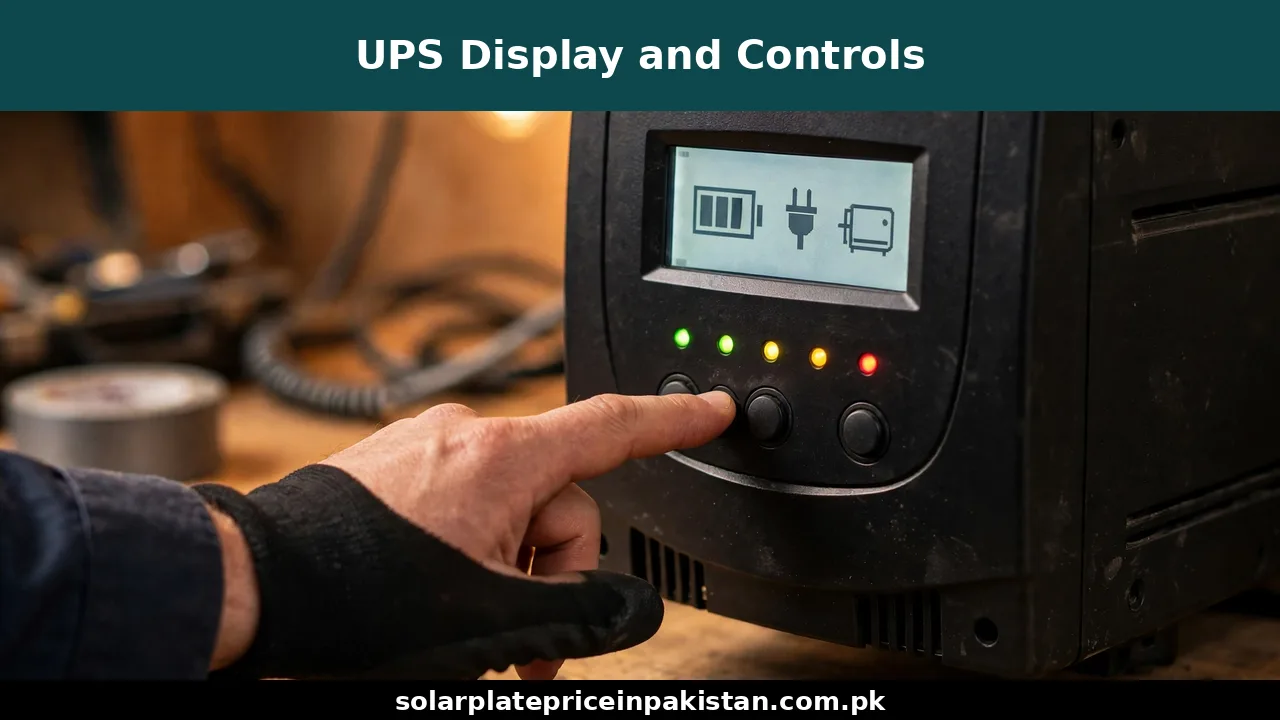
When you compare the ups price in pakistan across shops, remember you are comparing more than a price tag. Seven things move the price of the same UPS, and none of them is the UPS itself:
- Capacity: 1000VA is about 600–800W of real power; 2000VA is about 1,200–1,600W. Check the watt rating, not just the VA — real wattage is roughly 60–90% of the VA rating, and one guide puts it at about 70%.
- Waveform: pure sine wave costs more than simulated sine wave, which costs more than square wave — and square wave can damage your electronics. The Homage Vertex 2414 is simulated sine wave; the HAS-3218SCC is pure sine wave. The price gap is the waveform.
- Brand and warranty: APC costs more than Homage, Homage costs more than a local square-wave unit — and the warranty picture is thin and conflicting. Homage is about 1 year on one single-source retail listing; APC has no fresh verified warranty figure in the opened sources, so this page does not assert the usual “2 years” without a source; Simtek, Stabimatic, Trion and NS have no verified warranty figure found anywhere opened.
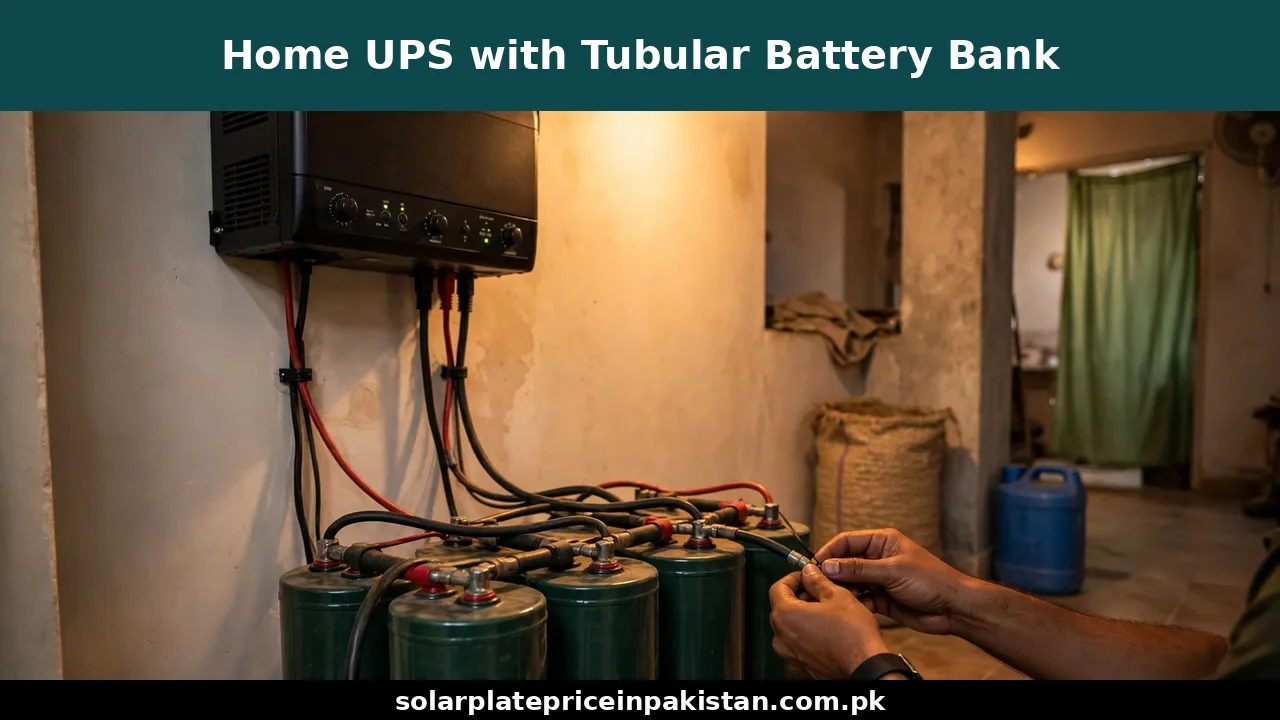
- Battery excluded: the unit price almost never includes the battery. A tubular battery adds a large chunk on top — and a branded 1000VA UPS plus a tubular battery plus installation costs far more all-in than the unit price alone.
- Dollar rate: UPS prices move with the dollar rate and vary slightly between cities — always confirm the final price with the seller. Dealer guides go stale fast for this reason.
- Online pattern: daraz single-dealer prices run well above dealer listings for the same model on the inverter pages, and the same pattern holds for UPS — never treat a single online listing as the market rate on its own. Where to buy: brand outlets and authorised dealers are safest for larger purchases; Hall Road (Lahore), Saddar (Karachi) and Blue Area (Islamabad) electronics markets offer the lowest street prices but check the seal and warranty card; online (Daraz, Telemart, Shophive) is convenient but buy only from highly rated sellers and confirm warranty terms in writing. Keep all receipts — you will need them for warranty claims.
- Unreliable guides: one price site’s inverter-class prices run 2–3.7× the verified dealer rates — its Nitrox 6kW figure sits far above the solarrate dealer listings — so its inverter-class figures are not headlined on this page. Its Trion rows are single-dealer listings only.
Which UPS Size Do You Need?
Size the UPS to your load, not to your budget. A too-small UPS trips on motor starts; a too-big UPS wastes money. And one rule every source uses is the same: list your load, add 25–30% headroom, then match it to a UPS size — and divide running watts by power factor 0.8 to get VA (a 1,600W load needs a 2,000VA minimum). Then check the ups price in pakistan for that size in the cards above.
Sizing Formula — Load + 25–30% Headroom, Watts ÷ 0.8 = VA
Step 1: list the load (fans, lights, TV, router, fridge). Step 2: add 25% headroom. Step 3: match it to a UPS size. Step 4: pick the battery.
Real wattage is roughly 60–90% of the VA rating, so a 1000VA UPS is about 600–800W and a 2000VA UPS is about 1,200–1,600W.
And check inrush: inductive equipment draws 3–5× its running wattage on startup — a 1.5-ton inverter AC draws about 1,600W running but 3,000W or more for a few seconds at compressor start, and a 1 HP water pump draws about 750W running and about 2,200W on startup. Failing to factor starting wattage trips backup inverters on overload.
UPS Size by Home
| Home | Load | UPS size |
|---|---|---|
| Small home | Router, CCTV, 2–3 fans, lights | Mini DC UPS / 1000VA |
| Medium home | 4–5 fans, lights, TV, fridge | 2000VA / 3 kW |
| Large home | 1 inverter AC, fridge, fans, lights | 3–5 kW |
| Office / server room | Computers, network gear, servers | APC Smart-UPS 1.5–5KVA Online |
How Many Batteries Per UPS
12V units need 1 battery; 24V need 2; 48V need 4. The Homage store table makes it plain: the 1,000W Vertex takes 1 battery, the 1,800W Vertex and the 3,200W and 4,000W hybrids take 2, and the 5,600W and above take 4.
Lead-acid and tubular batteries must never be discharged past 50% DoD if they are to survive more than 18 months — half the stored power is the safe limit.
Backup Hours by Battery
Backup hours come from the battery, not the UPS. The formula one guide uses is: Backup (hours) = Battery Volts × Ah × 0.7 ÷ Load (watts) — the 0.7 is because the battery must not be fully drained and the UPS loses some power. Example: a 12V 185Ah battery at 450W gives about 3.4 hours; at 200W, about 7 hours. The table below is that guide’s own backup table, for a 185Ah battery:
| Load | 1 battery (12V 185Ah) | 2 batteries (24V 185Ah) |
|---|---|---|
| 200W | ~7 hours | ~14 hours |
| 450W | ~3.5 hours | ~7 hours |
| 800W | ~2 hours | ~4 hours |
Another guide’s method: 12V × 200Ah = 2,400Wh; at 300W that is about 8 hours in theory and about 5 hours in practice (60–70%). An engineering source’s formula: Battery Ah = Load (W) × Hours ÷ (System Voltage × DoD × Inverter Efficiency). Worked example: 1,200W × 3 hours on 24V, 85% efficiency, 50% DoD → about 353Ah → four 12V 180Ah tall tubular batteries.
And one battery maker’s own list: a 170Ah battery gives about 3.4 hours on a 300W load at half use; a 190Ah battery about 3.8 hours; a 200Ah battery about 4 hours.
What Size for 1 AC?
A 1.5-ton inverter AC is about 1,500W rated — 1.9 kVA alone, so 2 kW minimum; with fans, lights, fridge, laptop and router, 2.9 kVA — so 3 kW. The Homage HAS-3218SCC 3.2 kW is the smallest unit the store would look at for a 1-ton inverter AC.
For a whole home with one AC, 5 kW is the practical size. Or work it out with the solar load calculator.
UPS vs Solar Hybrid
This is the page’s central question — and the answer is not “which is better” but “what do you need it to do”. The ups price in pakistan for a plain UPS looks lower than a hybrid — until you add the battery, and until you count what the hybrid saves on the bill.
| UPS (backup only) | Solar hybrid inverter | |
|---|---|---|
| Solar input | No — cannot take plates | Yes — takes plates |
| Bill saving | No — adds 30–60 units/month to the bill | Yes — plates cut the bill |
| Backup during load shedding | Yes — fans, lights, TV, router | Yes — plus AC by day |
| Runs an AC | No (at UPS sizes) | Yes — 3 kW for one AC, 6 kW for two |
| Battery | Almost always separate | Almost always separate |
| Best for | Short outages, fans and lights only | Long outages, lower bills, AC |
When a UPS Is Enough
If load shedding is 2–4 hours a day and you only want fans and lights, a sine-wave UPS plus a tubular battery is enough. A plain backup (UPS-type) inverter at the same size is cheaper than a solar hybrid — but it cannot take plates.
For most homes, a pure sine wave inverter UPS from Homage or Inverex in the 1–3 kW range is the sweet spot — safe for all appliances and ready for solar plates later.
When You Need a Hybrid
If you also want a lower bill, daytime outages covered, or to run an AC, a solar hybrid inverter is the better investment. A 3 kW solar hybrid runs a small home with a single inverter AC by day; a 6–6.6 kW hybrid runs one or two inverter ACs on sunny days.
Buy the hybrid first — plates can be added later. And if you plan to add plates within a year or two, buying hybrid now saves you from replacing the whole unit later.
The Battery-Less Trap
Two listings on solarrate carry a “Battery Less” label: the Lobo 5kW and the Fronus Meta 6kW PV9000. Both have NO battery backup. Label them battery-less and never present them as UPS or hybrid prices.
The Fronus PV 7200 is out of stock, and the PV 9000 Meta 6kW off-grid is “coming soon” — do not list either as buyable.
UPS Technology
AVR — Automatic Voltage Regulation
Line-interactive UPS units regulate voltage fluctuations with AVR — so when the summer voltage slumps below 180V on prioritised feeders, the UPS steadies it before it reaches your appliances. A facility facing three discrete two-hour cuts needs faster battery recharge cycles than one facing a single six-hour blackout, because the battery gets less time to recover between cuts.
Transfer Time
Transfer time is the gap between the mains failing and the battery taking over. Offline units have a brief interruption; line-interactive units switch in 10–20 ms — fast enough that a computer does not notice; online double-conversion units have zero transfer time, because the load is always powered through the battery. For a computer or a server, transfer time is the spec that matters most.
Charging and Your Electricity Bill
A UPS adds 30–60 units a month to the bill in load-shedding areas, especially with an old battery. One dealer’s own arithmetic: two full charge-and-use cycles a day of a 170Ah battery adds about 70–80 units a month — their figure, labelled as theirs.
Charging a battery adds units to your bill — a UPS does not save electricity, it moves it in time. A solar hybrid, by contrast, cuts the bill, because the plates generate the power.
How to Verify a Genuine UPS
Checking the ups price in pakistan is only half the job. The other half is making sure the UPS in your hands is genuine. Five checks before you pay, and they take ten minutes:
1. Serial Number and Factory Seal — Not the Box
Ask for the exact model number on the quotation and check it matches the label on the unit. Locate the serial number on the UPS side sticker, not the box — box labels are easily switched. Note the serial number and keep it with your invoice. For APC, check the factory seal.
2. Warranty Registration
Ask how the warranty is registered and keep the warranty paperwork. All warranties require registration at the manufacturer portal within 30 days of installation. A genuine serial completes registration; a fake returns “invalid SN” or “already registered elsewhere”.
But be honest about what is verified: Homage is about 1 year on one single-source retail listing; APC has no fresh verified warranty figure in the opened sources, so this page does not assert the usual “2 years” without a source; Simtek, Stabimatic, Trion and NS have no verified warranty figure found anywhere opened.
3. Authorised Dealer Check
Buy from an authorised dealer. Brand outlets and authorised dealers are safest for larger purchases. Hall Road (Lahore), Saddar (Karachi) and Blue Area (Islamabad) electronics markets offer the lowest street prices — but check the seal and warranty card. Online (Daraz, Telemart, Shophive) is convenient, but buy only from highly rated sellers and confirm warranty terms in writing.
Keep all receipts — you will need them for warranty claims.
Grey-Market and Refurbished Warning
Be cautious of unusually low prices from unknown sellers, or used units sold as new. For APC, buy from Schneider Electric authorised partners and check the factory seal and serial — a deal 30% or more below market is not a deal.
Grey-market units — bought in bulk from clearance sales or unauthorised distributors abroad — have no functioning warranty path once they land in Karachi. A low quote for a branded unit deserves a check for authenticity.
PSQCA Licence Check
One dealer advises checking the UPS and battery for a PSQCA licence — the Pakistan Standards and Quality Control Authority — before paying. The PSQCA website does not load, so it is named in the text only and never linked. Ask the dealer to show the licence on the unit or the packaging, and walk away if they cannot.

Fitting Your UPS — Installation Without the Usual Mistakes
Installation cost depends on wiring length and circuit count — get it in writing before the work starts. Five common mistakes, from the freshest guide: (1) thin wiring — UPS current from the battery is heavy; weak wire heats up and is a fire risk; (2) putting the whole house on the UPS — only essential circuits (fans, lights, TV) on the UPS line; never iron, motor or heater; (3) battery in a closed space — lead-acid releases gas, needs ventilation; (4) no earthing — UPS plus bad earthing risks appliances and life; (5) wrong changeover setup — WAPDA and UPS lines not properly separated creates backfeed risk.
All of this is a trained electrician’s job. Check on installation day: battery wire gauge, only essential circuits on the UPS line, and earthing works. Keep the battery ventilated, away from children, and check the water level monthly.
Battery Pairings
The battery is half the system — and half the cost.
Battery Count by Voltage
12V units need 1 battery; 24V need 2; 48V need 4. Lead-acid and tubular batteries must never be discharged past 50% DoD if they are to survive more than 18 months — half the stored power is the safe limit.
Tubular vs Flat-Plate vs Lithium
The table below is the freshest guide’s own figures, with the life conflict reported, never resolved:
| Battery | Life | Best for |
|---|---|---|
| Lead-acid 185Ah | 1.5–3 years | Cheapest upfront |
| Tubular 185–230Ah | 3–5 years (one guide says 2–3) | Home UPS standard |
| Lithium (branded) | 8–10 years | Longest life, no maintenance |
One guide says lead-acid tubular lasts 2–3 years; the freshest guide says tubular lasts 3–5 years — report both. A lithium pack costs several times a tubular battery, with 85% usable DoD and 10+ years. Full battery rates are on the lithium battery price in pakistan page, the tubular battery price in pakistan page, the phoenix battery price in pakistan page and the osaka battery price in pakistan page.
Battery Care
Check the water level monthly, distilled water only — tap water damages the plates. Clean the terminals with warm water and apply petroleum jelly. Never drain the battery to zero daily — it halves the life. Use the battery once a month even when load shedding is low.
Keep it in a cool, ventilated place, never in direct sun or a closed cupboard. And one fault guide: a constant beep usually means overload; a battery-low beep coming early means a weak battery or a charging fault; a UPS switching off from heat means blocked airflow or too much load; not charging when power returns means a fuse, a charging card or a setting fault; a swollen battery means stop using it immediately and replace it — it can be dangerous.
Tax on UPS
No UPS-specific GST or duty figure was verified in any source, so this page states none. What is verified is the basis of every figure on this page: the card figures are dealer-guide prices, each labelled with its source and date in the research record above, because solarrate.pk has no UPS section.
Always ask your dealer whether the quoted price includes GST and whether it includes the battery, installation and delivery — a quote that excludes any of them will look cheaper by exactly that much, and all of them are still payable. For context only: solar plates carry 0% customs duty and 10% GST since July 2025. Dealer guides note only that UPS prices move with the dollar rate — no figure.
About This UPS Page
Solar Plate Pakistan is an independent price-information website. We are not an authorized dealer or official partner of any brand. The ups price in pakistan on this page comes from dealer guides collected each morning — the freshest guide is dated 7 November 2026, and the Homage store prices were read on 7 November 2026 — and the same model’s price is matched across this page, the homepage and the brand pages on the same day.
Where a card comes from a dealer guide instead of a live listing, it is labelled as such in the research record above. If a size has no verified listing on the day this page is built, it has no card rather than a guessed figure.
A pure backup-only UPS is not grid-connected equipment, so NEPRA is less directly relevant here than on the inverter pages — but NEPRA governs the net-metering approval that applies the moment a UPS-class hybrid exports to the grid, plus the DISCO rules behind load shedding. The official catalogue and store for Homage is at homage.com.pk, named in text only.
Questions about this page can be sent through the Contact Us page, or by email at sohaibkhan127222@gmail.com. More about the site on our About Us page and our Our Team page, and read our Disclaimer before you buy.
The rules that govern this page are set by the National Electric Power Regulatory Authority (NEPRA), under the Prosumer Regulations 2026 (S.R.O. 251(I)/2026).
Frequently Asked Questions
What is the ups price in pakistan for a 1000VA UPS today?
See the cards at the top of this page for today’s UPS prices — they are updated every morning from dealer guides, and the date is in the heading above them. It depends on the type: local square-wave and branded sine-wave are different products at different prices, and the blended band mixes both. The price is for the unit only — the battery is almost always separate.
Does the UPS price include the battery?
Almost never — the guides and the Homage store all state prices are for the unit only. Budget 1, 2 or 4 batteries on top: 12V units need 1 battery, 24V need 2, 48V need 4. Always ask the dealer whether the quote includes the battery, installation and delivery.
Which UPS is best for home use in Pakistan?
For most homes, a pure sine wave inverter UPS from Homage or Inverex in the 1–3 kW range is the sweet spot — safe for all appliances and ready for solar plates later. If load shedding is 2–4 hours a day and you only want fans and lights, a sine-wave UPS plus a tubular battery is enough. The Homage HAS-3218SCC 3.2 kW is the Best Value card on this page.
How long does a UPS battery last?
Lead-acid 185Ah lasts 1.5–3 years, tubular 185–230Ah lasts 3–5 years on the freshest guide and 2–3 years on another, and branded lithium lasts 8–10 years. APC sealed lead-acid batteries last 2–3 years. Never drain a lead-acid battery to zero daily — it halves the life — and check the water level monthly, distilled water only.
What does a Homage UPS cost in Pakistan?
See the two Homage cards at the top of this page — the Vertex HVS-1214SCC and the HAS-3218SCC hybrid — both read at the official store on 7 November 2026. The store lists eight models from 1,000W to 8,500W, all named in the brand section below. Prices are invoice rates including tax, for the Lahore region only, and for the inverter only — budget batteries on top.
Do these prices apply in every city?
No — the Homage store covers the Lahore region only, and other cities call head office 021-111-764-111. UPS prices move with the dollar rate and vary slightly between cities, so always confirm the final price with the seller. Hall Road (Lahore), Saddar (Karachi) and Blue Area (Islamabad) offer the lowest street prices, but check the seal and warranty card.
Do the prices include batteries?
No — prices on this page are for the UPS unit only, unless a card says otherwise, and a tubular battery adds a large chunk on top. Always ask the dealer whether the quote includes the battery, installation and delivery — a quote that excludes any of them will look cheaper by exactly that much.
Which Homage inverter runs a 1 ton inverter AC?
The HAS-3218SCC 3.2 kW is the smallest unit the store would look at for a 1-ton inverter AC. A 1.5-ton inverter AC is about 1,500W rated — 1.9 kVA alone, so 2 kW minimum; with fans, lights, fridge, laptop and router, 2.9 kVA — so 3 kW. For a whole home with one AC, 5 kW is the practical size.
What does SCC mean on a Homage model?
SCC is the solar charge controller — MPPT type — built into the Homage hybrid models. The HAS-3218SCC carries a 5,000W solar charger; the HAS-4018SCC 6,000W; the HBS-5617SCC 6,500W; the HAS-6018SCC V4 9,000W; the HBS-8017SCC 11,000W; the HAS-8518SCC 13,000W. Most Homage “UPS” models are solar-supported hybrid inverters, not backup-only UPS.
How long does a 200 Ah battery last on a 300 watt load?
About 5 hours in practice — 12V × 200Ah = 2,400Wh, which is about 8 hours in theory and about 5 hours in practice (60–70%). One battery maker’s own list: a 170Ah battery gives about 3.4 hours on a 300W load at half use, a 190Ah battery about 3.8 hours, and a 200Ah battery about 4 hours. Half the stored power is the safe limit for lead-acid.