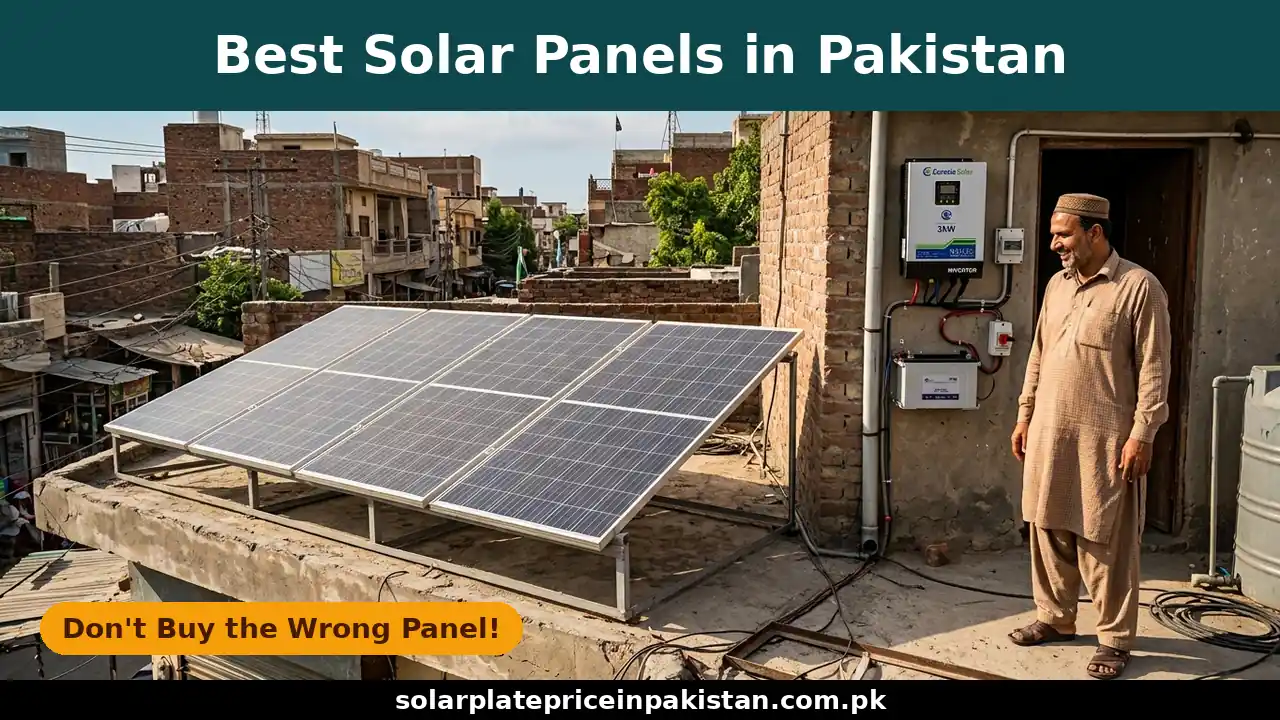
Best Solar Panels in Pakistan Today 2026 — How to Choose the Right One

If you are shopping for the best solar panels in pakistan, you are not alone. Every week, thousands of homeowners in Lahore, Karachi, Islamabad and smaller cities start the same search — and most of them feel lost after ten minutes.
The problem is not a lack of choice. The problem is too much choice, and too many sellers who all claim their plate is the best. This guide cuts through that noise.
You will learn how to judge the best solar panels in pakistan by the things that actually decide your electricity bill — the cell type, the heat performance, the warranty, and whether the plate in your hands is genuine. No engineering degree needed. Just plain words and simple checks.
By the end, you will know exactly which plate to ask for, which questions to ask the seller, and which red flags to walk away from. Let us start with the short answer.
Best Solar Panels in Pakistan — The Short Answer
Here is the short answer. For most homes in Pakistan, the safe shortlist has five names: Jinko, Longi, Canadian Solar, Trina and JA Solar.
All five are Tier-1 makers. All five sell modern N-type plates in Pakistan. The differences between them are smaller than most sellers admit.
Here is how the best solar panels in pakistan compare on the things that matter — without any prices, because prices change every day. For today’s prices, follow the link under each brand below.
| Brand | Flagship series | Cell type | Efficiency | Product warranty | Best for |
|---|---|---|---|---|---|
| Jinko | Tiger Neo | N-type TOPCon | Up to about 24% | 12 years | All-round homes and businesses |
| Longi | Hi-MO 7 / Hi-MO X10 | N-type TOPCon / HPBC back-contact | Up to 24.8% | 12–15 years | Small roofs, premium homes |
| Canadian Solar | TOPHiKu6 / HiHero | N-type TOPCon / HJT | Up to about 23% | 12 years | Homes and commercial roofs |
| Trina | Vertex N | N-type TOPCon | Up to about 23% | 12 years | Large roofs, commercial jobs |
| JA Solar | DeepBlue 4.0 | N-type TOPCon | Up to about 23% | 12 years | Value-conscious homes |
Every brand above also carries a 30-year performance warranty on its current N-type lines. That means the maker promises the plate will still produce a stated share of its original power after 30 years. The table above is a starting point, not a final answer — the rest of this guide shows you how to read it.
What Makes a Panel “Best” in Pakistan?
A good plate is not the one with the biggest watt number on the sticker. The best solar panels in pakistan win on four things, and you can check all four before you pay.
Efficiency — What the Percentage Really Means
Efficiency tells you how much of the sunlight hitting the plate becomes electricity. A plate with 23% efficiency turns 23 units out of every 100 units of sunlight into power. The rest becomes heat.
Why does it matter? Because your roof has a fixed size.
A more efficient plate makes more electricity from the same roof. If your roof is small, efficiency matters a lot. If your roof is big, you can use a slightly less efficient plate and simply fit one or two more.
Heat — The Number That Matters on a Pakistani Roof
Plates lose power as they heat up. Every plate has a temperature number on its datasheet, written as a percentage per degree Celsius. It is usually a minus number, like minus 0.26% per degree.
Think of it like a phone that slows down when it gets hot in the sun. A plate with a smaller minus number loses less power on a hot Lahore afternoon. In Pakistan, where rooftops cross 60 degrees in summer, this number matters more than the brand name.
Warranty — Product Warranty Is Not the Same as Performance Warranty
Every good plate has two warranties, and buyers mix them up. The product warranty covers defects — if the plate itself fails, the maker replaces it. Most Tier-1 plates carry 12 to 15 years of product warranty.
The performance warranty is different. It promises how much power the plate will still make after many years — usually 30 years. A plate can be fine as a product but still lose power faster than promised. Read both numbers on the datasheet, not just one.
Degradation — How Much Power It Loses Every Year
All plates lose a little power each year. Good N-type plates lose about 0.35 to 0.4% per year after the first year. That sounds small, but it adds up over 25 years.
Here is a simple way to see it. After 25 years, a good plate still makes about 90% of the power it made on day one. A poor plate can drop to 80% or less. That missing 10% is electricity you pay for but never get.
N-Type vs P-Type: The Choice That Matters Most
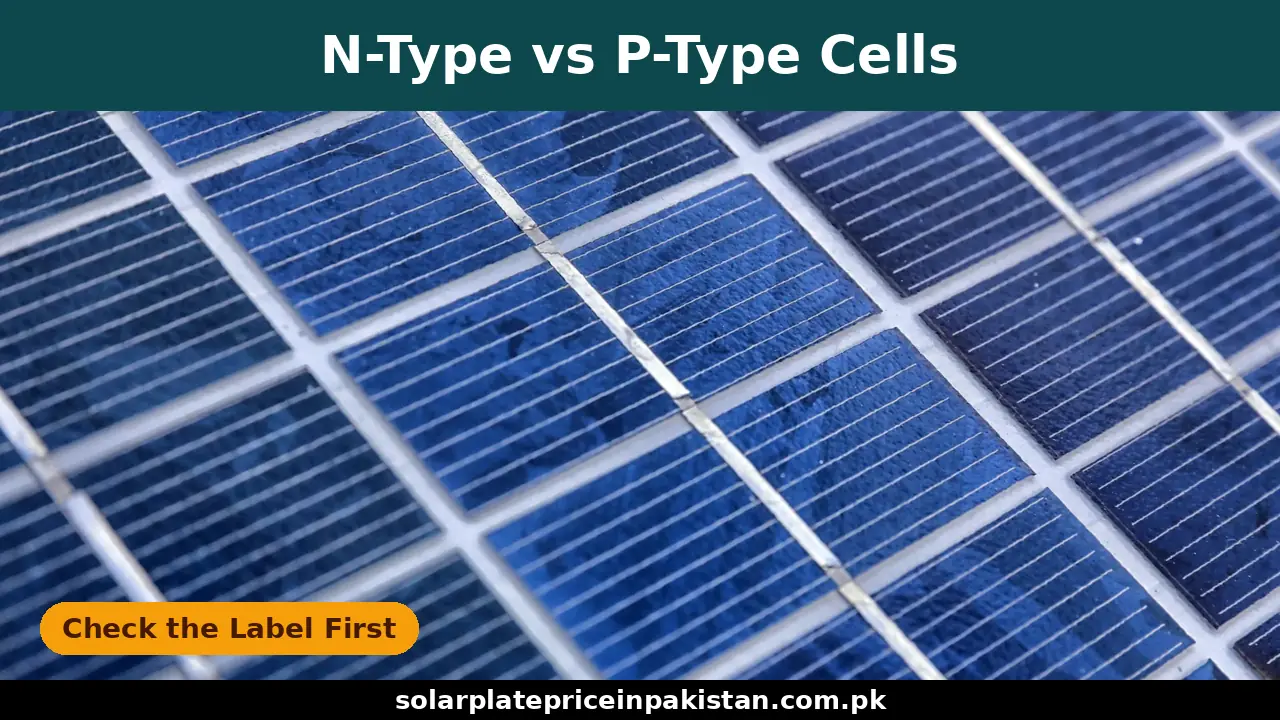
If you remember one thing from this guide, remember this: buy N-type, not P-type. Most new plates in Pakistan are N-type now, but some sellers still clear old P-type stock.
P-type was the standard for years. It works, but it loses more power in heat and ages faster. N-type is the newer cell design. When people compare the best solar panels in pakistan, the N-type versus P-type question decides more than the brand name does.
N-type plates usually reach 22 to 24% efficiency. P-type plates usually stop at 21 to 22%. N-type plates also handle heat better and lose less power each year. The price gap between the two has shrunk so much that there is no good reason left to buy P-type for a new system.
How to tell which one you are buying:
- Read the datasheet. It says N-type or P-type, usually near the top of the electrical data.
- Ask the seller to point at the cell type on the datasheet, not just say it out loud.
- If the datasheet does not say N-type, treat the plate as old stock and ask for a newer model.
Bifacial Plates: Worth It on a Flat Roof?
A bifacial plate makes power from both sides. The front catches direct sun, and the back catches light that bounces off the roof or the ground. On a white roof or a bright concrete surface, the back side can add a few extra percent of power.
On a normal dark roof, the gain is small. The plate costs more, and the extra output is tiny. Bifacial plates make sense on flat roofs with light-coloured surfaces, or on raised structures over a bright courtyard.
If your roof is dark and your budget is tight, a normal one-sided plate is the better buy. Spend the difference on a better inverter or one more plate.
The 5 Brands Worth Your Money
These five brands sell the most plates in Pakistan for a reason. They are all Tier-1 makers, which means a global finance list called BloombergNEF rates them as bankable — big, stable companies whose warranties are likely to mean something in ten years.
Tier-1 is not a quality award. It is a finance label. But in practice, Tier-1 makers use better materials, run tighter factory checks, and are still around when a warranty claim comes up. That is why this guide sticks to them.
Jinko — Tiger Neo
Jinko is the biggest plate maker in the world by the number of plates shipped. Its Tiger Neo line uses N-type TOPCon cells. Jinko is the name most dealers mention first when you ask about the best solar panels in pakistan, because its plates are easy to find in almost every city.
Tiger Neo plates suit almost any home. They handle heat well, and their warranty support in Pakistan is the most established of any brand. If you want the safe choice, start here. See today’s Jinko plate prices on the Jinko price page.
Longi — Hi-MO 7 and Hi-MO X10
Longi is the world’s largest maker of the silicon wafers that go inside plates. Its Hi-MO 7 line uses N-type TOPCon cells. Its newer Hi-MO X10 line uses back-contact cells, where all the wires sit on the back of the plate instead of the front.
That back-contact design gives the X10 the highest efficiency in this list — up to 24.8% — and the longest product warranty at 15 years. It also handles partial shade better than most plates, which helps on roofs with water tanks and parapet walls. See today’s Longi plate prices on the Longi price page.
Canadian Solar — TOPHiKu6 and HiHero
Canadian Solar has been making plates for over two decades. Its TOPHiKu6 line uses N-type TOPCon cells. Its HiHero line uses a different cell design called HJT, which performs well in heat.
Canadian plates suit buyers who want a bankable global brand and steady long-term output. They are a common choice for larger homes and commercial roofs. See today’s Canadian plate prices on the Canadian price page.
Trina — Vertex N
Trina started the trend of very large plates. Its Vertex N line uses N-type TOPCon cells and reaches high watt numbers because each plate is physically bigger — up to 720W on the largest size.
Big plates mean fewer plates on the roof, which can cut fitting labour. But check your roof size first: a bigger plate needs more space and is heavier to lift. Trina suits large roofs and commercial jobs best. See today’s Trina plate prices on the Trina price page.
JA Solar — DeepBlue 4.0
JA Solar is the value pick of the five. Its DeepBlue 4.0 line uses N-type TOPCon cells and delivers solid performance at a friendlier price point than the premium names.
If your budget is tight but you still want a Tier-1 plate with a real warranty, JA is where most careful buyers land. See today’s JA plate prices on the JA price page.
Best solar panels in Pakistan for most homes
For most homes, the shortlist is simple. A normal family home does well with Jinko Tiger Neo or Longi Hi-MO 7. A home with a small roof should look at Longi Hi-MO X10 or a high-efficiency Jinko line, because every square foot must work harder.
A home with a tight budget should look at JA DeepBlue 4.0. A large roof or a shop should look at Trina Vertex N or Canadian TOPHiKu6. There is also a local option: Inverex Mustang plates, made for the Pakistani market — see the Inverex price page for its two sizes.
Two premium names you may hear — Risen and AIKO — make excellent plates, but they are harder to find in Pakistan and their after-sales support is thinner. For most buyers, the five above are the safer bet.
How to Check a Panel Is Original Before You Pay
Fake plates are the biggest risk when you buy the best solar panels in pakistan. Rebuilt plates, relabelled plates and Grade-B cells sold as Grade-A all circulate in the market. Four checks protect you.
Check the serial number on the official portal
Every Tier-1 maker runs a free serial-number check on its own website. Jinko, Longi, Canadian Solar, Trina and JA Solar all have one. Type the official web address yourself — never click a link the seller sends you, because fake check websites exist that look exactly like the real ones.
Do the scratch test on the barcode
On a genuine Tier-1 plate, the barcode is sealed inside the glass during making. Run your fingernail firmly across it.
If it does not move, it is real. If a paper sticker peels off, the plate is fake. Do this on every plate before installation, not just one.
Ask for the flash test report
Every plate is tested at the factory before it leaves. The flash test report shows the real power the plate produced in the test. If the seller cannot show it, ask why. A genuine seller has it.
Match the datasheet and the dealer
Ask for the official datasheet for the exact model and check that the model number, wattage and warranty on the plate match it. Then ask whether the dealer is authorised by the maker. Authorisation does not prove everything, but it raises the bar for a fraud.
How Many Panels Does Your Home Need?
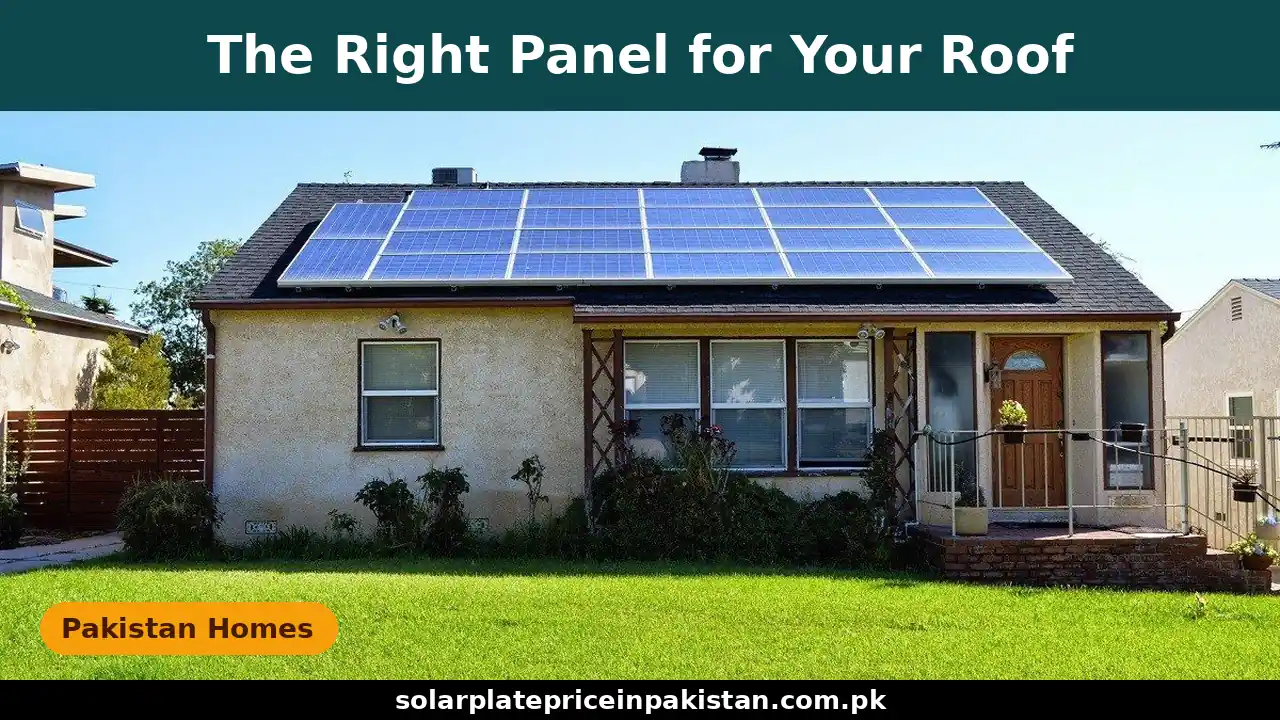
The number depends on your electricity use, not on the brand. A rough rule helps: a 5 kW system needs about 9 to 10 plates of around 585W. A 10 kW system needs about 18 to 20 plates. A 1 kW system makes roughly 3 to 4 units of electricity a day on average.
Do not guess your size from a neighbour’s system. Your fans, fridge, air conditioner and water pump decide your size. Use the solar load calculator to add up your own appliances first — it takes five minutes and stops you buying too many or too few plates.
Here is a worked example. A home with two fans, a fridge, a water pump, ten lights and one air conditioner used for a few hours a day needs roughly a 5 kW system. That is about 9 or 10 plates. The same home without the air conditioner needs about 3 kW — about 5 or 6 plates.
One more thing: NEPRA’s net-metering rules decide what happens to the extra units your plates make in the daytime. The amount paid for exported units has dropped, so using your own solar power in the daytime matters more now than selling it back. Read the current rules on NEPRA’s website before you size a system for export.
What About the Inverter and Battery?
A plate alone does not run your home. The inverter turns the plate’s DC power into the AC power your fans and fridge use. The battery stores power for the night and for load-shedding.
Do not buy the plate and the inverter from two different sellers without checking they work together. A good installer sizes the inverter to match your plates and your load. If you want backup power, plan the battery from the start — adding one later costs more.
Compare inverter options on the solar inverter hub page before you commit. The plate is only half the system.
Mistakes That Cost Pakistani Buyers the Most
Most bad solar purchases fail in the same five ways. The most expensive mistake when buying the best solar panels in pakistan is not picking the wrong brand — it is skipping the checks around the brand.
Buying by the watt number alone
A 720W plate is not better than a 670W plate if it is simply bigger and less efficient. Read efficiency and cell type first, watts second.
Ignoring the installer
A great plate on a weak structure, with thin cables and poor earthing, will still fail early. Judge the installer as seriously as the plate.
Chasing the cheapest unknown brand
A plate with no traceable maker and no local warranty support is a gamble. When it fails in year three, there is nobody to call.
Skipping the authenticity checks
Five minutes with the serial number and the scratch test can save you from a roof full of fakes.
Forgetting shade and roof space
A water tank’s shadow across one plate can drag down a whole string. Walk your roof at midday before you order.
The right plate is the one that fits your roof, your load and your budget — and that you can prove is genuine. Shortlist three or four models from the five brands above, compare their datasheets side by side, and check each plate before you pay. That is the whole secret. For today’s prices, start on the homepage and follow the links to the brand price pages.
One last tip: buy from a dealer who lets you run the checks in this guide. A seller who hides the serial number or rushes you past the scratch test is telling you something. Walk away, and find a seller who is happy to be checked.
Frequently Asked Questions
Which are the best solar panels in Pakistan for home use?
For most homes, Jinko Tiger Neo and Longi Hi-MO 7 are the safest picks. They combine modern N-type cells, strong warranties and wide availability. JA DeepBlue 4.0 is the best value pick for a tight budget.
What is the difference between N-type and P-type solar plates?
N-type plates use a newer cell design. They reach higher efficiency, handle heat better and lose less power each year than P-type plates. P-type was the old standard. For a new system, N-type is the better choice.
How do I know if a solar plate is original?
Check the serial number on the maker’s official website, do the scratch test on the barcode, and ask for the flash test report and the official datasheet. If the seller resists any of these checks, walk away.
How many solar panels do I need for my home?
It depends on your load. A 5 kW system needs about 9 to 10 plates of around 585W. Add up your appliances with the solar load calculator first, then decide the system size.
Is a higher watt panel always better?
No. A higher watt number often means a bigger plate, not better technology. A 670W plate at 24.8% efficiency is better technology than a 720W plate at 23.2%. Compare efficiency and cell type first.
Which solar panel brand is best for a small roof?
Longi Hi-MO X10 and high-efficiency Jinko lines suit small roofs best, because they make more electricity from less space. Measure your roof before you choose.
What warranty should I expect on a solar panel?
A good Tier-1 plate carries a 12 to 15-year product warranty and a 30-year performance warranty. Read both numbers on the datasheet. A long performance warranty alone means little if the product warranty is short.
Are Tier-1 solar panels worth it?
Yes, for most buyers. Tier-1 means the maker is large, stable and bankable, so its warranty is more likely to mean something years later. Tier-1 plates also use better materials and tighter factory checks.
Do solar panels work in cloudy weather and rain?
Yes, but they make less power. Plates work on light, not heat, so they still produce on cloudy days — just less. Heavy rain can even help by washing dust off the plates.
Should I buy a hybrid inverter with my solar panels?
A hybrid inverter with a battery suits homes that face load-shedding or want backup power at night. If your area has stable grid power and you only want lower bills, a simpler on-grid setup may be enough. Compare the inverter options on the solar inverter hub page.